

Urgency Copy in Meta Ads: Ethical Deadline and Scarcity Tactics
Write truthful deadline and scarcity copy with time zones, current inventory and expiration checks; distinguish faster purchases from additional sales.
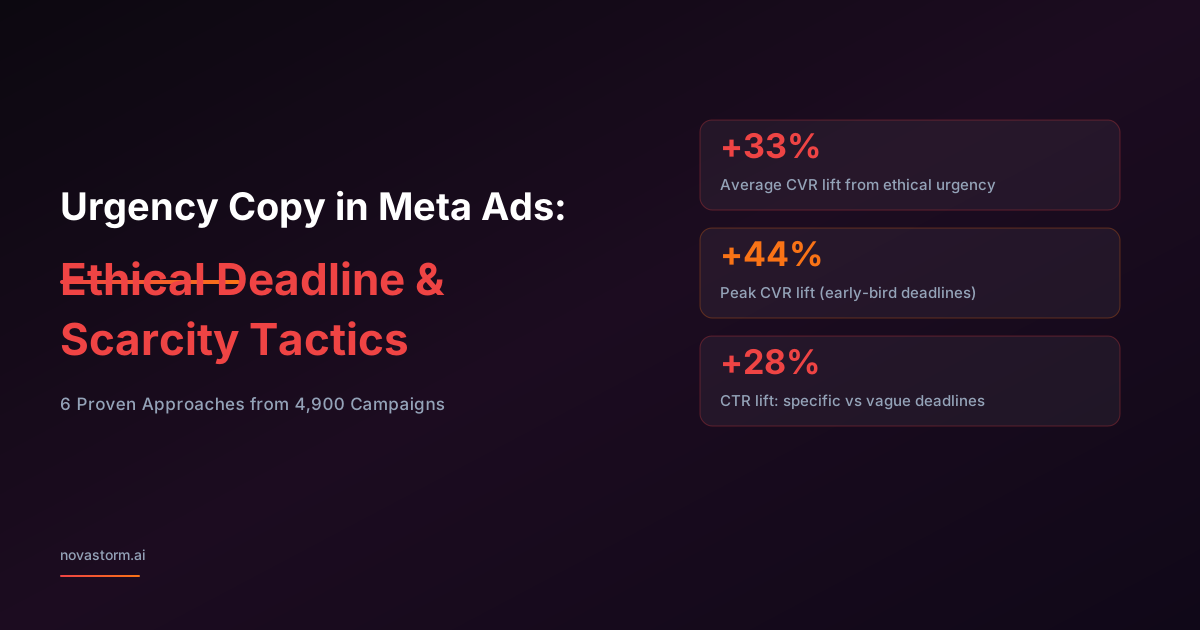
A useful deadline tells a buyer when a real offer ends. A stock statement tells them what can actually be purchased. Keep both traceable to current records, include the time zone, and plan what happens to ads and destinations when the offer changes.
Use verifiable constraints rather than a lift promise
The FTC report on dark patterns identifies misleading countdowns and false time pressure as deceptive tactics. This is US consumer-protection guidance, not a complete account-specific Meta policy review or a promise that a particular ad will be accepted. Check applicable market rules and current platform requirements for the actual offer.
Reviews and signup counts may be social proof if accurate and authorized, but they do not establish scarcity. A high rating is not evidence that a product is about to sell out. Do not turn popularity into a false shortage.
A filled deadline and stock register
Hypothetical teaching offer, not an actual NovaStorm promotion: a workshop has 30 places and a real early price. The chosen dates, prices and inventory are scenario assumptions; use current approved records for a live campaign.
| Constraint | Approved illustrative message | Operational evidence |
|---|---|---|
| Early price | Workshop tickets cost $199 until 2026-11-15 at 23:59 UTC; $249 afterward. | Approved price schedule and checkout behavior at boundary |
| Capacity | 10 places remain as of 2026-11-15 at 12:00 UTC. | 30 capacity minus 20 paid reservations; held/canceled tickets reconciled |
| Enrollment | Registration closes 2026-11-16 at 18:00 UTC, or sooner if sold out. | Real enrollment rule and owner; no rolling reopening |
| Price transition | The early price has ended; remaining tickets are $249. | Reviewed replacement creative and matching destination |
| Sold out | Registration closed. | Disable purchase route and stop active acquisition ads |
An exact remaining count can become stale before an ad is shown. If the workflow cannot keep it accurate, omit the exact number or use an honest capacity explanation with no live count. Time stamps do not make obsolete stock truthful indefinitely. Distinguish paid reservations, temporary holds and seats that can actually be sold.
Approve expiration work before launch
- Record the offer owner, UTC timestamp and shopper-facing time zone. Check that the checkout and public terms show the same deadline.
- Set supported campaign scheduling where available, but assign an owner to verify accepted settings and inspect delivery at expiration. Do not assume every active copy stops automatically.
- Prepare replacement copy before the price change. Stop or update ads carrying the obsolete offer, and verify that the destination and any cached promotions agree.
- Test the boundary behavior in the actual checkout: before the deadline, at it and after it. Ensure the timer does not reset on refresh or a new session.
- If stock cannot be reconciled or expiration fails, pause affected delivery rather than extending an invented deadline. Log any real extension and explain it accurately.
Stop wasting ad budget
NovaStorm AI cuts Meta Ads CPA by 30% on average. No complex setup required.
Separate purchase acceleration from additional demand
Hypothetical concurrent test: each assigned arm has 1,000 eligible people. The deadline message has 30 paid purchases during the offer and 10 afterward; the neutral message 20 during and 20 afterward. Both have 40 over the same complete follow-up. The message accelerated 10 purchases but did not add purchases in this example.
At an assumed $50 contribution per purchase and $500 media per arm, both generate $1,500 contribution less media before other costs. Discounts, refunds and fulfillment may change the comparison. Faster cash receipt can matter, but it is a different outcome from incremental demand.
A bounded urgency experiment
Proposed hypothesis: a truthful deadline improves retained contribution over the complete follow-up. Use an eligible randomized concurrent design with the same real offer, destination and audience eligibility; only the communication differs. Calculate sample and power from baseline retained-purchase rate, a useful detectable difference and the assignment unit, then check funding. Four days and $50 do not establish evidence.
Predeclare authorized exposure, final analysis, purchase/returns maturity and false-positive handling. Track post-offer behavior and refunds to detect timing shifts, regret or displaced later sales. Use the significance guide to plan sufficient evidence, and keep an inconclusive outcome valid.
Prepare a reviewed promotion draft
Use NovaStorm to prepare the approved campaign structure as a draft, inspect saved fields and Paused status, then approve publication. Unpublished ad sets remain local drafts. Verify scheduling in the control that owns it and keep the expiration owner responsible. No automatic deadline detection or last-hour budget increase is assumed; any additional spend needs a separate mature-economics and capacity review.
Published by NovaStorm AI. Worked examples and proposed tests are labeled in the article.
Disclaimer: This article was generated with the assistance of AI and reviewed by the NovaStorm AI team. While we strive for accuracy, we recommend verifying specific data points and consulting official sources (linked where available) for critical business decisions.
Ready to automate your Meta Ads?
NovaStorm AI takes full responsibility for your campaigns — from monitoring to optimization.
Start NowMore on Ad copy and messaging
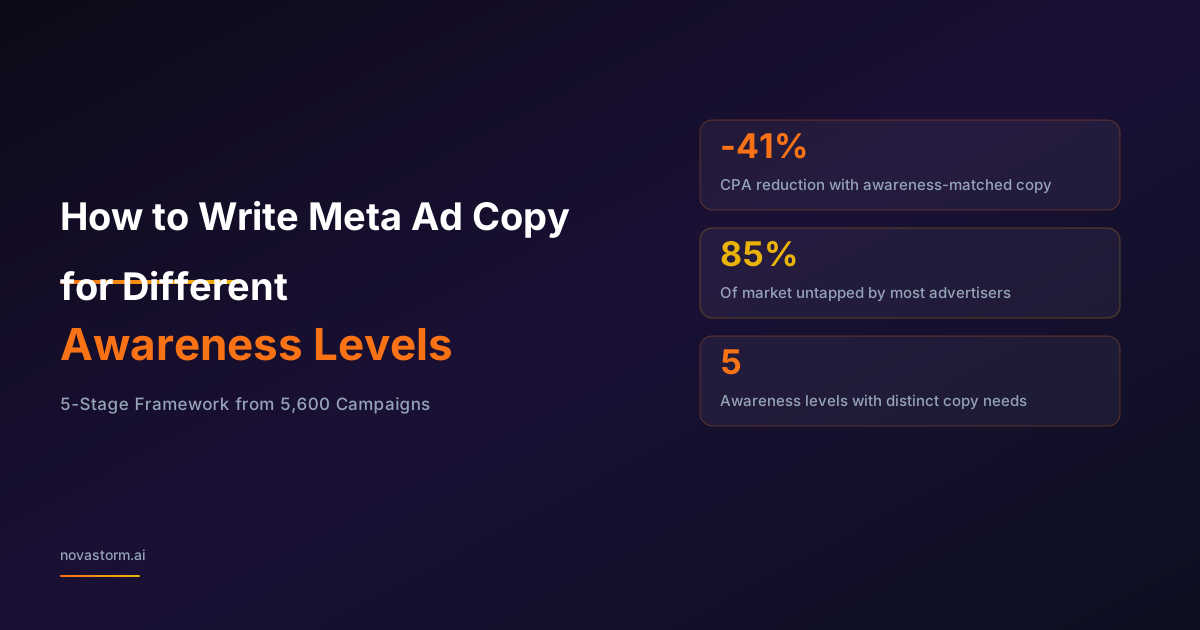
How to Write Meta Ad Copy for Different Awareness Levels
Research category and brand knowledge, draft five awareness message hypotheses and measure complete acquisition economics rather than assuming market shares.
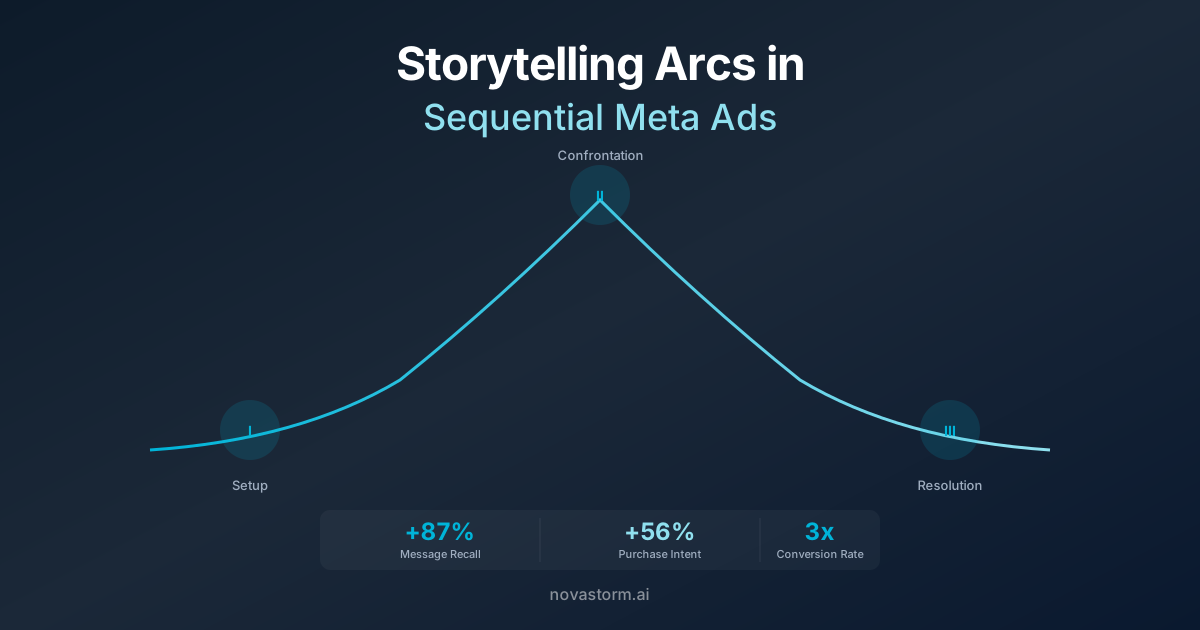
Storytelling Arcs in Sequential Meta Ads: Three-Act Structure
Write three self-contained ad acts, verify audience conditions and exclusions, and evaluate the complete sequence cost against mature purchases.
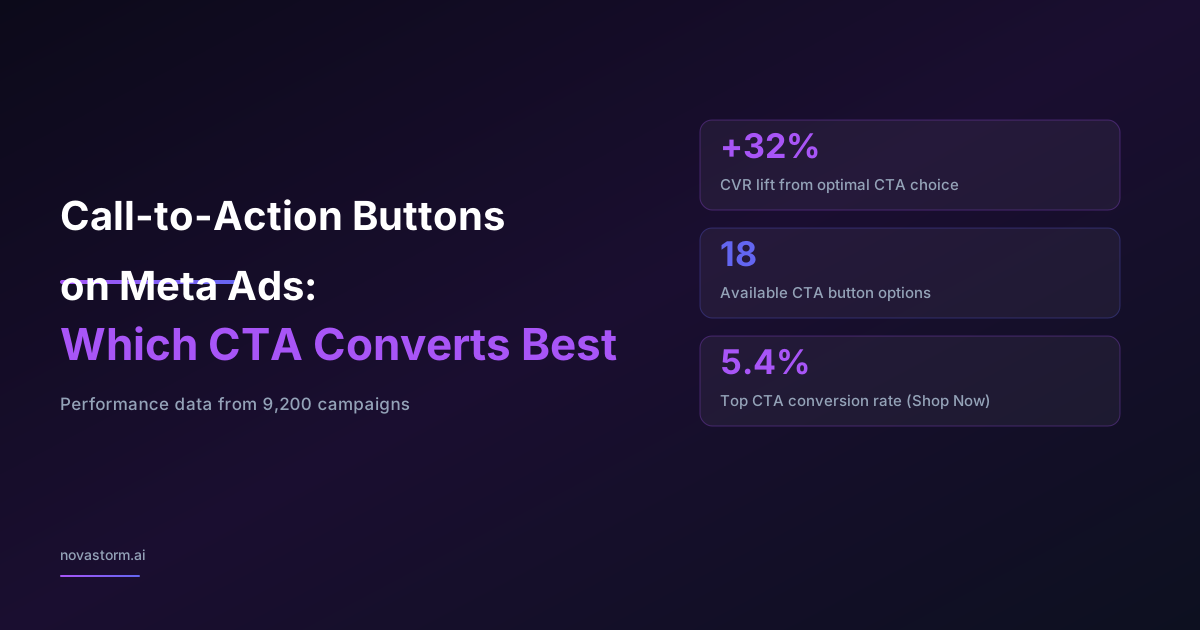
Call-to-Action Buttons on Meta Ads: Which CTA Converts Best
Match an available Meta CTA to the destination, compare one mature business outcome and plan a funded randomized test before declaring a winner.
Benefit-Driven vs Feature-Driven Ad Copy on Meta
Translate features into supportable task benefits, draft three comparable versions and evaluate mature outcomes without guaranteed performance claims.