

Thank You Page Optimization: Confirm Status and Prevent Duplicate Purchases
Design confirmation messages from verified lead and payment states; prevent duplicate purchases and make optional add-ons and surveys explicit.
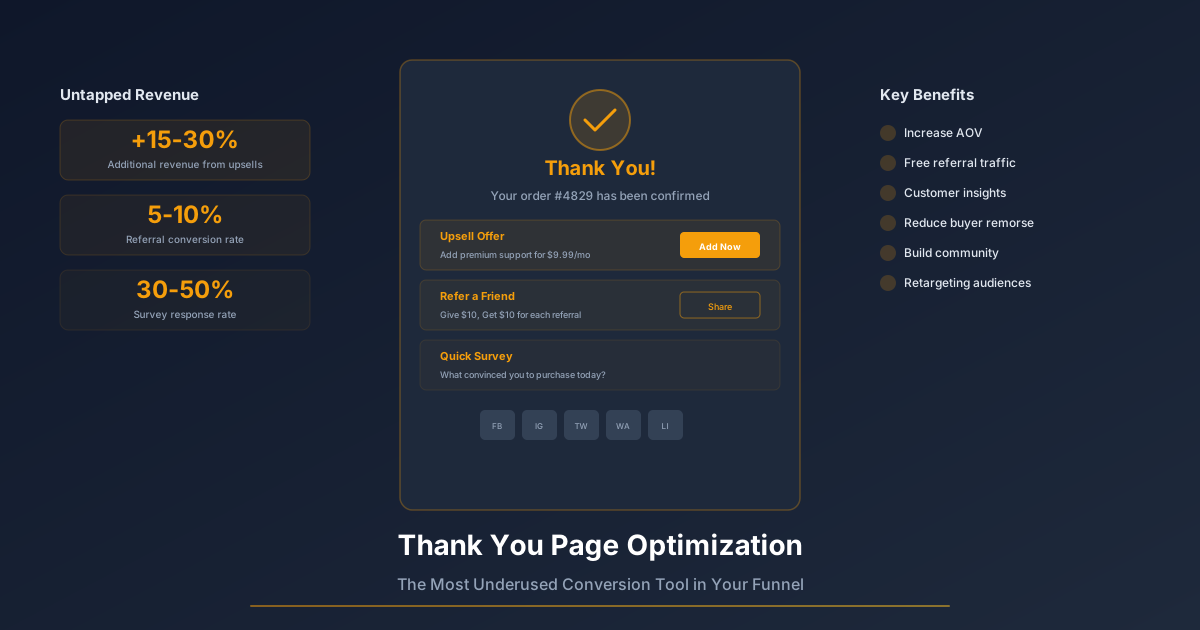
A confirmation URL is not proof of a payment. It can be reopened, shared or loaded while a payment is pending. Derive the message from the authorized server record and distinguish inquiry acceptance, pending payment and confirmed payment.
Ready-to-adapt confirmation copy
The identifiers, timing and amounts below are fictional examples. Replace the response time and delivery terms with your actual service commitments; do not show another customer’s order to a person who merely knows its URL.
| Server state | Example message | Next action |
|---|---|---|
| Accepted inquiry | We received your inquiry L-1042. Our team will email you within two business days. This is not a booking or payment confirmation. | Review your inquiry or contact support quoting L-1042 |
| Payment pending | Payment for order A-1042 is still pending. Do not pay again while we check its status. We will update this page when confirmation arrives. | Refresh status or contact support; use the verified recovery path if payment fails |
| Payment confirmed | Payment confirmed: order A-1042, $80. Your order summary and delivery details are available below. | View order details and the applicable delivery estimate |
For a declined payment, show the failure and a safe retry route rather than a successful purchase message. For an unauthorized or unknown ID, show a generic lookup/recovery message without exposing addresses, item details or payment information. A lead record, paid order and completed fulfillment are separate states.
Order A, two views and a separate order B
This hypothetical journal contains $80 plus $10 of confirmed payments, totaling $90. Page views and optional clicks are excluded from paid revenue. Event names describe a proposed implementation, not an existing NovaStorm payment integration.
| Sequence | Verified business record | Analytics meaning | Paid revenue change |
|---|---|---|---|
| A created; payment pending | A-1042 pending | Status view; no Purchase | 0 |
| A payment settles | A-1042 paid, $80 | One purchase with the stable transaction identity | +80 |
| Confirmation opened | A-1042 still paid | Confirmation view, separate from purchase | 0 |
| Confirmation reopened | A-1042 still paid | Another view; no new business transaction | 0 |
| Optional add-on selected | B-1043 created, payment pending | Add-on selection; no paid purchase yet | 0 |
| B payment settles | B-1043 paid, $10 | Separate purchase with a distinct identity | +10 |
Persist the payment transition and intended event identity so retries are idempotent. A server webhook retry or browser reload must not create another paid order. An analytics retry uses the same intended transaction identity, with delivery and deduplication checked for each implemented path. The GA4 event reference specifies purchase transaction fields; one platform identifier is not a universal deduplication guarantee for every destination.
Stop wasting ad budget
NovaStorm AI cuts Meta Ads CPA by 30% on average. No complex setup required.
Acceptance checks before release
- Create synthetic orders A and B in the agreed test environment. Verify pending, failed and paid states through the server record, not a URL parameter or browser-only flag.
- Open and reload the pending confirmation twice. Expect no paid purchase; after the verified payment transition, expect one business payment and the intended purchase event.
- Reopen the paid page and replay the authorized payment notification. Expect the same transaction identity, no new order and no duplicate paid amount.
- Accept the add-on through a separate explicit action and payment. Expect B’s identity and $10 only after settlement; decline it and verify A remains unchanged.
- Test missing/unauthorized IDs, delayed callbacks and recovery. Reconcile the payment ledger with event receipts and distinguish retry failures from actual orders.
These checks are a proposed acceptance procedure, not a claim that this checkout has been built or tested. The checkout validation process covers the payment boundary.
Offer follow-up without obscuring confirmation
Example add-on copy: “Optional: add the storage pouch for $10. Review the price and order before paying.” Keep the charge, terms and action clear; declining it must leave the paid order and support route intact. Do not preselect extra purchases or treat visiting the page as authorization to charge.
Example survey copy: “Optional: how did you first hear about us? Skip this question if you prefer.” Separate this choice from marketing consent, fulfillment notices and any required information. Survey respondents are a selected subset; remembered sources do not establish causal attribution or product satisfaction before use.
NovaStorm’s connection here is the quality of the customer’s route after an ad click. Prepare the campaign’s promise and confirm that the destination states match it; this article does not claim NovaStorm processes payments, issues refunds or manages survey consent. Test any additional continuation with the landing-page experiment method, keeping clear confirmation and duplicate prevention as guardrails.
Published by NovaStorm AI. Planning examples are illustrative assumptions, not measured customer results.
Disclaimer: This article was generated with the assistance of AI and reviewed by the NovaStorm AI team. While we strive for accuracy, we recommend verifying specific data points and consulting official sources (linked where available) for critical business decisions.
Ready to automate your Meta Ads?
NovaStorm AI takes full responsibility for your campaigns — from monitoring to optimization.
Start NowMore on Landing pages and conversion
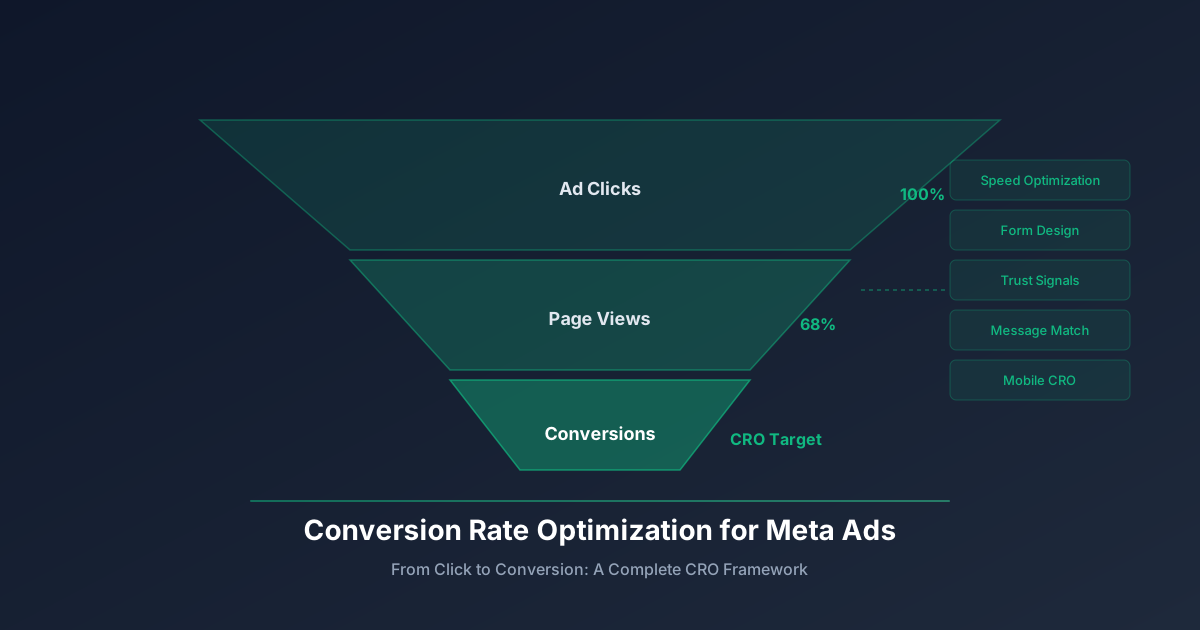
Conversion Rate Optimization for Meta Ads Landing Pages
Turn CRO observations into an owned backlog, reproduce mobile defects and separate repair acceptance from a controlled conversion hypothesis.
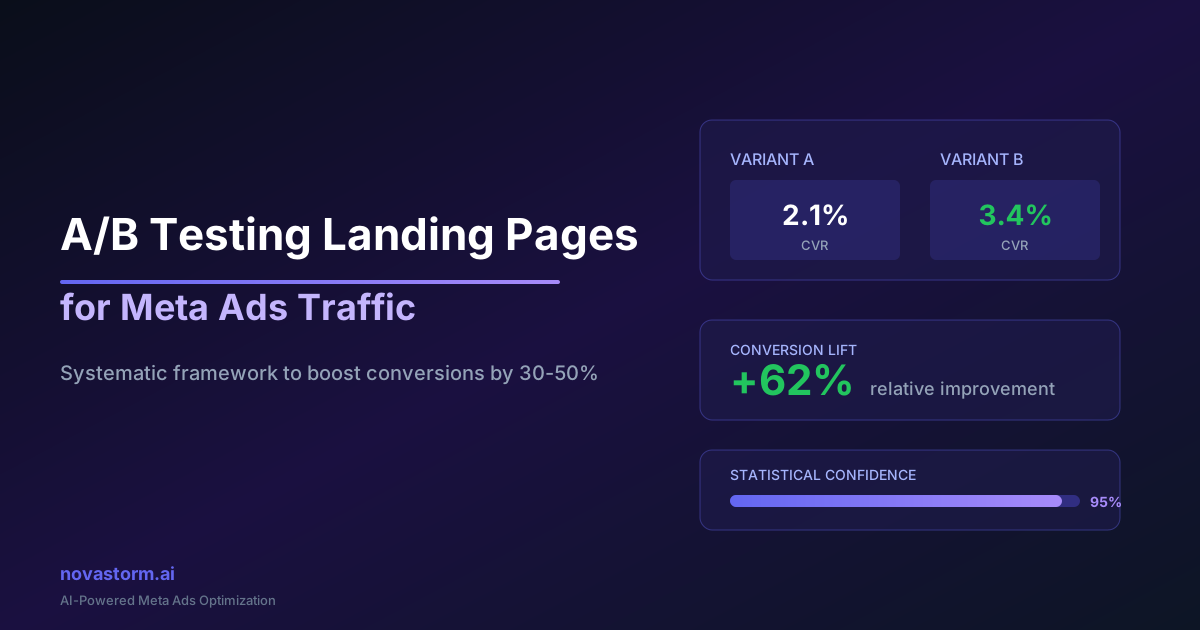
A/B Testing Landing Pages for Meta Ads Traffic
Set up consistent landing-page assignment, check revisit and event integrity, calculate sample and budget needs, and distinguish repairs from experiments.
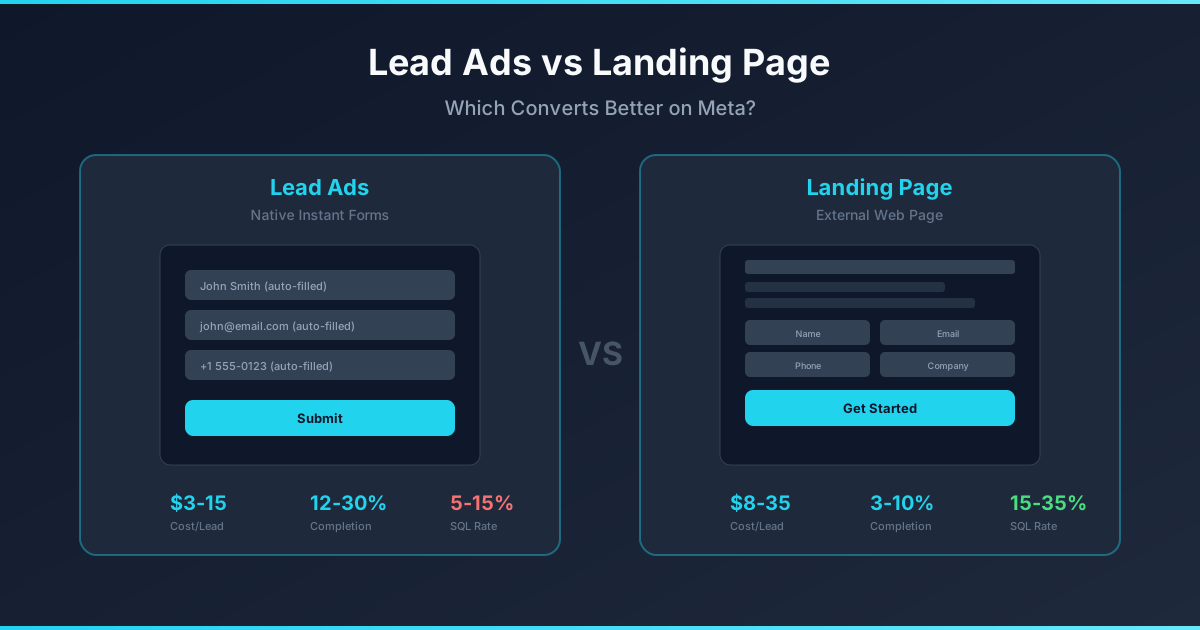
Lead Ads vs Landing Page: Which Converts Better on Meta
Compare instant forms and landing pages through qualified leads, mature sales and allowable customer costs, with a tested handoff and fair assignment.
Post-Click Conversion Optimization for Meta Ads
Reconcile explicit post-click IDs, consent and mature outcomes, repair routing and duplicates, and distinguish local attribution tests from commercial evidence.