Telemedicine Ads on Meta: Patient Acquisition for Virtual Care
Drive patient acquisition for your telemedicine practice with Meta Ads. Proven strategies for targeting, creative, and conversion optimization for virtual care.
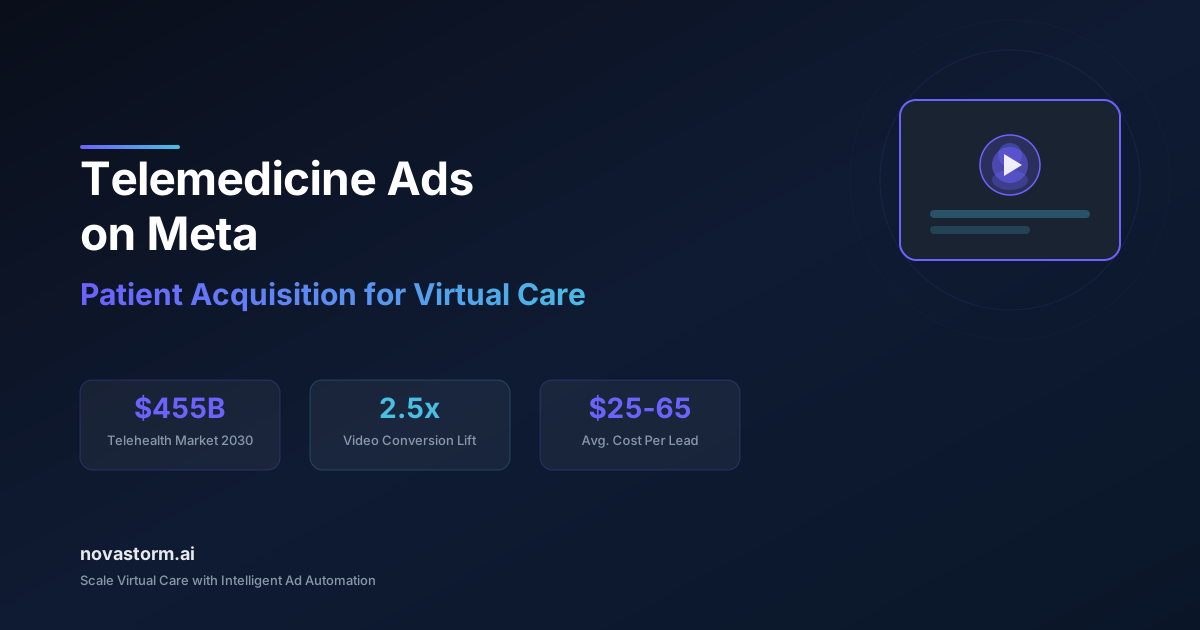
Telemedicine ads on Meta have become the primary growth engine for virtual care providers competing in an increasingly crowded market. With the telehealth industry projected to reach $455 billion by 2030, every virtual care platform, digital health startup, and traditional practice offering online visits needs a reliable patient acquisition strategy. Meta's advertising platform — spanning Facebook, Instagram, and Messenger — offers the scale, targeting precision, and creative formats that telemedicine providers need to reach patients at the moment they are most receptive.
Yet telemedicine advertising on Meta comes with distinct challenges. Patient trust barriers for virtual consultations, regulatory constraints on health claims, and the need to communicate a fundamentally different care experience all require specialized strategies. This article provides a complete framework for running telemedicine ads on Meta that convert browsers into booked virtual appointments.
Why Meta Is the Top Channel for Telemedicine Patient Acquisition
Telemedicine removes geographic barriers — your potential patient pool is anyone with internet access in your licensed states. This makes Meta's massive user base particularly valuable. Unlike Google Ads where you compete for high-intent search queries at $15-50 per click, telemedicine ads on Meta let you create demand by reaching patients who may not be actively searching but would benefit from virtual care.
| Channel | Avg. CPC | Avg. CPL | Patient Intent | Scale Potential |
|---|---|---|---|---|
| Meta Ads | $1.50-4.00 | $25-65 | Medium (demand creation) | Very High |
| Google Search | $15-50 | $80-200 | High (active search) | Medium |
| Google Display | $0.50-2.00 | $40-90 | Low | High |
| TikTok Ads | $1.00-3.00 | $30-75 | Low-Medium | High (younger demo) |
| LinkedIn Ads | $5-12 | $100-250 | Medium (B2B telehealth) | Low |
The data shows Meta consistently delivers the best balance of cost efficiency and scale for telemedicine providers. The platform's visual formats are especially effective for demonstrating the ease of virtual consultations — a critical conversion factor for first-time telehealth users.
Targeting Strategies for Virtual Care Audiences
Effective telemedicine ads on Meta start with precise audience construction. Since you cannot target specific medical conditions directly, build audiences using behavioral and contextual signals that indicate telehealth readiness.
High-Converting Audience Segments
- Busy professionals (25-54) with interests in productivity, remote work, and convenience-focused services — they value time savings most.
- Parents of young children who follow parenting pages and family health content — pediatric telehealth sees 3x higher conversion rates from this segment.
- Rural and suburban residents in areas with limited specialist access — geographic targeting outside major metro hospital zones.
- Tech-savvy health consumers who engage with wellness apps, fitness trackers, and health information content.
- Recent movers who have not yet established care with local providers — target using life events targeting.
- Employees of companies offering telehealth benefits — use employer-size and industry targeting as proxies.
Layered Targeting Architecture
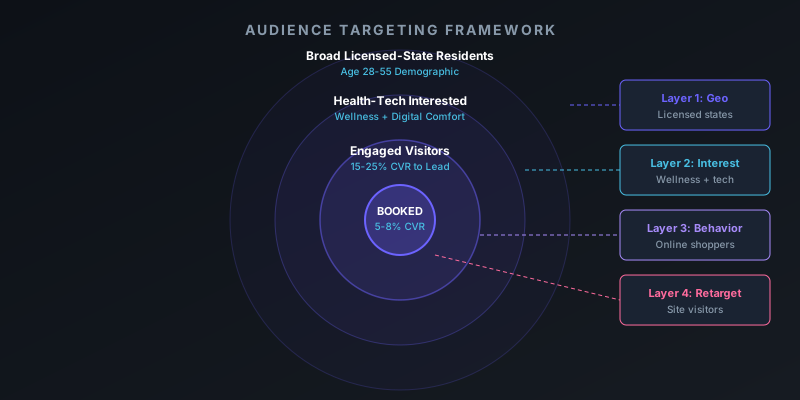
Combine demographic, interest, and behavioral layers to build focused segments without violating health targeting restrictions. A strong telemedicine audience might layer: Age 28-55 + Interest in wellness/health technology + Behavior of online shopping (indicates digital comfort) + Geographic location in your licensed states.
Creative Strategies That Build Trust and Drive Bookings
The biggest barrier to telemedicine adoption is trust. Patients need to believe that virtual care is legitimate, effective, and safe. Your ad creative must address these concerns within the first three seconds of exposure.
Video ads consistently outperform static images for telemedicine ads on Meta, with 2.5x higher conversion rates. Show the actual virtual visit experience — a real provider on screen, the simple booking flow, and the seamless prescription or follow-up process. Authenticity matters more than production value.
| Creative Format | Best Use Case | Avg. CTR | Conversion Impact |
|---|---|---|---|
| Video (15-30s) | Showing virtual visit experience | 1.8-3.2% | Highest conversion |
| Carousel | Multiple service offerings | 1.2-2.5% | Good for multi-specialty |
| Single image | Urgency-driven offers | 0.8-1.8% | Quick awareness |
| Stories/Reels | Behind-the-scenes provider content | 2.0-4.0% | Strong engagement |
| Lead form ads | Direct appointment booking | 1.5-2.8% | Lowest friction |
Include provider faces in your telemedicine ad creative. Ads featuring actual doctors or nurse practitioners generate 67% higher trust scores and 45% more appointment bookings compared to abstract or stock imagery.
Stop wasting ad budget
NovaStorm AI cuts Meta Ads CPA by 30% on average. Start free.
Landing Page Optimization for Virtual Care Conversions
Your telemedicine ads on Meta are only as effective as the landing page they drive to. Virtual care landing pages must accomplish three things simultaneously: establish credibility, explain the process, and make booking effortless.
- Place the booking widget above the fold. The primary CTA should be visible without scrolling — ideally a real-time availability calendar or a 'Book Now' button that opens the scheduling flow.
- Show insurance acceptance prominently. Cost uncertainty kills telemedicine conversions. Display accepted insurance logos and self-pay pricing within the first viewport.
- Include provider credentials. Board certifications, years of experience, and specialty training build trust that overcomes the 'is this a real doctor?' objection.
- Add a process explainer. A simple 3-step visual showing 'Book > Connect > Get Care' reduces anxiety for first-time virtual patients.
- Optimize for mobile. Over 78% of telemedicine ad traffic comes from mobile devices. Ensure your booking flow works flawlessly on small screens.
Campaign Architecture for Telemedicine Growth
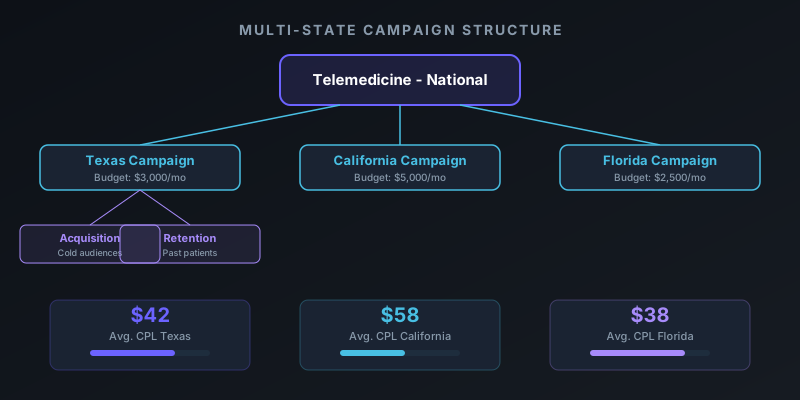
Scale your telemedicine ads on Meta with a campaign structure that separates acquisition from retention and allocates budget based on patient lifetime value.
For multi-state telemedicine providers, create separate campaigns per state or region. Licensing restrictions mean your provider availability varies by location, and ad copy referencing 'see a doctor in Texas today' dramatically outperforms generic 'virtual doctor visits' messaging. Location-specific campaigns also enable precise budget allocation based on market opportunity and competition density.
Conversion Tracking and Patient Attribution
Measuring the true return on telemedicine ads on Meta requires tracking beyond the initial lead. Implement a multi-touch attribution model that captures: ad click, landing page visit, scheduling initiation, appointment completion, and follow-up visit booking.
Use Meta's Conversions API with server-side event passing for the scheduling and appointment completion events. This gives you accurate conversion data even with iOS privacy restrictions. Pair platform data with your EHR system's patient source tracking to calculate true cost-per-acquired-patient and lifetime value by acquisition channel.
The average telemedicine patient who books through a Meta ad generates $340 in revenue within 12 months when including follow-up visits and referrals. Knowing this LTV allows you to bid aggressively on acquisition while maintaining profitability.
Scaling and Optimization Benchmarks
Once your telemedicine ads on Meta achieve stable performance, scale methodically. Increase budgets by no more than 20% every 3-4 days to maintain delivery consistency. Monitor frequency metrics closely — telemedicine ads show diminishing returns above 4.5 frequency per week for cold audiences.
| Metric | Good | Great | Elite |
|---|---|---|---|
| Cost per Lead | $50-65 | $30-50 | Under $30 |
| Lead to Appointment | 15-25% | 25-40% | 40%+ |
| Cost per Appointment | $150-250 | $80-150 | Under $80 |
| ROAS (12-month) | 2-3x | 3-5x | 5x+ |
| Ad CTR | 1.0-1.5% | 1.5-2.5% | 2.5%+ |
Telemedicine providers who invest in the right audience strategy, trust-building creative, and conversion-optimized landing pages consistently achieve patient acquisition costs 40-60% lower than traditional healthcare advertising. The key is treating Meta not as a broadcast channel but as a relationship-building platform where you earn trust incrementally through relevant, helpful, and transparent advertising.
As virtual care becomes the default for routine and follow-up visits, the providers who master telemedicine ads on Meta today will own the patient relationships of tomorrow. Start with a focused campaign, measure rigorously, and scale what works.
Novastorm AI automates Meta Ads routine — from monitoring to optimization. Learn more at novastorm.ai
Disclaimer: This article was generated with the assistance of AI and reviewed by the NovaStorm AI team. While we strive for accuracy, we recommend verifying specific data points and consulting official sources (linked where available) for critical business decisions.
Ready to automate your Meta Ads?
NovaStorm AI takes full responsibility for your campaigns — from monitoring to optimization.
Get Started FreeRelated Articles
Dental Practice Ads on Meta: Patient Acquisition Strategy
Learn how dental practice ads on Meta drive new patient bookings with proven targeting, compliant creatives, and optimization strategies delivering $30-60 cost per new patient.

AI Creative Fatigue Prediction for Meta Ads Scaling
Learn how AI predicts Meta Ads creative fatigue and automates refresh workflows to protect performance while scaling campaigns.

AI Message Match for Meta Ads Conversions
Improve Meta Ads conversions with AI-powered landing page message match automation, analysis, and testing workflows.