

Social Identity Theory in Ad Targeting and Creative
Use customer self-description responsibly in Meta creative, with permissioned language, stereotype checks and a same-audience message test.
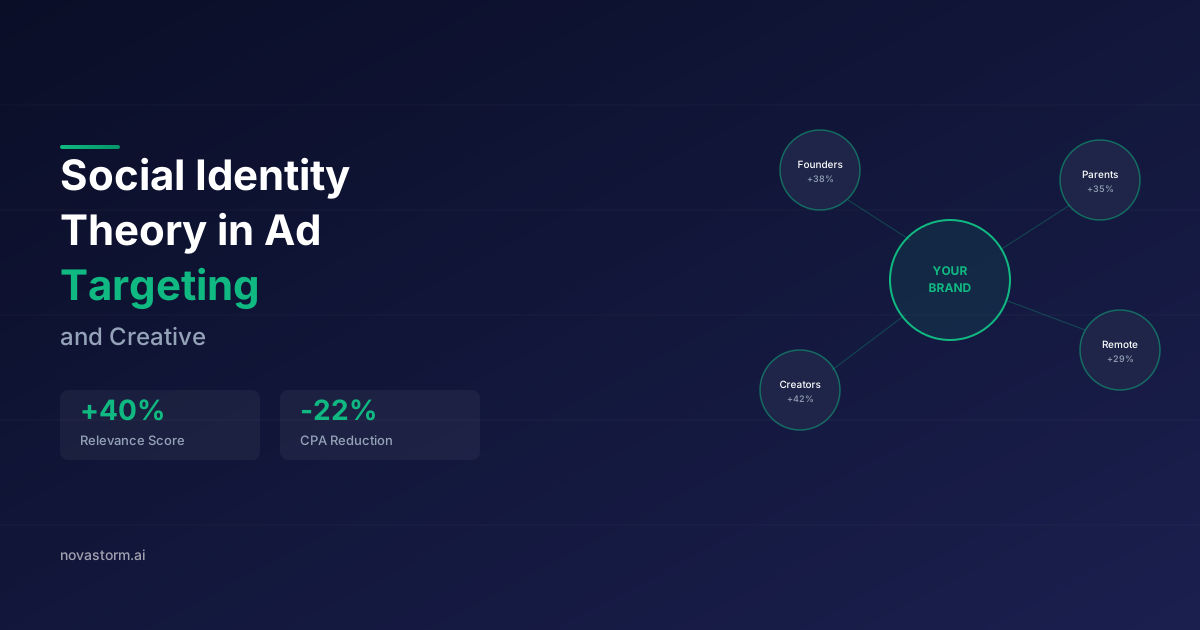
Customer language can help an ad describe a relevant task without assigning a stereotype to the viewer. Social identity research provides a hypothesis about group context, not permission to infer sensitive characteristics or guarantee a creative uplift.
Tajfel, Billig, Bundy and Flament (1971) studied social categorization and intergroup behavior. Those experiments are not Meta campaigns and do not validate a platform “relevance 8.2/10” score or a 48-hour production payback.
Collect self-description before writing the message
With appropriate consent, ask customers how they describe their work, what task they are completing and which words feel accurate. Keep anonymized responses and permission for quotation, including context and date. Do not substitute visual stereotypes for what people actually say.
No real customer interview is supplied here. The following responses are explicitly invented teaching examples, not anonymized customer quotations.
| Synthetic self-description | Useful task language | Brief decision |
|---|---|---|
| “I manage projects across a small distributed team.” | Project handoff across locations | Show a real supported handoff workflow |
| “I run the work myself and review it with clients.” | Client review and clear next step | Explain approval, not an assumed personality |
| “I need to understand the price before inviting others.” | Plan/seat obligations | Use verified pricing language |
Stop wasting ad budget
NovaStorm AI cuts Meta Ads CPA by 30% on average. No complex setup required.
Teaching copy: “Make the next project handoff clear for your team.” This describes a task without asserting that the viewer belongs to a sensitive group. A phrase such as “built by developers” needs to be true of the business, not merely an identity tactic. Avoid derogatory out-group contrasts and unsupported assumptions about gender, culture, health or finances.
Compare messages inside the same audience
- Hypothesis: the documented task language improves understanding compared with generic feature copy.
- Use eligible comparable allocation within the same audience and offer. Equal budgets on different identity audiences do not isolate a message effect.
- Prespecify comprehension and mature retained contribution, production cost, outcome lag and a maximum loss.
- Review complaints, opt-outs and incorrect interpretation alongside clicks. Shares or sentiment are proxy observations, not direct proof of identity activation.
- Show uncertainty and sample counts; do not use an arbitrary engagement-lift cutoff as scientific validation.
For a synthetic economics check, an extra $200 of production requires more than $200 of incremental contribution to recover its cost. The time to recovery depends on actual paid outcomes; it cannot be assumed from improved CTR or a generic relevance number.
Prepare a NovaStorm message brief from permitted, accurately represented language and have the customer-facing owner approve it. Review the campaign draft and saved fields before publication. Real interview collection and permissions remain with the team; synthetic responses must not become public testimonials.
Published by NovaStorm AI. Worked examples and proposed tests are labeled in the article.
Disclaimer: This article was generated with the assistance of AI and reviewed by the NovaStorm AI team. While we strive for accuracy, we recommend verifying specific data points and consulting official sources (linked where available) for critical business decisions.
Ready to automate your Meta Ads?
NovaStorm AI takes full responsibility for your campaigns — from monitoring to optimization.
Start NowMore on Buyer psychology

Anchoring Bias in Meta Ads: Setting the Right Price Frame
Prepare truthful price frames with documented references, visible subscription commitments and a retained-contribution test of anchoring hypotheses.
The Bandwagon Effect: Why Social Proof Numbers Matter in Ads
Audit social-proof numbers with a dated claim register and correct CTR comparisons, then test retained contribution with approved evidence.
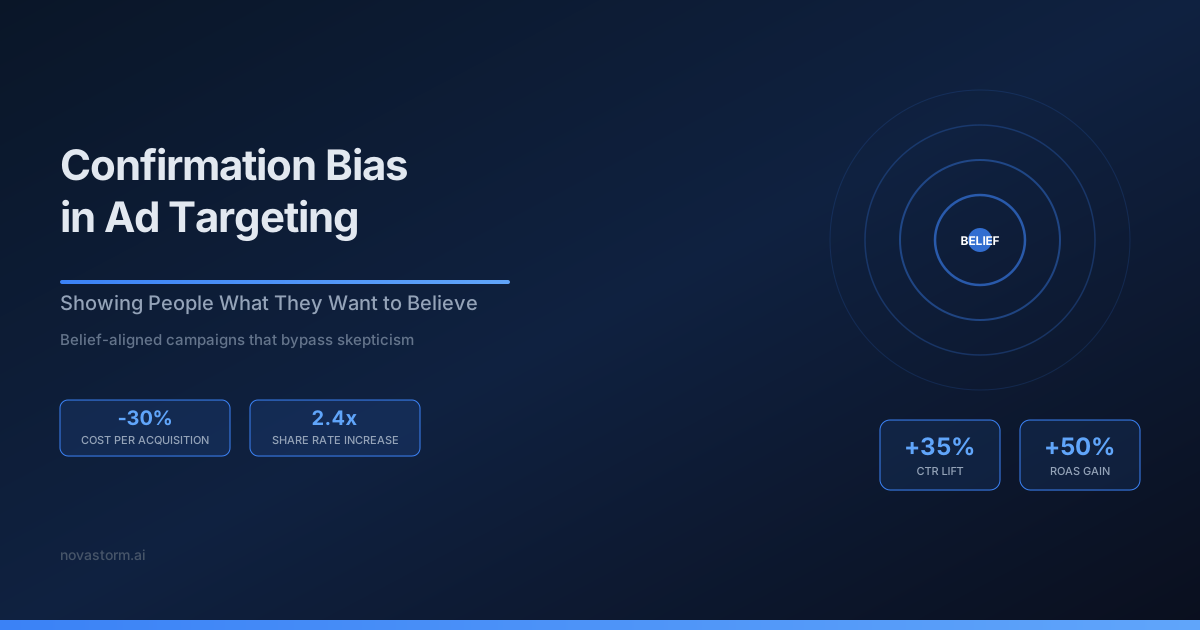
Confirmation Bias in Ad Targeting: Showing People What They Want to Believe
Turn customer language into truthful Meta ad hypotheses, retain contradictory feedback and test one message within a verified audience.
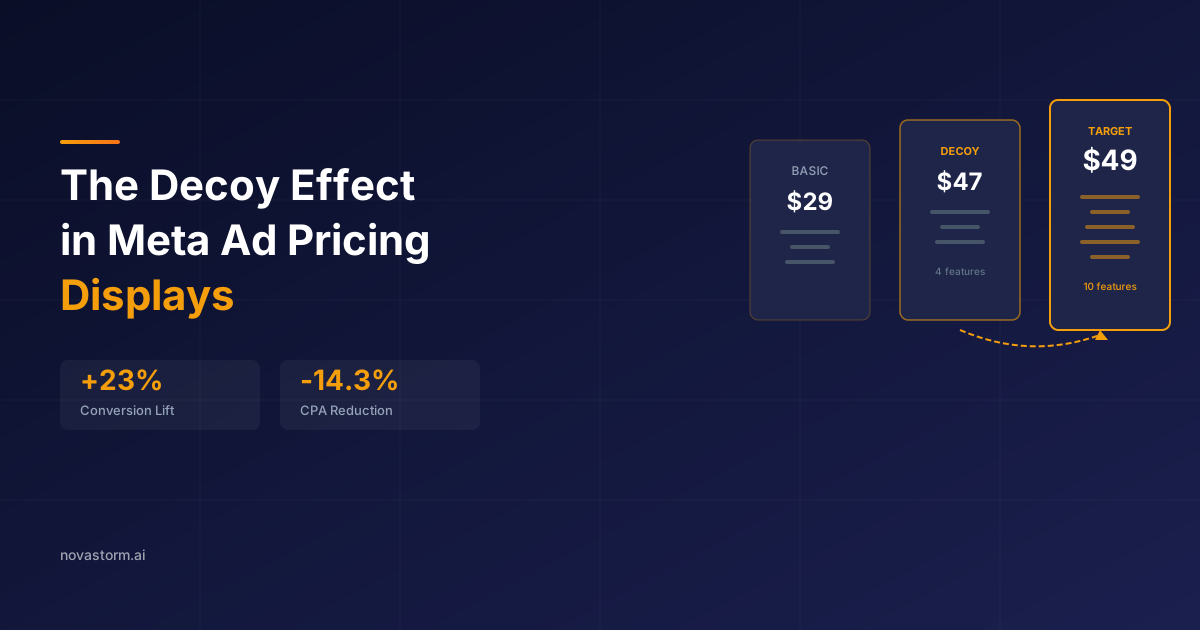
The Decoy Effect in Meta Ad Pricing Displays
Use the decoy effect as a testable pricing-display hypothesis with correct dominance, real offers and retained contribution rather than unsupported uplifts.