Skincare Ads on Meta: Before-After and Ingredient Marketing
Learn how to run skincare ads on Meta using before-after creative and ingredient marketing. Navigate policies, build trust, and achieve 4x+ ROAS for beauty brands.
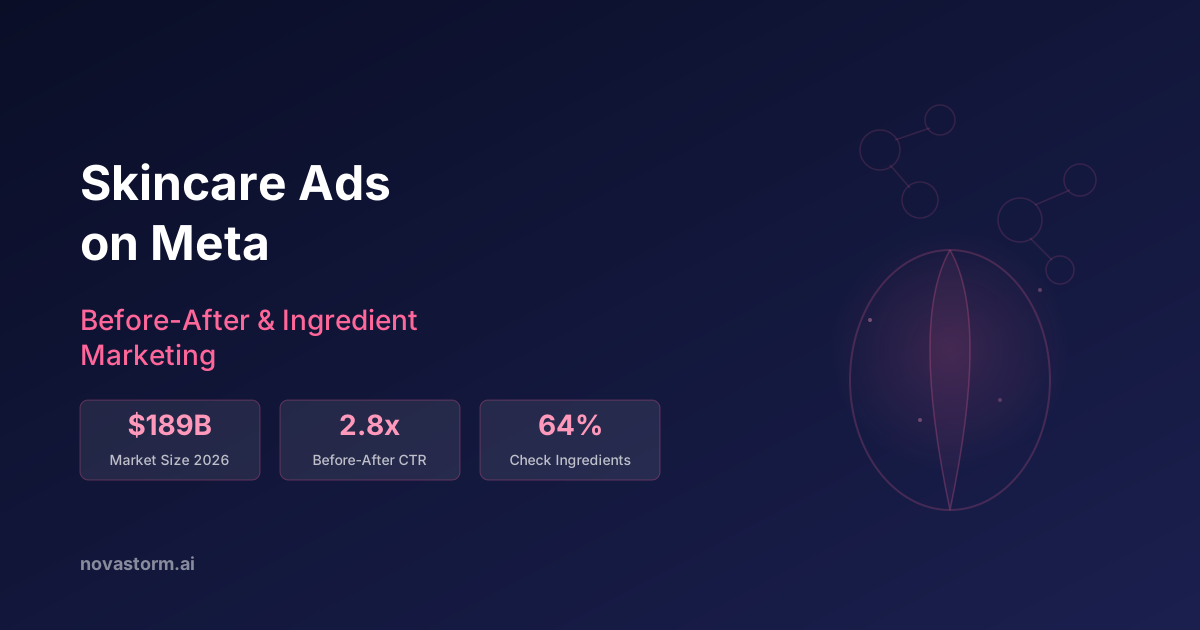
Skincare ads on Meta represent one of the fastest-growing e-commerce categories, with the global skincare market projected to reach $189 billion in 2026. Meta platforms account for 48% of all skincare brand discovery, making them the single most important advertising channel for beauty brands. Skincare ads on Meta succeed through two primary creative strategies: before-after transformation content and science-backed ingredient marketing, both of which must navigate Meta's specific advertising policies.
The skincare category occupies a unique position in digital advertising. Buyers are simultaneously emotional (seeking confidence and beauty) and rational (researching ingredients, reading studies, comparing formulations). The brands that bridge this gap, combining emotional transformation stories with credible ingredient science, consistently outperform those that rely on one approach alone.
Before-After Creative: Policy-Compliant Approaches
Before-after imagery is the most powerful conversion tool in skincare advertising, driving 2.8x higher click-through rates than standard product shots. However, Meta has strict policies around before-after content. Ads cannot imply unrealistic results, use manipulated images, or create negative self-perception. Understanding these boundaries is critical to running effective, compliant campaigns.
The compliant approach focuses on realistic, documented results. Use consistent lighting, angles, and backgrounds in before-after shots. Include timeframes ("Results after 8 weeks of daily use"). Add disclaimers where appropriate ("Individual results may vary"). Avoid side-by-side formats that Meta's automated review often flags; instead, use carousel formats or video transitions that show progress over time.
| Creative Approach | Policy Status | Avg CTR | Approval Rate | Best Practice |
|---|---|---|---|---|
| Side-by-side before/after | High risk | 2.4% | 55% | Avoid or use very subtle differences |
| Carousel timeline progression | Compliant | 2.1% | 92% | 3-5 cards showing gradual improvement |
| Video transition (same angle) | Compliant | 2.8% | 88% | 15-30s with clear timeframe |
| Customer testimonial with photos | Compliant | 1.9% | 95% | Real customers, verified reviews |
| Ingredient close-up + result | Compliant | 1.7% | 97% | Focus on science, not transformation |
Pro tip: Never use the word "cure" or imply medical treatment in skincare ads. Instead use phrases like "helps improve the appearance of," "supports skin health," or "visibly reduces." This keeps your ads within Meta's advertising policies while still communicating effectiveness.
Skincare Ads on Meta: Ingredient Marketing Strategy
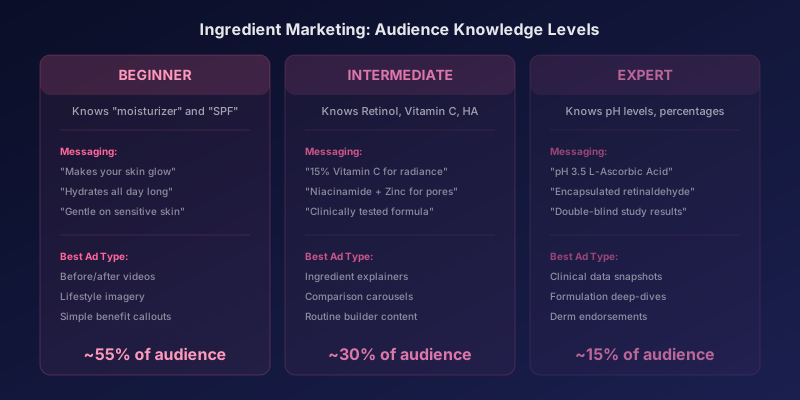
Ingredient marketing has become the dominant trend in skincare advertising. Consumers in 2026 are more ingredient-literate than ever, with 64% reporting they check ingredient lists before purchasing skincare products. Brands like The Ordinary proved that leading with ingredients rather than brand promises can build massive consumer trust.
The key to ingredient marketing on Meta is education without overwhelming. Your ad creative should highlight 1-2 hero ingredients per product, explain what they do in simple terms, and connect the ingredient to a tangible benefit the viewer cares about. Avoid jargon-heavy copy that only appeals to skincare enthusiasts; the majority of your audience needs accessible language.
- Hero ingredient spotlight: "Vitamin C: Your brightness booster. 15% L-Ascorbic Acid for visible radiance in 14 days"
- Ingredient comparison: "Retinol vs Bakuchiol: Which anti-aging ingredient is right for your skin?"
- Formulation story: "Why we pair Niacinamide with Zinc: The science behind our acne serum"
- Concentration callouts: "10% Azelaic Acid, clinical-grade concentration at a fraction of the price"
- Source storytelling: "Sustainably harvested sea buckthorn from Nordic coastal farms"
Audience Segmentation for Skincare Campaigns
Skincare audiences segment naturally by skin concern, making concern-based targeting the most effective approach. Rather than targeting "women interested in skincare," target by specific concerns: acne, aging, hyperpigmentation, dryness, or sensitivity. Each concern group responds to different messaging, ingredients, and creative styles.
Stop wasting ad budget
NovaStorm AI cuts Meta Ads CPA by 30% on average. No complex setup required.
| Skin Concern | Primary Demo | Key Ingredients | Best Creative | Avg ROAS |
|---|---|---|---|---|
| Acne/Breakouts | Women 16-30 | Salicylic acid, Niacinamide, BHA | Before-after, routine videos | 3.8x |
| Anti-aging | Women 35-55 | Retinol, Peptides, Vitamin C | Ingredient science, testimonials | 4.5x |
| Hyperpigmentation | Women 25-45 | Vitamin C, AHA, Tranexamic acid | Progress timeline carousels | 4.1x |
| Dryness/Sensitivity | Women 25-50 | Ceramides, Hyaluronic acid, Squalane | Texture shots, comfort messaging | 3.6x |
| General glow/wellness | Women 22-40 | Multi-ingredient serums | Lifestyle + UGC | 3.2x |
Building Trust Through Educational Content
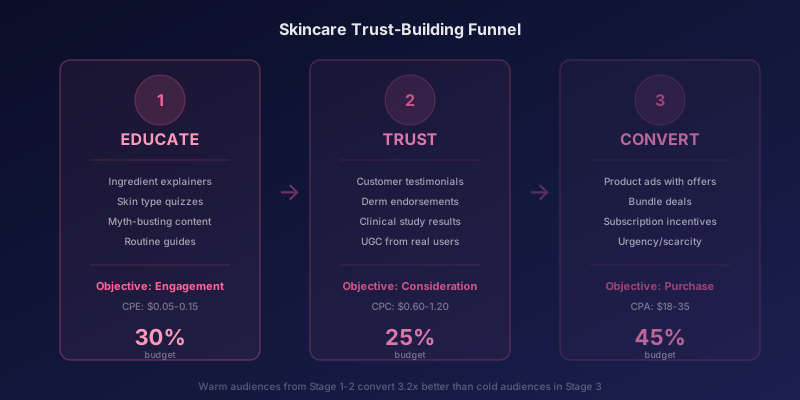
Skincare buyers are skeptical by nature. Years of overpromising by beauty brands have created a trust deficit that only transparent, educational marketing can overcome. The most effective Meta ad strategy for skincare brands combines direct-response ads with educational content that builds credibility over time.
Create a content ecosystem where educational posts, ingredient explainers, and dermatologist endorsements support your conversion ads. When a prospect sees your retargeting ad after engaging with an educational piece about hyaluronic acid, they are 3.2x more likely to convert than a cold audience member seeing the same ad.
Subscription and Replenishment Campaigns
Skincare is inherently a replenishment category. A bottle of serum lasts 6-8 weeks, creating a natural repurchase cycle. Smart Meta advertisers build subscription campaigns that reduce customer acquisition costs over time and increase lifetime value by 3-5x.
- First-purchase incentive: Offer 15-20% off the first order when subscribing to auto-replenishment
- Routine builder: Sell multi-product routines at a bundle discount to increase AOV and retention
- Refill reminders: Retarget past buyers at the expected product depletion date (6-8 weeks post-purchase)
- Subscription upgrade: Target existing single-product buyers with the full routine offering
- Gift subscriptions: Seasonal campaigns promoting skincare subscriptions as gifts
Pro tip: Use Meta's custom conversion events to track subscription sign-ups separately from one-time purchases. This allows you to optimize campaigns specifically for subscribers, who typically have 4-6x higher lifetime value than one-time buyers.
Scaling Skincare Ads with Automation
Skincare brands running concern-based targeting across multiple products can quickly accumulate dozens of active campaigns. Managing creative rotation, budget allocation by concern segment, and policy compliance monitoring becomes a full-time job. This is where automation tools like Novastorm AI deliver significant value.
Novastorm AI monitors ad approval rates across your skincare campaigns, alerting you immediately when creative is rejected so you can adjust before losing momentum. It also tracks creative fatigue by concern segment, automatically flagging when engagement drops and suggesting creative refresh cycles. For skincare brands running 20-50 active ad sets, this monitoring alone can recover 15-20% of wasted spend from fatigued creative running unnoticed.
Novastorm AI automates Meta Ads routine — from monitoring to optimization. Learn more at novastorm.ai
Disclaimer: This article was generated with the assistance of AI and reviewed by the NovaStorm AI team. While we strive for accuracy, we recommend verifying specific data points and consulting official sources (linked where available) for critical business decisions.
Ready to automate your Meta Ads?
NovaStorm AI takes full responsibility for your campaigns — from monitoring to optimization.
Start NowRelated Articles

AI Funnel Fingerprint Analysis for Meta Ads
Use AI-powered Meta Ads analytics to find funnel drop-offs and automate journey-specific creative for better conversions.

AI-Powered Meta Ads Lead Qualification for Sales
Learn how AI-powered Meta Ads lead qualification and conversation intelligence speed up sales handoff and improve lead quality.

AI-Powered Meta Ads Placement Exclusion Strategy
Learn how AI-powered Meta Ads placement optimization and exclusions can reduce wasted spend and improve campaign performance.