SEO and Paid Social: How They Complement Each Other
Explore how SEO and paid social complement each other to create a unified marketing strategy. Learn about keyword research for ads, retargeting search visitors, and cross-channel measurement.
SEO and Paid Social: How They Complement Each Other
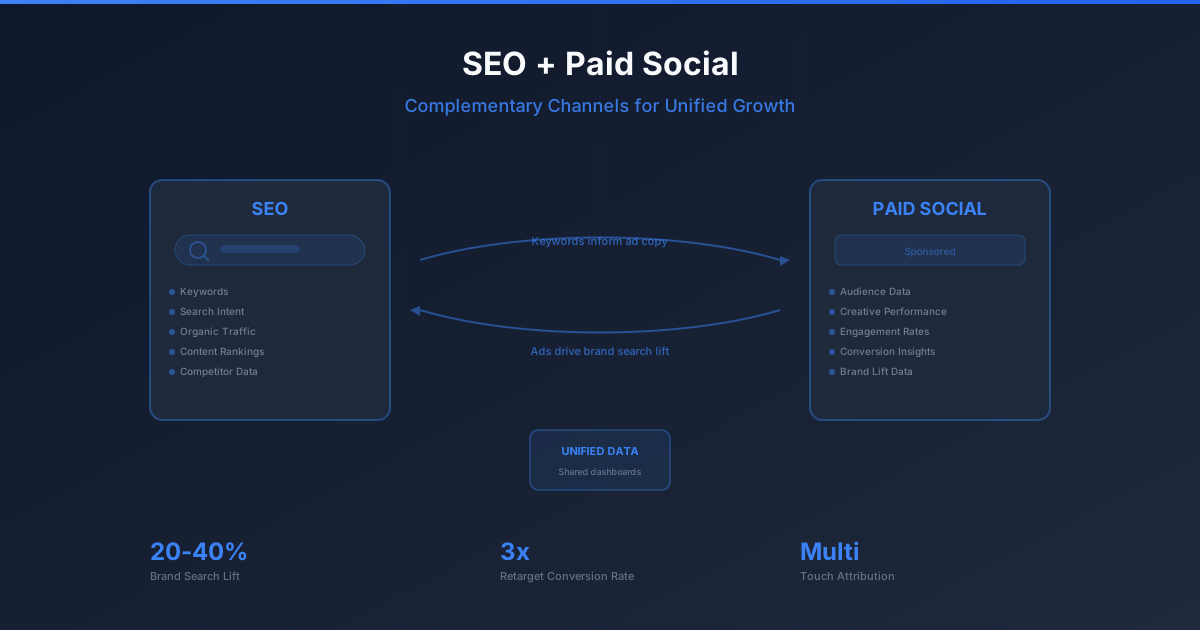
SEO and paid social are often treated as entirely separate disciplines, managed by different teams with different budgets and different goals. But this siloed approach leaves enormous value on the table. When SEO and paid social work together, each channel amplifies the other in ways that create compounding returns. Organic search data makes your ads smarter, and paid social campaigns boost your organic visibility.
The relationship between SEO and paid social is not about choosing one over the other. It is about recognizing that search behavior and social behavior are two phases of the same customer journey. Someone discovers your brand through a social ad, later searches for your product on Google, reads your SEO-optimized content, and then sees a retargeting ad that brings them back to convert. Understanding these interconnections is the key to creating a truly unified digital marketing strategy.
Keyword Research as the Foundation for Ad Copy
Your SEO keyword research is a goldmine for paid social ad copywriting. The phrases people type into search engines reveal their exact language, pain points, and desires. When you incorporate these search terms into your Meta ad copy, you speak directly in the language your audience already uses. This alignment between SEO and paid social copy creates a consistent experience across touchpoints.
Start by exporting your top-performing SEO keywords, especially those driving conversions. Identify the modifiers people use: words like best, affordable, fast, how to, and comparison. These modifiers reveal buying intent and emotional triggers. Incorporate them into your ad headlines and primary text. An ad headline that mirrors the exact phrase someone would search for creates an immediate sense of relevance.
Long-tail keywords are particularly valuable for paid social targeting. A keyword phrase like affordable project management software for small teams tells you exactly who is searching and what they care about. Transform this into a Meta ad headline: Project Management Built for Small Teams, and you have copy that resonates deeply because it matches real search behavior.
Search Intent Informing Ad Messaging Strategy
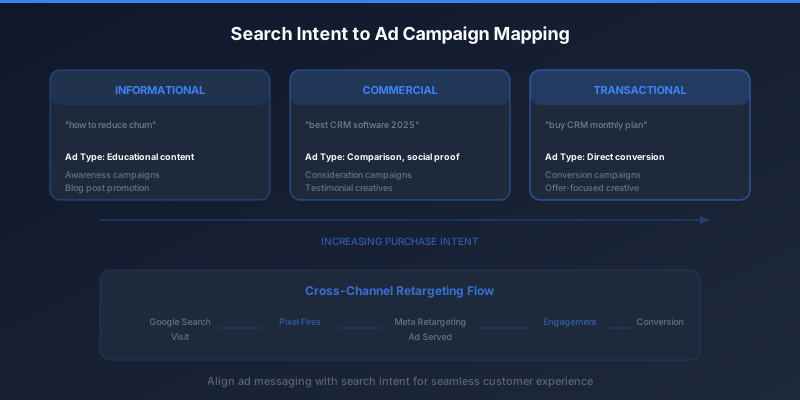
Understanding search intent is one of the most powerful ways SEO and paid social intersect. SEO professionals categorize search queries into informational, navigational, commercial, and transactional intent. This framework is equally valuable for structuring your ad campaigns and messaging hierarchy.
Informational intent queries like how to reduce customer churn indicate people in the early awareness stage. Target these individuals with educational content ads, not hard sales pitches. Commercial investigation queries like best CRM software 2025 signal comparison shopping. Serve these searchers ads that highlight your differentiators and include social proof. Transactional queries like buy CRM monthly plan indicate readiness to purchase. These audiences deserve direct conversion ads.
Map your ad creative to intent stages. Build separate ad sets for awareness, consideration, and conversion that mirror the informational-to-transactional intent spectrum from SEO. This ensures your paid social messaging is as precisely targeted as your organic search content, creating a seamless experience whether someone encounters your brand through search or social.
Retargeting Search Visitors Through Social Ads
One of the most effective bridges between SEO and paid social is retargeting your organic search visitors on Meta platforms. When someone finds your site through Google, they have demonstrated active intent, they were searching for something related to your business. Retargeting these visitors on Facebook and Instagram keeps your brand top of mind as they move through their decision process.
Create custom audiences based on specific landing page URLs. Someone who visited your pricing page through organic search is much warmer than someone who landed on a blog post. Segment these audiences and serve tailored retargeting ads. Pricing page visitors might see ads featuring a limited-time discount. Blog readers might see ads for a related downloadable resource.
The data works both ways. Track which organic landing pages generate the highest-quality retargeting audiences by measuring downstream conversion rates. If visitors from your comparison guide page convert at three times the rate of other organic pages when retargeted, that insight should inform both your SEO content strategy and your retargeting budget allocation.
Brand Search Lift From Paid Social Campaigns
One of the most measurable ways SEO and paid social complement each other is through brand search lift. When you run awareness campaigns on Meta, a percentage of people who see your ads will later search for your brand name on Google. This increased branded search volume is a direct, measurable impact of paid social on organic search performance.
Stop wasting ad budget
NovaStorm AI cuts Meta Ads CPA by 30% on average. No complex setup required.
Monitor your branded search volume in Google Search Console while running Meta awareness campaigns. You will typically see a noticeable increase in branded queries within one to two weeks of campaign launch. Some studies show that paid social campaigns can increase branded search volume by 20 to 40 percent, depending on spend level and audience targeting precision.
This brand search lift has cascading benefits for your SEO. Higher branded search volume signals to Google that your brand is growing in relevance and authority. Branded searches have near-perfect click-through rates to your site, which improves your overall organic click-through metrics. And visitors who arrive through branded search tend to engage more deeply, sending positive user experience signals that benefit your broader organic rankings.
Content Gap Filling With Paid Social Data
Your paid social campaigns generate a wealth of data about what resonates with your audience. Ad engagement metrics reveal which topics, angles, and formats generate the most interest. Use this data to identify content gaps in your SEO strategy. If a particular ad angle generates exceptionally high engagement, but you have no corresponding organic content, that represents an SEO opportunity.
A/B test ad copy variations to discover which messaging performs best, then create SEO content around winning themes. If ads highlighting cost savings outperform ads emphasizing features, develop blog content focused on ROI and cost optimization. The ad data gives you a rapid testing mechanism that would take months to replicate through organic content testing alone.
Conversely, your SEO data reveals content gaps for paid social. If your analytics show organic visitors searching for topics you rank for but do not advertise around, those topics might make excellent ad campaign themes. The intersection of high organic traffic and no paid presence often reveals untapped opportunities where SEO and paid social can work together.
Data Sharing Between SEO and Paid Social Teams
Breaking down data silos between SEO and paid social teams is essential for realizing the full potential of cross-channel synergy. SEO teams have access to keyword data, search volume trends, competitor ranking analysis, and content performance metrics. Paid social teams have access to audience demographics, engagement benchmarks, creative performance data, and conversion insights.
Establish regular data sharing sessions where both teams present their top insights. SEO teams should share which keywords are trending, what competitors are ranking for, and which content topics drive the most engaged organic visitors. Paid social teams should share which audience segments respond best, which ad formats drive the highest engagement, and which landing pages produce the best conversion rates.
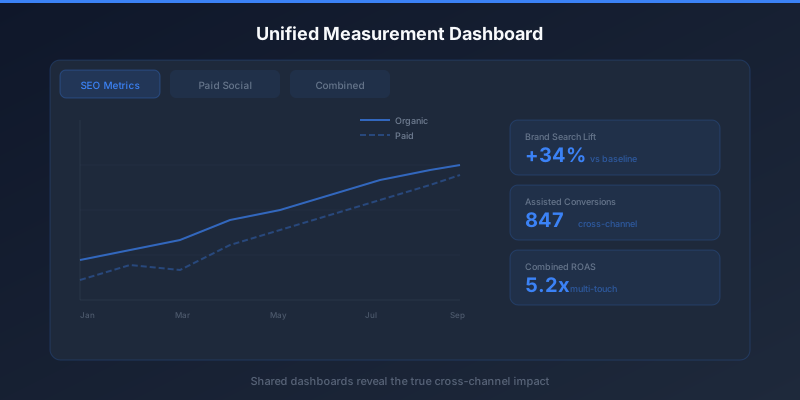
Create shared dashboards that display metrics from both channels side by side. When both teams can see how branded search volume correlates with ad spend, or how organic traffic trends relate to paid social engagement, the connections between SEO and paid social become visible and actionable. Tools like Google Data Studio or Tableau can pull data from both Google Analytics and Meta Ads to create unified views.
Unified Measurement and Attribution
The final piece of the SEO and paid social integration puzzle is unified measurement. Traditional attribution models assign conversion credit to the last touchpoint, which almost always favors either search or direct traffic. This dramatically undervalues the contribution of paid social in the awareness and consideration stages of the customer journey.
Implement multi-touch attribution that tracks the complete path from first impression to conversion. A typical customer journey might start with a Meta awareness ad, continue with an organic search visit, include a retargeting ad click, and conclude with a direct visit purchase. Each touchpoint deserves credit, and your measurement framework should reflect this reality.
Use assisted conversion reports to understand how each channel supports the other. You will likely find that paid social frequently assists organic search conversions and vice versa. This data justifies continued investment in both channels and provides the evidence needed to maintain integrated strategies even when budget pressure mounts.
Track incrementality by running lift tests. Pause paid social campaigns for a defined period and measure the impact on organic search metrics. You may find that branded search volume drops, organic traffic from non-branded queries decreases as retargeting stops, and overall conversion rates decline. These lift tests quantify the true impact of the relationship between SEO and paid social.
The brands that dominate their markets are those that have stopped treating SEO and paid social as competing budget line items. Instead, they see them as complementary channels that share data, audiences, and strategic objectives. Start by connecting your keyword data to your ad copy, retarget your organic visitors, measure brand search lift, and build shared dashboards. The synergy between these channels will compound over time, creating a marketing engine that is greater than the sum of its parts.
Novastorm AI automates Meta Ads routine — from monitoring to optimization. Learn more at novastorm.ai
Disclaimer: This article was generated with the assistance of AI and reviewed by the NovaStorm AI team. While we strive for accuracy, we recommend verifying specific data points and consulting official sources (linked where available) for critical business decisions.
Ready to automate your Meta Ads?
NovaStorm AI takes full responsibility for your campaigns — from monitoring to optimization.
Start NowRelated Articles

AI Funnel Fingerprint Analysis for Meta Ads
Use AI-powered Meta Ads analytics to find funnel drop-offs and automate journey-specific creative for better conversions.

AI-Powered Meta Ads Lead Qualification for Sales
Learn how AI-powered Meta Ads lead qualification and conversation intelligence speed up sales handoff and improve lead quality.

AI Workflows for Cross-Platform Ad Repurposing
Learn how AI-powered Meta Ads creative adapter workflows improve creative repurposing, consistency, and performance across platforms.