Scarcity and Urgency in Meta Ads: Ethical Techniques That Convert
Learn ethical scarcity and urgency techniques for Meta ads including countdown timers, limited-quantity messaging, seasonal urgency, and FTC compliance rules.
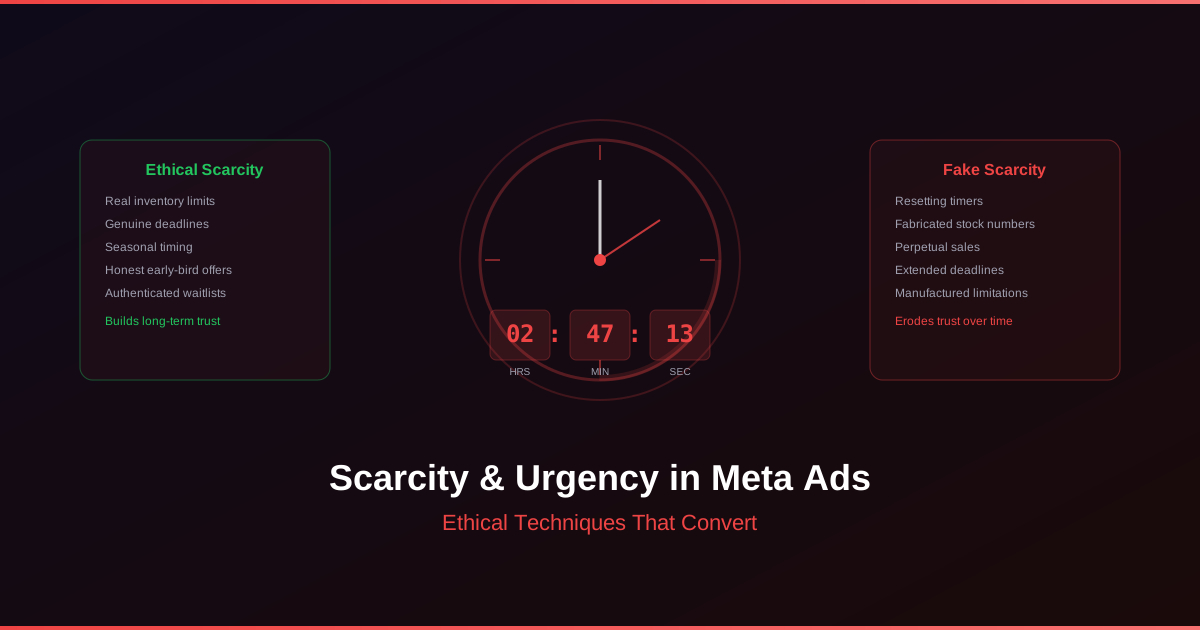
Scarcity and Urgency in Meta Ads: Ethical Techniques That Convert
Scarcity and urgency are among the most powerful psychological drivers in advertising. When people believe something is limited in quantity or time, their decision-making accelerates dramatically. The brain shifts from deliberation mode to action mode, driven by loss aversion — the deeply wired tendency to weigh potential losses more heavily than equivalent gains. For Meta advertisers, scarcity and urgency in Meta ads can be the difference between a campaign that delivers modest results and one that drives exceptional conversion rates.
But there is a critical distinction between ethical scarcity techniques and deceptive ones. Fake countdown timers that reset on every visit, fabricated stock numbers, and artificial limitations erode consumer trust and can violate advertising regulations. The most effective long-term strategies use genuine scarcity and real urgency to motivate action while maintaining brand integrity.
Real Versus Fake Scarcity: The Trust Factor
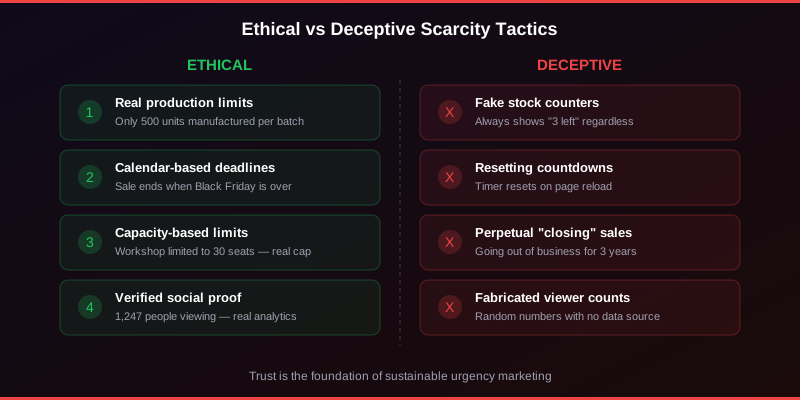
Real scarcity exists when a genuine limitation constrains supply. A product with limited production runs, a service with capped enrollment, or an event with finite seating all represent authentic scarcity. When communicated honestly in Meta ads, this scarcity creates legitimate urgency that respects the consumer's intelligence.
Fake scarcity, by contrast, manufactures limitations that do not exist. Perpetual going-out-of-business sales, countdown timers that restart when the page reloads, and stock counters showing low numbers for products with unlimited supply all fall into this category. While fake scarcity can generate short-term conversions, it carries significant risks. Consumers who discover the deception become vocal critics. Social media amplifies negative experiences rapidly. And regulatory bodies increasingly scrutinize misleading urgency claims.
The distinction matters for campaign longevity. Brands that build their scarcity and urgency in Meta ads around genuine limitations create a reputation for honesty that compounds over time. When they say an offer is limited, their audience believes it because past claims have proven true. This trust premium makes every subsequent urgency-based campaign more effective.
Countdown Timers and Time-Bound Offers
Countdown timers are one of the most visually compelling urgency mechanisms available. They create a tangible, moving representation of time running out, which activates the brain's urgency circuitry more effectively than static text. When used in Meta ad creative — particularly in video ads and Stories — animated countdown elements consistently improve click-through rates.
The effectiveness of a countdown timer depends on the credibility of the deadline. A 24-hour flash sale that genuinely ends at midnight creates real pressure. A seasonal promotion tied to a specific date — Black Friday, end of quarter, product launch — has inherent legitimacy. The countdown must connect to a meaningful event, not an arbitrary expiration designed purely to create pressure.
Best practices for countdown-based campaigns include clear communication of what happens when the timer expires, consistent messaging across all touchpoints, and follow-through on the deadline. If the ad says the sale ends Friday, it must actually end Friday. Extending deadlines repeatedly trains the audience to ignore future urgency claims, undermining the entire strategy of scarcity and urgency in Meta ads.
Limited-Quantity Messaging That Works
Quantity-based scarcity operates differently from time-based urgency. While time-based urgency creates a deadline that affects everyone equally, quantity-based scarcity creates competition among buyers. The message shifts from you are running out of time to other people are buying what you want, which activates both loss aversion and competitive instincts.
Effective limited-quantity messaging is specific rather than vague. Only 47 units remaining is more compelling than limited stock because specificity signals authenticity. Round numbers feel manufactured while odd numbers feel real. Dynamic quantity displays that update in real time create an additional layer of urgency as viewers watch availability decrease.
For Meta ads specifically, limited-quantity messaging works best in retargeting campaigns where the viewer has already expressed interest. Someone who visited the product page and sees an ad saying the item they viewed is nearly sold out experiences a powerful combination of familiarity and scarcity. This combination produces some of the highest conversion rates in digital advertising.
Seasonal Urgency and Early Bird Strategies
Stop wasting ad budget
NovaStorm AI cuts Meta Ads CPA by 30% on average. No complex setup required.
Seasonal urgency leverages calendar-driven deadlines that everyone intuitively understands. Holiday shopping deadlines, back-to-school timing, tax season, and quarterly business cycles all create natural urgency windows that do not need to be manufactured. Meta advertisers can plan campaigns around these windows with authentic urgency messaging.
Early bird offers combine scarcity with reward. By offering a better price or exclusive bonus to those who act first, the campaign creates urgency while also providing genuine value. The early bird structure works because it rewards decisive action rather than punishing delay — a subtle but important psychological distinction. People feel they are gaining something special rather than losing something they already had.
Waitlist psychology represents another form of ethical scarcity. When a product or service genuinely has limited availability, a waitlist communicates both scarcity and demand. Meta ads that promote waitlist enrollment create urgency through social proof — the existence of a waitlist implies that others value the product enough to wait for it. This positions the product as desirable rather than merely available.
Recognizing and Avoiding Urgency Fatigue
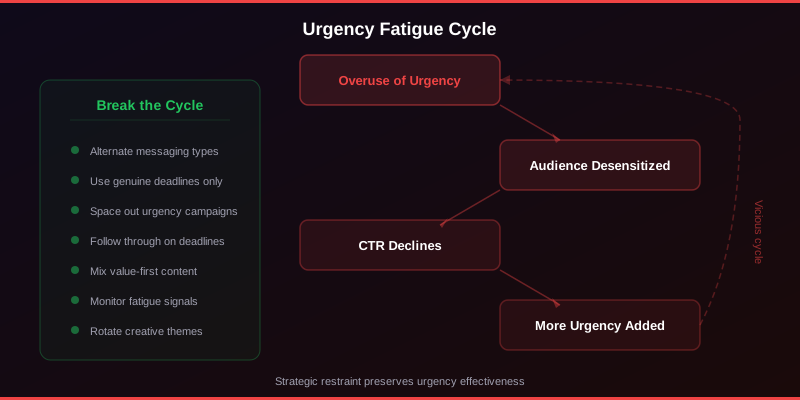
Urgency fatigue occurs when an audience is exposed to so many urgency signals that they stop responding to any of them. It is the psychological equivalent of the boy who cried wolf — when every ad screams LAST CHANCE and HURRY, none of them feel genuinely urgent. This is a growing problem in digital advertising as more brands adopt urgency tactics without strategic restraint.
The symptoms of urgency fatigue in campaign data include declining click-through rates on urgency-themed ads, increasing frequency with decreasing response, and lower conversion rates despite strong urgency messaging. When these patterns emerge, the audience has become desensitized, and more urgency will not fix the problem.
Combating urgency fatigue requires variety and restraint. Not every campaign needs scarcity and urgency in Meta ads as its primary driver. Alternating between value-based messaging, educational content, social proof, and urgency creates a rhythm that keeps each approach effective. When urgency is used sparingly and authentically, it retains its power to drive immediate action.
Compliance, FTC Rules, and Platform Policies
The Federal Trade Commission requires that advertising claims, including scarcity and urgency claims, be truthful and substantiated. An ad claiming only 10 left must reflect actual inventory. A deadline advertised as final must actually be the end of the offer. The FTC has taken enforcement action against brands using deceptive urgency tactics, and penalties can include fines, required disclosures, and public consent orders.
Meta's advertising policies add another layer of compliance requirements. Ads must not contain deceptive, false, or misleading content, including deceptive claims related to product characteristics or availability. Meta's automated review system and human reviewers both evaluate ads for misleading urgency claims, and violations can result in ad rejection, account restrictions, or permanent bans.
Best practices for compliance include documenting the basis for scarcity claims, ensuring consistency between ad messaging and landing page content, training team members on advertising regulations, and conducting regular audits of active campaigns. A compliance-first approach does not limit creativity — it channels it toward authentic, sustainable urgency strategies.
Building a Sustainable Urgency Framework
The most effective approach to scarcity and urgency in Meta ads is building a structured framework that maps urgency types to campaign objectives and calendar events. This framework ensures that urgency is deployed strategically rather than reactively, with each instance backed by genuine limitations.
A quarterly urgency calendar might include genuine product launches with limited first-run availability, seasonal promotions tied to real calendar events, early bird pricing for upcoming events or releases, and genuine flash sales with strictly enforced deadlines. Each urgency event should be separated by periods of non-urgency messaging to prevent fatigue and maintain the signal strength of scarcity claims.
Measurement should track not just immediate conversion rates but also long-term metrics like repeat purchase rate, customer lifetime value, and brand sentiment. A scarcity campaign that drives high initial conversions but generates returns and negative reviews is not truly successful. The goal is urgency that converts today while building trust for tomorrow — a sustainable cycle where each honest scarcity claim strengthens the brand's credibility for the next one.
Novastorm AI automates Meta Ads routine — from monitoring to optimization. Learn more at novastorm.ai
Disclaimer: This article was generated with the assistance of AI and reviewed by the NovaStorm AI team. While we strive for accuracy, we recommend verifying specific data points and consulting official sources (linked where available) for critical business decisions.
Ready to automate your Meta Ads?
NovaStorm AI takes full responsibility for your campaigns — from monitoring to optimization.
Start NowRelated Articles

AI Funnel Fingerprint Analysis for Meta Ads
Use AI-powered Meta Ads analytics to find funnel drop-offs and automate journey-specific creative for better conversions.

AI-Powered Meta Ads Lead Qualification for Sales
Learn how AI-powered Meta Ads lead qualification and conversation intelligence speed up sales handoff and improve lead quality.

AI Workflows for Cross-Platform Ad Repurposing
Learn how AI-powered Meta Ads creative adapter workflows improve creative repurposing, consistency, and performance across platforms.