Referral Program Ads on Meta: Turning Customers Into Advocates
Discover how to promote referral programs through Meta Ads and turn happy customers into brand advocates. Targeting, incentives, and creative strategies inside.
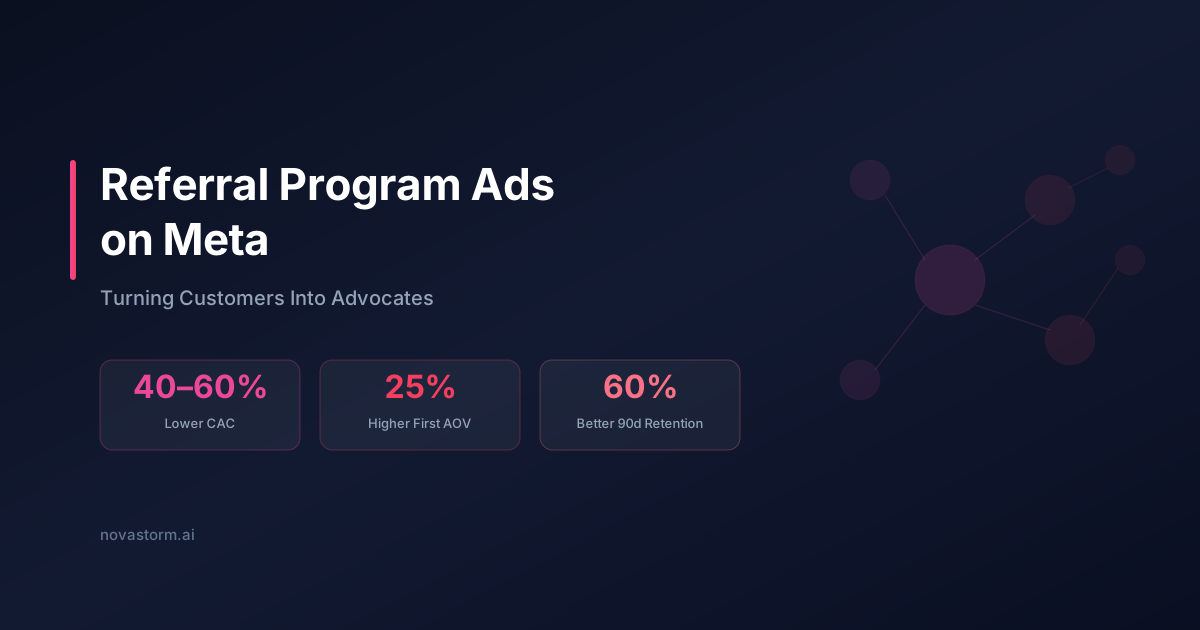
Referred customers convert at higher rates, spend more on their first order, and retain longer than customers acquired through any other channel. Yet most brands treat their referral program as an afterthought — a small link buried in a post-purchase email. Referral program ads on Meta change this dynamic by actively promoting your referral offer to the customers most likely to share it.
When you use Meta's powerful targeting to put referral prompts in front of your happiest, most engaged customers at the right moment, you transform passive satisfaction into active advocacy. The result is a self-reinforcing acquisition loop where every new customer has the potential to bring in two or three more.
The Economics of Referral Program Ads on Meta
Referral marketing operates on fundamentally different economics than traditional paid acquisition. Instead of paying Meta directly for each new customer, you invest in prompting existing customers to do the selling for you. The cost structure shifts from cost-per-click to cost-per-advocacy, which typically runs 40 to 60 percent lower.
| Metric | Standard Prospecting | Referral Program Ads |
|---|---|---|
| Cost Per Acquisition | $35 – $85 | $12 – $30 |
| First Purchase Conversion | 2% – 5% | 8% – 15% |
| Average First Order Value | Baseline | 25% higher |
| 90-Day Retention Rate | 25% – 35% | 45% – 60% |
| Lifetime Value | Baseline | 16% – 25% higher |
These numbers make referral program ads on Meta one of the most capital-efficient growth strategies available. You pay a modest amount to remind customers about your referral offer, they share it with friends who already trust their judgment, and those friends convert at dramatically higher rates.
Identifying Your Best Potential Advocates
Not every customer is equally likely to refer. Research consistently shows that advocacy follows a power law — a small percentage of customers generate the majority of referrals. Your Meta targeting should prioritize these high-potential advocates.
- Repeat buyers (3+ purchases): They have demonstrated sustained satisfaction with your brand.
- Recent five-star reviewers: They have publicly expressed positive sentiment and are primed to advocate.
- High social engagement: Customers who like, comment, or share your organic posts have established sharing behavior.
- Recent large orders: Customers who just made a significant purchase are experiencing peak excitement.
- NPS promoters (score 9–10): If you collect Net Promoter Scores, target those who rate you highest.
Create Custom Audiences for each advocate segment. Layer these with engagement signals from your Meta Pixel — customers who visited multiple product pages, spent significant time on site, or added multiple items to cart show higher advocacy propensity.
Designing Referral Incentives That Motivate Sharing
The incentive structure determines whether your referral program ads on Meta generate casual interest or active participation. Two-sided incentives — where both the referrer and the friend receive a reward — consistently outperform one-sided offers.
The referrer reward should feel like genuine appreciation, not a transaction. Cash-equivalent rewards like store credit tend to outperform percentage discounts because they feel more tangible. The friend reward should remove a barrier to first purchase, typically through a meaningful discount or free shipping.
- Give $20, Get $20: Both parties receive store credit. Simple, clear, and symmetrical.
- Give 25% off, Get $15 credit: Friend gets a first-purchase discount, referrer earns credit for their next order.
- Give free product, Get free product: Both parties receive a specific item. Works well for consumable products.
- Tiered rewards: Referrers earn escalating rewards (first referral $10, second $15, third $25).
- Charity component: For every referral, a donation is made. Appeals to values-driven customers.
Test your referral incentive generosity using Meta's A/B testing. Run identical ads to similar audiences with different reward amounts. Often, a modest increase in reward value (from $15 to $20) produces a disproportionate increase in referral volume.

Creative Formats That Drive Referral Action
Stop wasting ad budget
NovaStorm AI cuts Meta Ads CPA by 30% on average. No complex setup required.
Referral program ads on Meta must accomplish two things simultaneously: remind customers that the program exists and make sharing feel effortless. The creative should communicate the incentive clearly while reducing perceived effort to near zero.
Video testimonials from existing referrers perform exceptionally well. A 15-second clip of a real customer explaining how they earned rewards by sharing with friends creates both social proof and aspiration. Pair this with a clear overlay showing the exact reward amount and a direct link to their unique referral dashboard.
| Creative Format | Best For | Average Share Rate |
|---|---|---|
| Video testimonial | Building social proof | 4.2% |
| Static with reward breakdown | Clarity and simplicity | 3.1% |
| Carousel (how it works) | Education and objection handling | 3.5% |
| Story ad with swipe-up | Impulse sharing | 5.8% |
| Reels with UGC style | Authenticity and relatability | 4.7% |
Optimizing the Referral Funnel from Ad to Conversion
The ad is only the first touchpoint. Once a customer clicks, the landing experience must make referring as frictionless as possible. Every additional step between ad click and referral share reduces completion rates by 20 to 30 percent.
Ideal referral landing pages pre-populate the customer's unique referral link and offer one-tap sharing to WhatsApp, Messenger, SMS, email, and social platforms. Display a dashboard showing their referral history, pending rewards, and earned credits. This gamification element encourages repeat referrals.
Mobile optimization is non-negotiable. Over 85 percent of Meta ad clicks originate from mobile devices. Ensure your referral sharing flow works flawlessly on phones — pre-formatted share messages, deep links that open directly in messaging apps, and one-tap copy for the referral link.
Measuring and Scaling Referral Program Ads
Tracking referral program ads on Meta requires connecting ad exposure data with referral program backend data. Standard Meta pixel events track the click and landing page visit, but you need server-side tracking to attribute actual referrals and referred customer purchases back to specific ads.
- Cost per referral share: Ad spend divided by the number of customers who shared their referral link.
- Referral conversion rate: Percentage of referred friends who complete a purchase.
- Viral coefficient: Average number of new customers generated per referrer per campaign.
- Referral CAC: Total cost (ad spend plus rewards) divided by referred customers acquired.
- Referred customer LTV: Lifetime value comparison between referred and non-referred customers.
Once you identify your highest-performing advocate segments and creative combinations, scale aggressively. Referral program ads on Meta have natural scaling limits — your advocate pool is finite — but expanding to Lookalike Audiences based on top referrers can extend reach while maintaining quality.
Automating Referral Promotion for Continuous Growth
The most effective referral programs run as always-on automated workflows. When a customer hits a satisfaction milestone — a positive review, a third purchase, high engagement — they automatically enter a referral promotion sequence on Meta. This ensures you reach every potential advocate at the moment of peak enthusiasm.
Novastorm AI automates the entire referral promotion workflow — from audience syncing and creative rotation to budget optimization and performance monitoring. Automated triggers ensure referral ads reach customers at optimal moments, while smart budget allocation shifts spend toward the advocate segments generating the highest viral coefficients.
Referral program ads on Meta transform your happiest customers into your most effective sales force. By targeting high-potential advocates, offering compelling two-sided incentives, creating frictionless sharing experiences, and automating the workflow, you build a self-reinforcing growth engine that compounds over time.
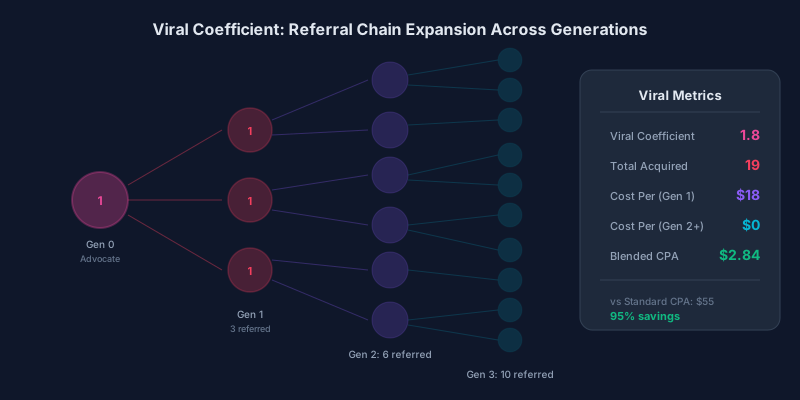
Novastorm AI automates Meta Ads routine — from monitoring to optimization. Learn more at novastorm.ai
Disclaimer: This article was generated with the assistance of AI and reviewed by the NovaStorm AI team. While we strive for accuracy, we recommend verifying specific data points and consulting official sources (linked where available) for critical business decisions.
Ready to automate your Meta Ads?
NovaStorm AI takes full responsibility for your campaigns — from monitoring to optimization.
Start NowRelated Articles

AI Funnel Fingerprint Analysis for Meta Ads
Use AI-powered Meta Ads analytics to find funnel drop-offs and automate journey-specific creative for better conversions.

AI-Powered Meta Ads Lead Qualification for Sales
Learn how AI-powered Meta Ads lead qualification and conversation intelligence speed up sales handoff and improve lead quality.

AI-Powered Meta Ads Placement Exclusion Strategy
Learn how AI-powered Meta Ads placement optimization and exclusions can reduce wasted spend and improve campaign performance.