

The Paradox of Choice in Meta Ads: Test Clearer Product Selection
Test choice reduction by distinguishing narrative cards from assortment decisions, using truthful recommendations and retained-contribution outcomes.
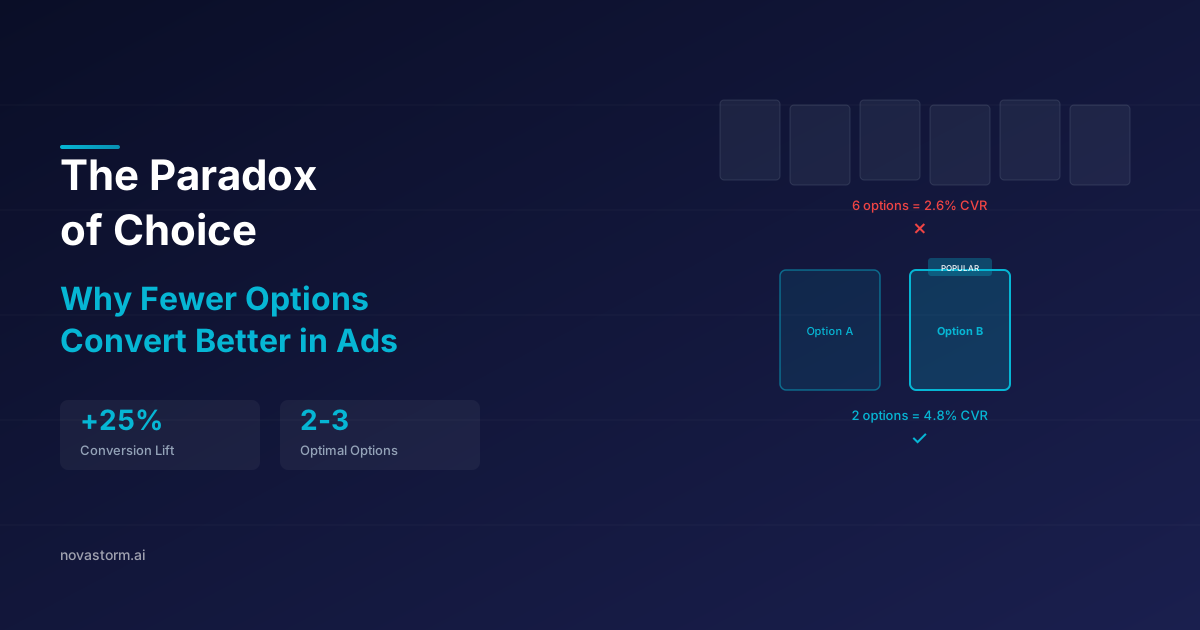
Reducing options may help a buyer make a relevant decision, but more choice is not universally harmful. Iyengar and Lepper (2000) studied choice and motivation in three experiments, including a jam-selection setting. That result is a reason to test your decision design, not a transferable Meta conversion guarantee.
Correct the comparison count
If every pair among n options were compared once, the count is n × (n − 1) / 2. Two options give one pair, four give six and six give fifteen. This grows quadratically, not exponentially. Buyers do not necessarily inspect every pair, so the formula is not a measurement of cognitive effort or probability of abandonment.
Separate story cards from assortment choices
| Creative structure | What the buyer decides | Useful check |
|---|---|---|
| Five cards explain one product | One product/offer decision | Is each card useful and independently understandable? |
| Five cards offer different products | Assortment selection plus purchase | Are differences and fit criteria clear? |
| Two plan cards | Price/features/commitment tradeoff | Are both real and material conditions visible? |
| One product with many CTA paths | Navigation/action selection | Is the primary next step clear? |
A longer carousel telling one story is not automatically five independent product choices. Do not cap every carousel at three cards or assume the dynamic catalog can always be restricted to three most-viewed items. Inspect the actual product set, format controls and saved preview; use only supported settings.
A completed curation brief
Stop wasting ad budget
NovaStorm AI cuts Meta Ads CPA by 30% on average. No complex setup required.
Hypothetical backpack store: compare a current six-model assortment with three models labeled by factual capacity and intended use: “20 L day trips,” “35 L overnight trips,” and “50 L longer packing.” These are teaching specifications, usable only if the products support them. A “Most Popular” badge needs a defined, dated sales/selection ledger; otherwise explain fit without a popularity claim.
Keep the omitted models accessible where appropriate, and document whether curation changes availability, offer or merely presentation. Removing a high-margin niche product could reduce total contribution even if the visible conversion rate rises.
Test a commercial outcome
Synthetic worksheet: control yields 40 retained orders at $30 contribution each, or $1,200. Curated display yields 50 at $20 each, or $1,000. Before production/media costs it gives $200 less contribution despite more orders. This is an arithmetic example, not a reported 560-campaign study.
- Allocate eligible comparable visitors/traffic using a prespecified design and maintain consistent pricing and stock.
- Declare retained contribution per assigned visitor, returns and satisfaction measures, outcome maturity and maximum loss.
- Include production cost and uncertainty; sample planning depends on the meaningful effect and baseline variability.
- Report whether a changed assortment, clearer labeling or another intervention drove the test. Do not infer a cause from card count alone.
Prepare the truthful curation message and campaign draft in NovaStorm, then review saved product/destination fields and owner-approved labels before publication. Catalog-control and popularity verification remain separate checks.
Published by NovaStorm AI. Worked examples and proposed tests are labeled in the article.
Disclaimer: This article was generated with the assistance of AI and reviewed by the NovaStorm AI team. While we strive for accuracy, we recommend verifying specific data points and consulting official sources (linked where available) for critical business decisions.
Ready to automate your Meta Ads?
NovaStorm AI takes full responsibility for your campaigns — from monitoring to optimization.
Start NowMore on Buyer psychology

Cognitive Load Theory: Simplifying Your Meta Ad Message
Review Meta ad clarity with a seven-second usability probe, a before-and-after message example and quality outcomes that preserve material disclosures.
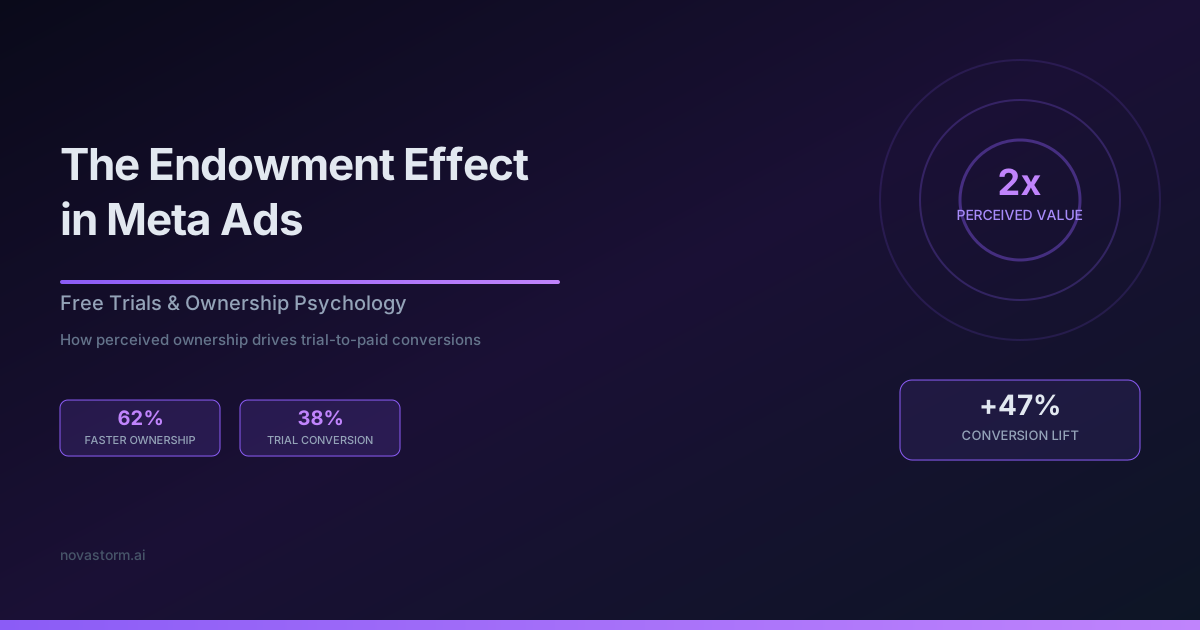
The Endowment Effect in Meta Ads: Free Trials and Ownership Psychology
Test ownership language in trial ads with a single copy change, confirmed payment and clear voluntary cancellation terms.
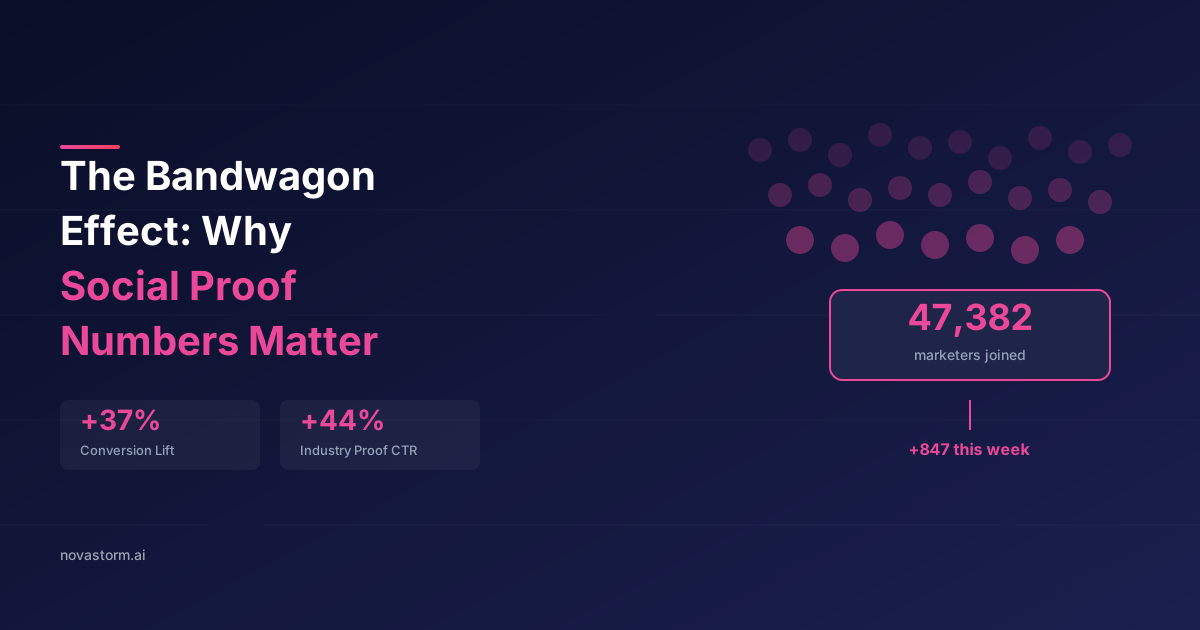
The Bandwagon Effect: Why Social Proof Numbers Matter in Ads
Audit social-proof numbers with a dated claim register and correct CTR comparisons, then test retained contribution with approved evidence.

The Decoy Effect in Meta Ad Pricing Displays
Use the decoy effect as a testable pricing-display hypothesis with correct dominance, real offers and retained contribution rather than unsupported uplifts.