

Neuromarketing for Meta Ads: Test One Visual Attention Hypothesis
Turn a visual attention idea into one honest creative hypothesis; compare mature purchase cost without claiming neuroscience or guaranteed sales.
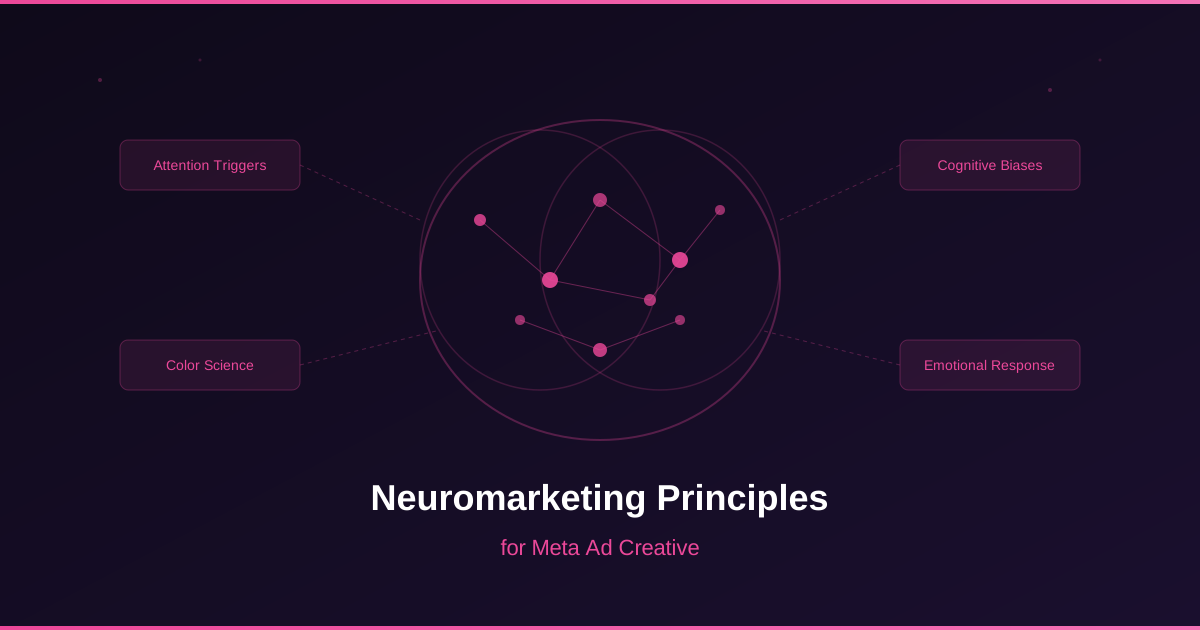
For a Meta creative decision, “neuromarketing” is useful only if it becomes a specific, testable design choice. Attention is not a sale, and a predicted gaze map is not a measurement of your audience’s brain. This guide selects one visual treatment and evaluates its commercial result.
Choose one variable: offer contrast
Hypothesis: placing the same truthful offer in a distinct high-contrast panel makes its terms easier to notice and may improve retained purchase cost. The treatment changes the offer panel’s background contrast only. It does not also add a new face, urgency phrase, headline and price; those would make the comparison ambiguous.
| Creative element | Control | Treatment |
|---|---|---|
| Product and image | Same approved backpack photograph | Same photograph and crop |
| Headline | A backpack for your daily commute | Identical |
| Offer and terms | Workshop preorder closes October 20 at 18:00 UTC; dispatch from November 5 | Identical verified terms |
| Action copy | See preorder details | Identical |
| One design change | Offer panel blends into background | Offer panel has a distinct contrasting background |
This is a fictional creative brief, not an actual preorder or customer advertisement. Publish the deadline only if that workshop really has that closing time and dispatch commitment. If the offer is always available, use evergreen details instead. Stop the deadline creative when the deadline expires; never reset a countdown to manufacture scarcity.
What the design does and does not establish
You can check that text is readable at the actual placement size and that product, terms and action are unambiguous. You cannot infer a reaction time, emotional state or conversion lift from a color name. F- and Z-shaped reading paths can be design hypotheses, but this article supplies no eye-tracking study demonstrating them for this placement.
No neuroscience percentages or millisecond rankings are used here. A reaction-time comparison would need a named experiment, task, participants, conditions and uncertainty; smaller times would mean faster responses only under the same measurement definition. Do not replace missing methodology with a decorative brain diagram.
Stop wasting ad budget
NovaStorm AI cuts Meta Ads CPA by 30% on average. No complex setup required.
A complete test card
- Eligibility: people eligible for this product and market, with the same truthful offer and landing page. Use stable assignment and an available experiment method; ordinary algorithmic ad delivery is not proof of random assignment.
- Variable: offer-panel contrast. Predeclare exposure cap, target decision precision, outcome delay and stopping rule before launch. Obtain approved creative rights and verify the actual placement previews.
- Primary outcome: mature retained purchases and cost per retained purchase under a stated spend scope. Guardrails: contribution, cancellations, refund rate and complaints about the deadline.
- Diagnostic measures: clicks or video attention where applicable. Treat them as clues about the mechanism, not as substitute revenue.
- Decision: compare mature outcomes with uncertainty and data-quality checks. If the deadline ends before sufficient evidence accumulates, stop the offer and report the test as inconclusive; do not extend scarcity merely to finish a sample.
For illustration, control spends $200 and produces 10 retained purchases: CPA $20. Treatment spends $200 and produces eight: CPA $25. Even if treatment has more clicks, this small hypothetical table does not establish a commercial winner or statistical significance. Check the contribution ceiling and the experiment planning method before making a decision.
Prepare the creative honestly
Use an approved product photograph, readable terms and a source record for the deadline. Faces and testimonials require rights and substantiation; synthetic faces do not become real customers by being placed beside a quote. Show the same product and offer in both variants and ask a reviewer to identify the action without prompting.
A proposed NovaStorm workflow is to prepare campaign materials and review the variants as paused campaign and local ad-set drafts before any publishing decision. This is creative preparation, not a claim of eye tracking, neural analytics, automated experiment assignment or proven uplift. The visual hierarchy guide covers mobile-scale readability.
Published by NovaStorm AI. Planning examples are illustrative assumptions, not measured customer results.
Disclaimer: This article was generated with the assistance of AI and reviewed by the NovaStorm AI team. While we strive for accuracy, we recommend verifying specific data points and consulting official sources (linked where available) for critical business decisions.
Ready to automate your Meta Ads?
NovaStorm AI takes full responsibility for your campaigns — from monitoring to optimization.
Start NowMore on Buyer psychology
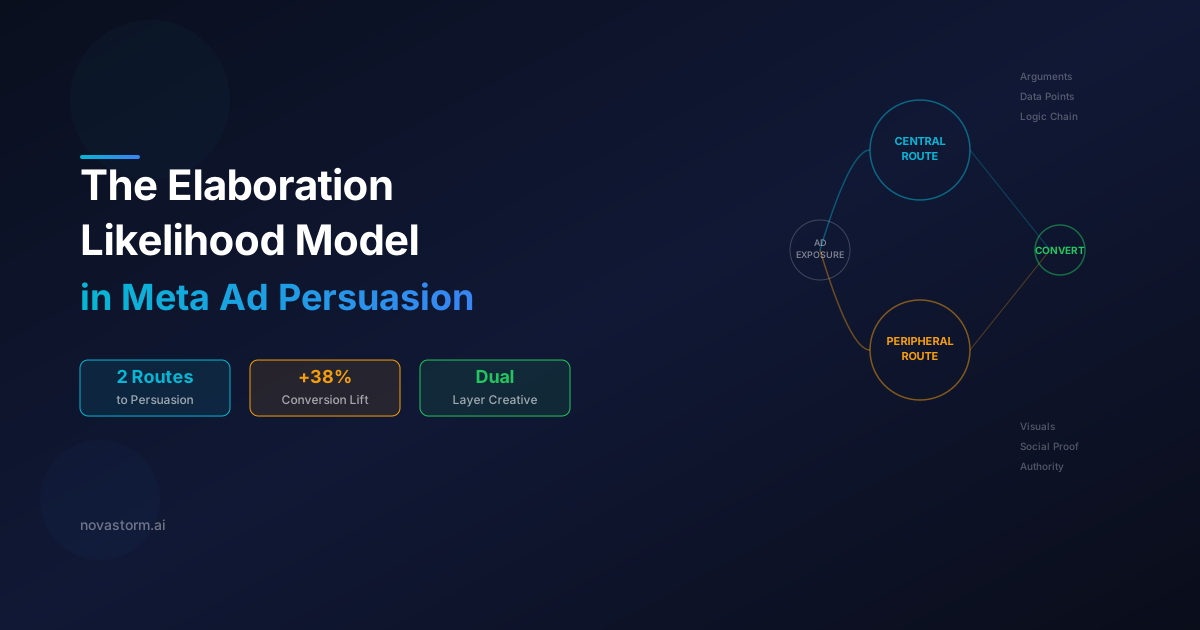
The Elaboration Likelihood Model in Meta Ad Persuasion
Learn how the Elaboration Likelihood Model shapes Meta ad persuasion through central and peripheral routes. Build ads that persuade at every engagement level.
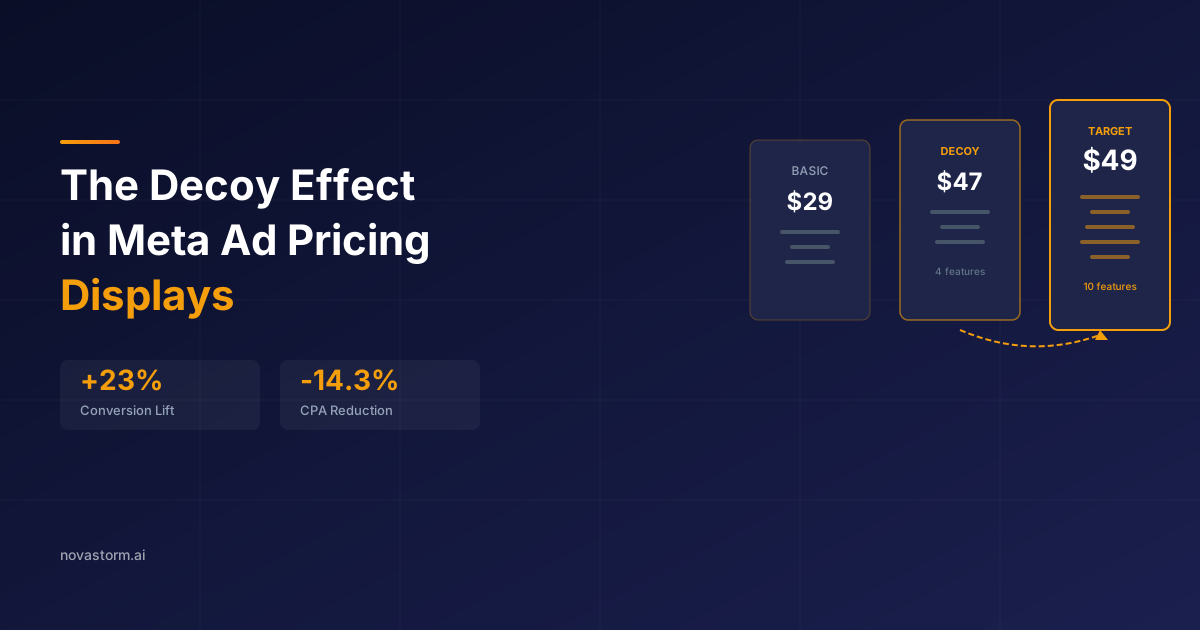
The Decoy Effect in Meta Ad Pricing Displays
Use the decoy effect as a testable pricing-display hypothesis with correct dominance, real offers and retained contribution rather than unsupported uplifts.
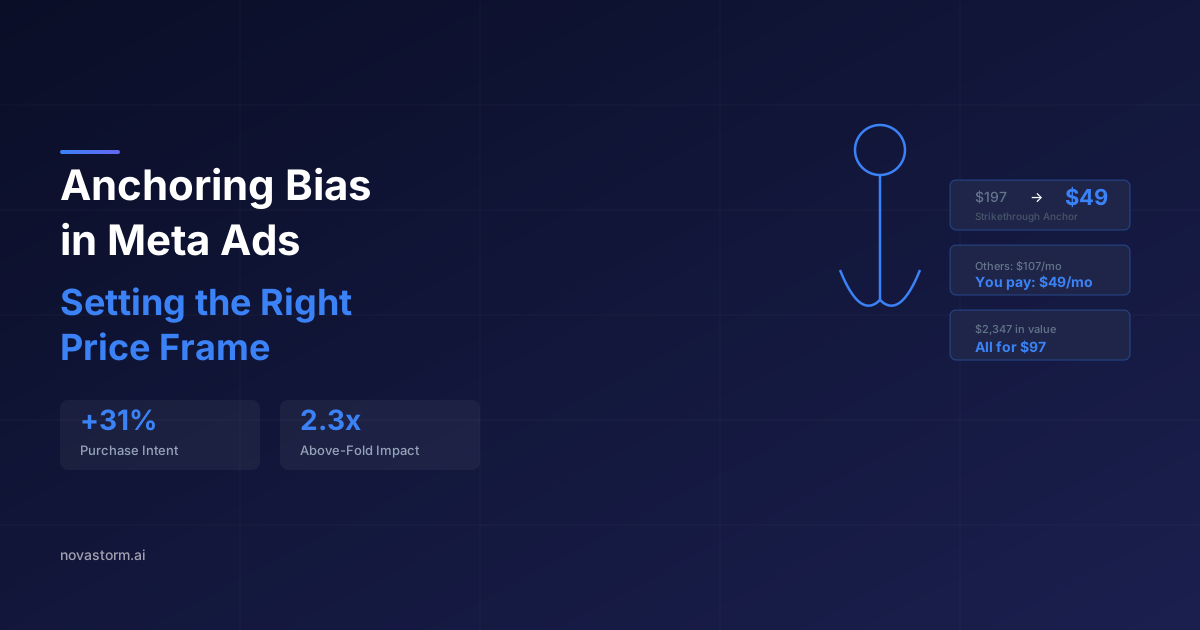
Anchoring Bias in Meta Ads: Setting the Right Price Frame
Prepare truthful price frames with documented references, visible subscription commitments and a retained-contribution test of anchoring hypotheses.
Social Identity Theory in Ad Targeting and Creative
Use customer self-description responsibly in Meta creative, with permissioned language, stereotype checks and a same-audience message test.