The Mere Exposure Effect: Why Ad Frequency Builds Preference
Understand the mere exposure effect and how ad frequency builds brand preference on Meta platforms. Learn optimal exposure counts and how to balance frequency with fatigue.
The Mere Exposure Effect: Why Ad Frequency Builds Preference
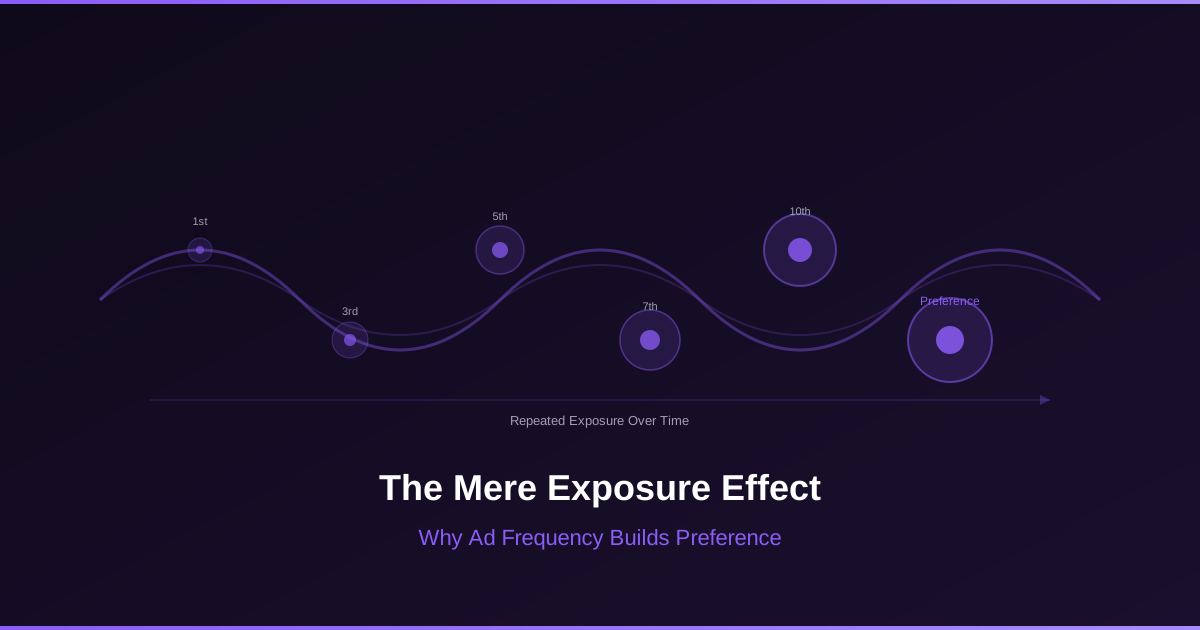
In 1968, psychologist Robert Zajonc published research that would fundamentally change how we understand human preference. His experiments demonstrated that people develop a preference for things simply because they are familiar with them. No persuasion required, no compelling argument needed — just repeated exposure. This phenomenon, known as the mere exposure effect, has profound implications for Meta advertisers who need to understand how the mere exposure effect ad frequency relationship works to build lasting brand preference.
The mere exposure effect operates below conscious awareness. People do not realize they are developing preferences through repetition. They simply find that familiar brands feel more trustworthy, familiar products feel safer, and familiar messages feel more credible. For advertisers on Meta platforms where users scroll through hundreds of posts daily, understanding this mechanism is essential for building campaigns that create genuine brand affinity rather than just momentary attention.
The Psychology Behind Familiarity and Preference
The neurological basis of the mere exposure effect involves processing fluency — the ease with which the brain processes information. When the brain encounters something it has seen before, it processes it faster and with less effort. This fluency is experienced as a positive feeling, which the brain then attributes to the stimulus itself. The brand does not just feel familiar — it feels good.
This mechanism evolved as a survival heuristic. In ancestral environments, things that were familiar were generally safe — you had encountered them before and survived. Novel stimuli required caution and cognitive resources to evaluate. The brain therefore developed a preference for the known over the unknown, a preference that persists in modern consumer behavior.
For Meta advertisers, this means that brand impressions have cumulative value even when they do not generate immediate clicks or conversions. Each impression that enters a user's visual field — even peripherally — contributes to processing fluency. Over time, this fluency translates into preference, and preference translates into choice when the consumer enters the market for that product category. The mere exposure effect ad frequency connection is not about a single powerful impression but about consistent presence over time.
Optimal Exposure Count: Finding the Sweet Spot
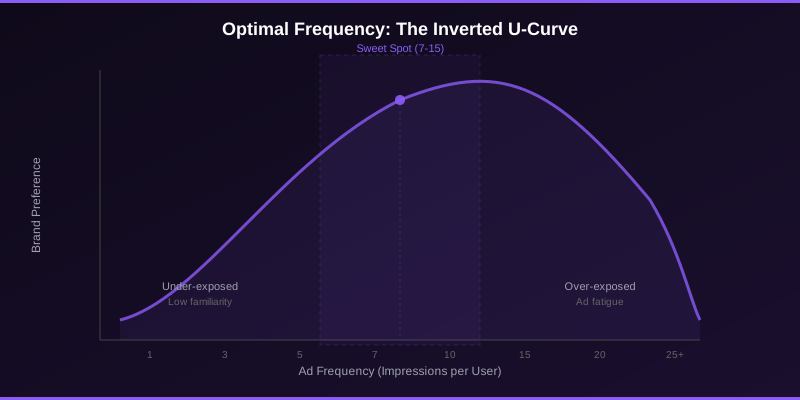
Research consistently shows that the mere exposure effect follows an inverted U-curve. Preference increases with exposure up to a peak, after which additional exposure leads to diminishing returns and eventually negative reactions. The critical question for advertisers is: where is the peak?
Studies across different media and product categories suggest that the optimal exposure range for advertising is between seven and fifteen impressions over a purchase cycle. Below seven, the brand has not achieved sufficient familiarity to trigger the preference effect. Above fifteen, the audience begins to experience saturation, and the positive fluency effect gives way to irritation.
However, these numbers vary significantly based on creative variety, message complexity, and purchase consideration level. A simple brand awareness campaign with consistent visual identity may reach its peak at lower frequencies, while a complex product with multiple benefits to communicate may sustain positive responses at higher frequencies — provided the creative rotates to maintain novelty within familiarity.
Meta's frequency metrics provide the data needed to monitor this curve. Tracking the relationship between frequency and key performance indicators — click-through rate, conversion rate, cost per acquisition — reveals the brand-specific sweet spot where the mere exposure effect is maximized without triggering fatigue.
Brand Recall and the Impression Threshold
Brand recall — the ability to spontaneously remember a brand when thinking about a product category — is directly correlated with exposure frequency. Research in advertising effectiveness shows that unaided brand recall requires significantly more impressions than aided recall, and both follow logarithmic growth curves where early impressions contribute more than later ones.
On Meta platforms, the threshold for aided recall typically sits around three to five impressions. At this point, when shown the brand name or logo, most users will report having seen it before. Unaided recall — the more valuable metric for purchase consideration — typically requires eight to twelve impressions before the brand enters the consumer's spontaneous consideration set.
These thresholds explain why brand awareness campaigns need sustained budgets and patience. Cutting a campaign short at three impressions per user achieves some recognition but falls short of the recall levels that drive purchase behavior. The mere exposure effect ad frequency dynamic requires reaching the recall threshold to translate impressions into market share.
Cross-Channel Frequency and Compound Exposure
Stop wasting ad budget
NovaStorm AI cuts Meta Ads CPA by 30% on average. No complex setup required.
The mere exposure effect does not operate in channel isolation. A consumer who sees a brand on Instagram, encounters it again on Facebook, notices it on a Google search result, and then sees it mentioned on a podcast is accumulating exposure across channels. Each touchpoint contributes to the same familiarity pool that drives preference.
This cross-channel compound effect means that Meta advertising works synergistically with other marketing channels. A Meta campaign that runs alongside email marketing, search advertising, and content marketing achieves familiarity faster because each channel contributes incremental exposure. The practical implication is that isolated Meta campaigns need higher within-platform frequency to achieve the same familiarity level that integrated campaigns achieve at lower per-channel frequencies.
Meta's cross-platform delivery across Facebook, Instagram, Messenger, and the Audience Network provides built-in cross-channel exposure. A single campaign can deliver impressions across multiple contexts, each encounter reinforcing familiarity while varying the context enough to maintain interest. This platform variety within the Meta ecosystem is one of its strongest advantages for leveraging the mere exposure effect.
Building Mental Availability Through Consistent Presence
Marketing scientist Byron Sharp popularized the concept of mental availability — the probability that a brand comes to mind in a buying situation. Mental availability is built through consistent, broad-reach advertising that keeps the brand present in consumers' memory structures. The mere exposure effect is the neurological mechanism that makes this work.
Building mental availability through Meta ads requires consistent visual and verbal identity across all creative. The brand's distinctive assets — logo, colors, typography, sonic cues, character elements — must appear consistently so that each exposure reinforces the same memory structure. Creative variation is important for maintaining interest, but it must operate within a recognizable brand framework.
Category entry points are the specific situations, needs, or occasions that trigger purchase consideration. A beverage brand might be linked to afternoon energy, social gatherings, or post-workout hydration. Each Meta ad that connects the brand to a category entry point while maintaining distinctive brand assets builds mental availability for that specific context. Over time, the accumulation of these associations through repeated exposure ensures the brand comes to mind when the need arises.
Balancing Frequency With Creative Freshness
The tension between the mere exposure effect and ad fatigue creates one of the central challenges in Meta advertising. The brain needs repetition to build familiarity but craves novelty to maintain attention. Resolving this tension requires a strategy of consistent branding with varied creative execution.
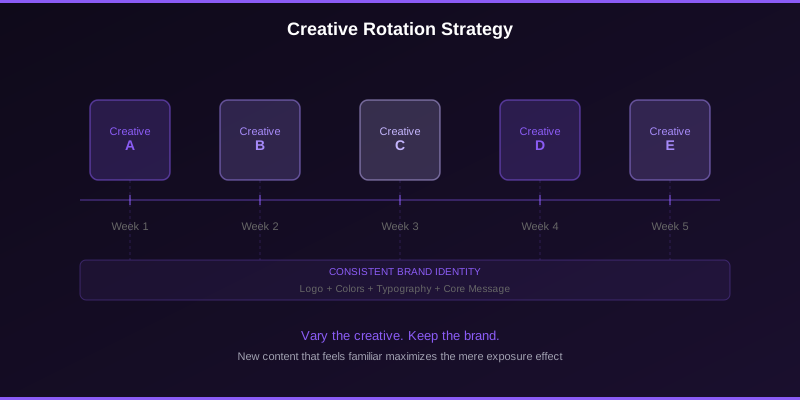
Effective frequency management involves rotating creative assets while maintaining brand consistency. The logo placement, color palette, and core message remain constant, while the imagery, specific copy, and creative format change regularly. This approach delivers new content that feels familiar — a combination that maximizes both the mere exposure effect ad frequency benefits and ongoing engagement.
Creative rotation cadence depends on audience size and budget. Smaller audiences with higher individual frequency need more frequent creative refreshes — typically every one to two weeks. Larger audiences with lower individual frequency can sustain creative for three to four weeks before fatigue sets in. Monitoring frequency alongside engagement metrics provides the real-time feedback needed to time creative refreshes optimally.
Measuring the Invisible: Attribution Beyond Last Click
The mere exposure effect presents a measurement challenge because much of its impact is invisible to standard attribution models. Last-click attribution gives no credit to the seven prior impressions that built the familiarity needed for the eighth impression to convert. This leads to systematic undervaluation of awareness and frequency-building campaigns.
Brand lift studies offer one solution. Meta's brand lift measurement tools compare brand awareness, ad recall, and purchase intent between exposed and unexposed groups, quantifying the lift attributable to advertising exposure. These studies consistently show that campaigns with adequate frequency generate significantly higher brand metrics than low-frequency campaigns, even when click-based metrics are similar.
Incrementality testing provides another lens. By holding out a portion of the audience from advertising exposure and comparing their purchase behavior to the exposed group, advertisers can measure the true incremental impact of their Meta campaigns. These tests frequently reveal that the contribution of awareness-stage advertising — where the mere exposure effect operates most powerfully — is substantially larger than what click-based attribution suggests. Understanding this hidden value is essential for allocating budgets that properly support the frequency levels needed to build lasting brand preference.
Novastorm AI automates Meta Ads routine — from monitoring to optimization. Learn more at novastorm.ai
Disclaimer: This article was generated with the assistance of AI and reviewed by the NovaStorm AI team. While we strive for accuracy, we recommend verifying specific data points and consulting official sources (linked where available) for critical business decisions.
Ready to automate your Meta Ads?
NovaStorm AI takes full responsibility for your campaigns — from monitoring to optimization.
Start NowRelated Articles

AI Funnel Fingerprint Analysis for Meta Ads
Use AI-powered Meta Ads analytics to find funnel drop-offs and automate journey-specific creative for better conversions.

AI-Powered Meta Ads Lead Qualification for Sales
Learn how AI-powered Meta Ads lead qualification and conversation intelligence speed up sales handoff and improve lead quality.

AI Workflows for Cross-Platform Ad Repurposing
Learn how AI-powered Meta Ads creative adapter workflows improve creative repurposing, consistency, and performance across platforms.