

Kill Criteria: When to Pause Meta Ads and When to Wait
Use a predeclared pause/wait tree with mature outcomes, a decision journal and an actual-spend check after campaign approval.
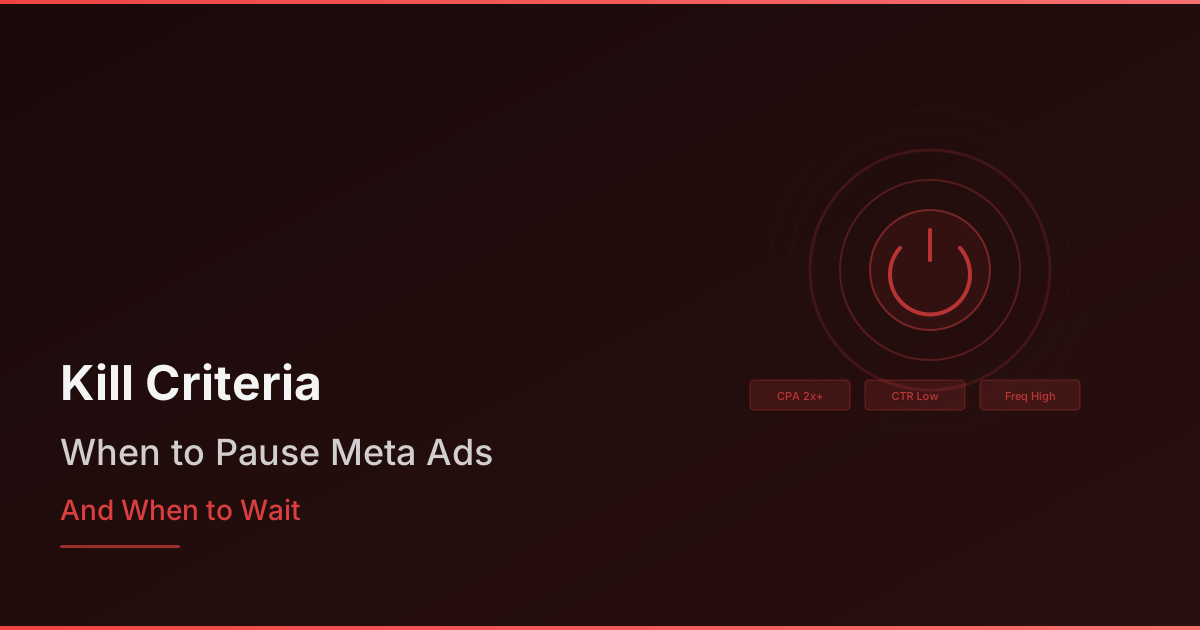
A pause rule protects cash without proving that a small sample can never succeed. Before approval define paid/qualified outcomes, contribution-based CPA ceiling, permitted spend/loss, conversion delay and who may change the plan.
The wait/check/stop tree
| Check in order | Response | What to log |
|---|---|---|
| Broken destination, invalid offer, unserviceable delivery or cash cap reached | Stop the affected spend and fix the confirmed defect | Issue, affected scope and remaining cash |
| Missing or duplicated events versus business payments | Check measurement; limit/pause if cash cannot be observed reliably | Reconciliation and responsible owner |
| Relevant cohort still immature | Wait within the approved cap | Exact next-review time and permitted additional risk |
| Mature economics fail the approved rule | Stop or reduce the affected test | Outcome count, contribution and uncertainty |
| Too few mature outcomes at the test limit | Stop the test as inconclusive | Do not call interrupted evidence a definitive loss |
Two versions of the same early CPA
Synthetic cases use a chosen $30 target, $300 spend cap and an assumed two-day purchase delay. Case A: $180 spent, six mature paid orders, but no platform purchases. Reconciled CPA is $180/6 = $30; check collection/attribution before calling it failure.
Case B: $180 spent, three paid orders now and three pending potential orders. Current paid CPA is $60; pending orders are not yet purchases. If the last click was October 4 at noon, a hypothetical two-day delay would set October 6 at noon as the next review, while the $300 cap still applies. If six real paid orders are later confirmed, reconciled CPA becomes $30; if not, retain actual counts. No future order is promised.
Filled illustrative decision journal
Stop wasting ad budget
NovaStorm AI cuts Meta Ads CPA by 30% on average. No complex setup required.
| Field | Illustrative case B entry |
|---|---|
| Observed spend | Synthetic $180; reconcile actual platform/account expenditure |
| Mature outcome | Three confirmed paid orders; pending outcomes listed separately |
| Technical check | Checkout/events need recorded pass or failure, not assumed success |
| Limits | Chosen $300 total spend cap; further risk requires responsible approval |
| Decision/owner | Wait within cap; marketing owner schedules reconciliation |
| Next review | October 6 noon only under the justified two-day delay assumption |
| Final record | Actual payments, late orders, costs and interrupted/inconclusive status |
Learning status does not override cash or a broken checkout. A spend multiple, CTR threshold or impression minimum is not a statistical-power calculation. The ASA statement advises evaluating evidence and decision context beyond a single statistical threshold.
From an unpublished draft to actual control
- Prepare the brief and paused campaign/local ad-set drafts in NovaStorm. The user verifies currency, service boundaries, offer, event, actual saved limits and approval responsibility.
- Any publication is a separate approved action. Then inspect actual status and cumulative spend in the supported advertising/account reports, not in the preparation brief.
- Reconcile payments in the business order system and platform outcomes within a common period. Do not assume every connection has a publish-permission restriction.
- Keep the affected scope deliberate and log all exceptions before changing the cap.
Use the contribution calculation for the ceiling and the experiment guide for an interpretable comparison.
Published by NovaStorm AI. Planning examples are illustrative assumptions, not measured customer results.
Disclaimer: This article was generated with the assistance of AI and reviewed by the NovaStorm AI team. While we strive for accuracy, we recommend verifying specific data points and consulting official sources (linked where available) for critical business decisions.
Ready to automate your Meta Ads?
NovaStorm AI takes full responsibility for your campaigns — from monitoring to optimization.
Start NowMore on Scaling and bidding
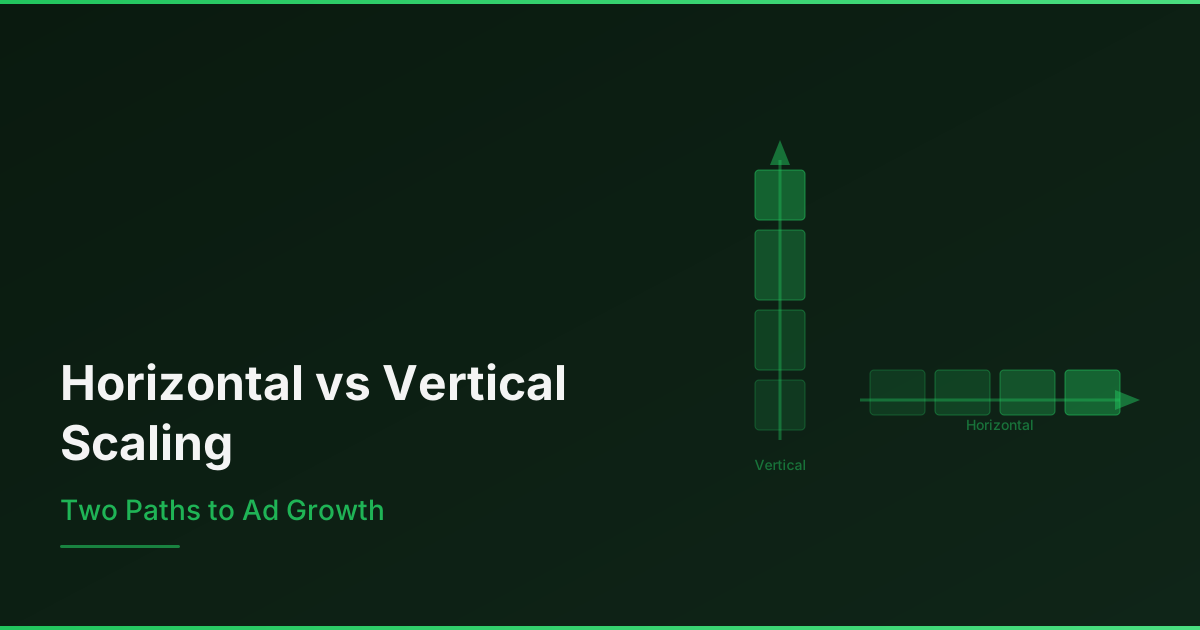
Horizontal vs Vertical Scaling: Two Paths to Ad Growth
Separate an existing-budget increase from a new-market test, with incremental spend limits, a review date and a reversible response.
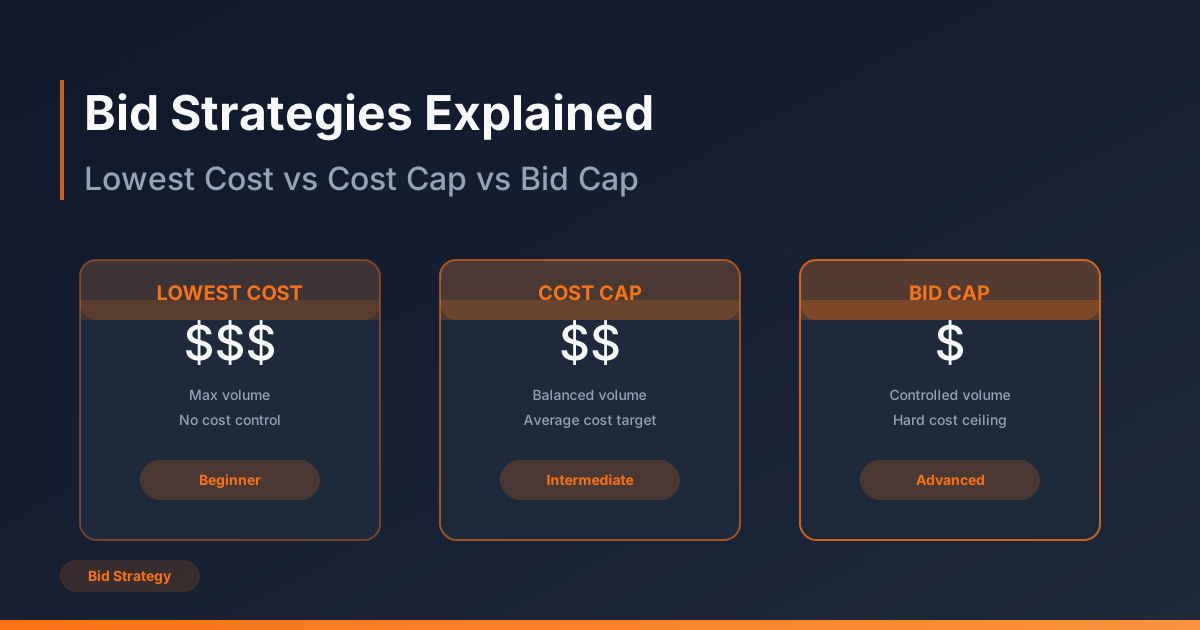
Bid Strategies Explained: Lowest Cost vs Cost Cap vs Bid Cap
Select an available bid strategy by commercial risk and underdelivery, distinguishing auction bid caps from mature acquisition cost.
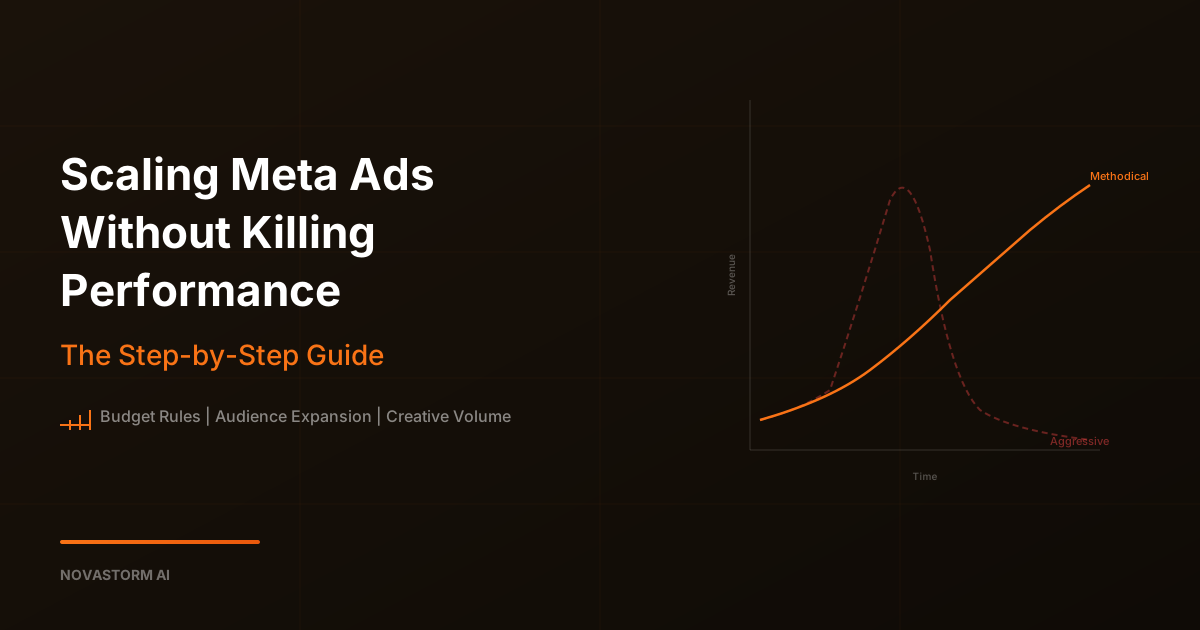
Scaling Meta Ads Without Killing Performance: The Step-by-Step Guide
Review a bounded Meta budget increase with actual spending, refunds, delayed orders, marginal cost and user-approved campaign fields.
Dayparting in Meta Ads: Does Time-of-Day Targeting Still Work
Verify schedule availability and time-zone behavior, align ads with real contact handling, and test mature outcomes within a spending allowance.