Influencer Marketing and Meta Ads: Paid Amplification Strategy
Learn how to combine influencer marketing with Meta Ads for maximum paid amplification. Discover strategies for scaling creator content across Facebook and Instagram.
Influencer marketing Meta Ads integration has become the fastest-growing performance channel for brands seeking authentic reach at scale. By combining the trust and creativity of influencer content with the precision targeting of Meta's advertising platform, marketers can achieve results that neither channel delivers alone.
The days of treating influencer marketing and paid social as separate silos are over. In 2026, the most successful brands run unified paid amplification strategies that blend creator authenticity with algorithmic distribution. This guide walks you through building that system from the ground up.
Why Influencer Marketing Meta Ads Integration Outperforms Traditional Ads
Traditional brand-created ads on Meta face growing resistance from audiences who have learned to scroll past polished promotional content. Influencer content, however, carries an inherent trust signal that stops the scroll. When you amplify that content through Meta Ads, you combine the best of both worlds.
Data from Meta's own research shows that creator-driven ads generate 50% higher engagement rates compared to standard brand creatives. The reason is simple: audiences respond to faces and voices they recognize and trust, not logos and taglines.
| Metric | Brand Ads Only | Influencer + Meta Ads | Improvement |
|---|---|---|---|
| Click-Through Rate | 0.9% | 1.8% | +100% |
| Cost Per Acquisition | $42 | $26 | -38% |
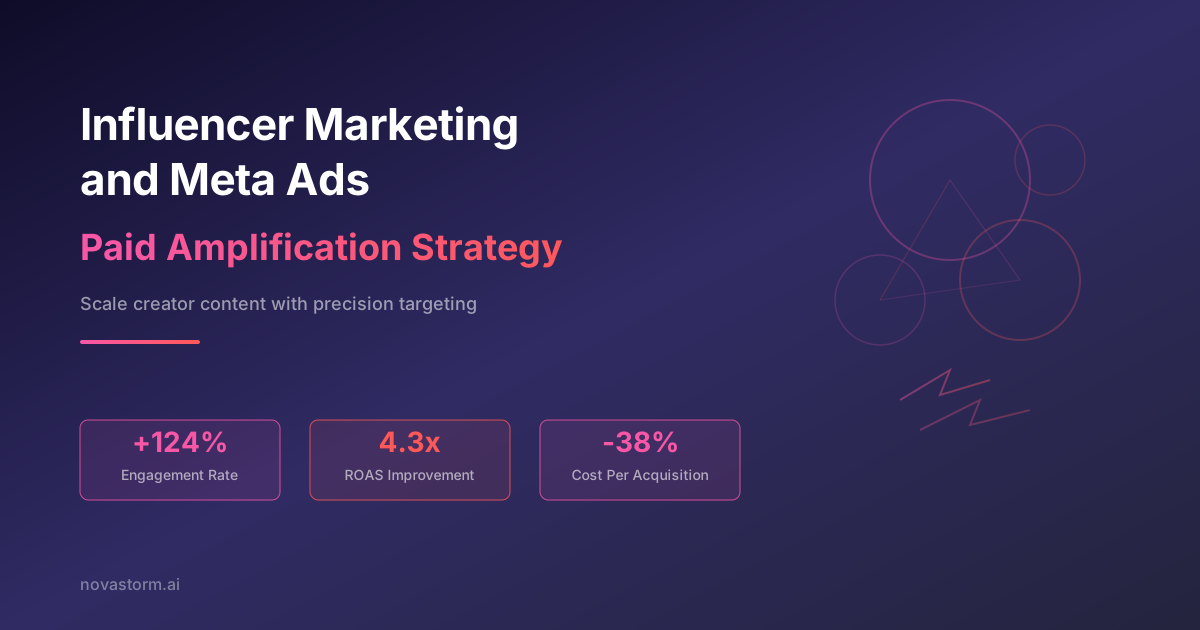
| Engagement Rate | 2.1% | 4.7% | +124% |
| Ad Recall Lift | 8 pts | 14 pts | +75% |
| Return on Ad Spend | 2.8x | 4.3x | +54% |
Building Your Paid Amplification Strategy Framework
A successful paid amplification strategy requires more than simply boosting influencer posts. You need a structured framework that aligns creator selection, content production, and media buying into a cohesive workflow.
- Define campaign objectives and KPIs before selecting creators
- Choose influencers whose audience demographics match your Meta Ads targeting
- Negotiate content licensing and whitelisting rights upfront
- Brief creators with both organic and paid performance in mind
- Build custom audiences from influencer engagement data
- Launch ads through creator handles using partnership ads
- Optimize based on real-time performance data across the funnel
Creator Selection for Influencer Marketing Meta Ads Campaigns
Not every influencer is suited for paid amplification. The creators who perform best in Meta Ads campaigns share specific characteristics that go beyond follower count. You need creators whose content style translates well to the ad format and whose audience aligns with your targeting parameters.
Start by analyzing the creator's organic content performance. Look for high save rates, share rates, and comment quality rather than vanity metrics. These engagement signals predict how well the content will perform when distributed to cold audiences through Meta Ads.
Use Meta's Brand Collabs Manager to find creators whose audience overlaps with your existing customer base. This ensures the influencer's followers match the demographic and interest profiles you already target in paid campaigns.
Setting Up Partnership Ads for Maximum Reach
Partnership Ads (formerly Branded Content Ads) are Meta's native tool for running influencer marketing Meta Ads at scale. They allow brands to promote creator content directly from the influencer's handle, preserving the authentic look and feel while gaining access to full targeting capabilities.
The setup process requires the creator to grant your Business Manager advertising permissions through the Instagram or Facebook branded content tools. Once connected, you can create ads that appear as coming from the influencer's account, complete with their profile picture and handle.
Stop wasting ad budget
NovaStorm AI cuts Meta Ads CPA by 30% on average. No complex setup required.
- Creator tags the brand in a branded content post
- Brand receives the post in Ads Manager under Partnership Ads
- Brand creates ad campaign using the influencer's post as creative
- Ad is delivered to targeted audiences showing the creator's handle
- Both parties can view performance metrics in their respective dashboards
Budget Allocation and Bidding Strategies
Allocating budget across your paid amplification strategy requires balancing investment between creator fees and media spend. A common mistake is overspending on influencer production while underfunding the distribution that makes the content work at scale.
The optimal ratio depends on your campaign goals, but most successful brands allocate 30-40% of total budget to creator compensation and content production, with 60-70% dedicated to paid amplification through Meta Ads. This ensures every piece of influencer content gets sufficient distribution to justify the production investment.
| Campaign Goal | Creator Budget | Media Budget | Recommended Bid Strategy |
|---|---|---|---|
| Brand Awareness | 40% | 60% | Reach / Frequency Cap |
| Engagement | 35% | 65% | ThruPlay / Engagement |
| Traffic | 30% | 70% | Lowest Cost CPC |
| Conversions | 25% | 75% | Target CPA / ROAS |
| App Installs | 30% | 70% | Cost Per Install |
Measuring and Optimizing Influencer Ad Campaigns
Measurement is where influencer marketing Meta Ads strategies either prove their value or fail to justify continued investment. You need a clear attribution model that accounts for both the direct response metrics visible in Ads Manager and the halo effects of creator association.
Set up Meta's Conversion API alongside the pixel to capture the full picture of campaign performance. Use UTM parameters specific to each creator to track post-click behavior, and implement lift studies where budget allows to measure incrementality.
Track the performance of influencer creatives against your standard brand creatives within the same campaign. This A/B comparison provides clear evidence of the value creator content adds to your paid amplification strategy and helps justify future investment.
Scaling Your Influencer Marketing Meta Ads Program
Once you have proven the model with initial campaigns, scaling requires systematizing every step of the process. Build a creator database with performance benchmarks, standardize your briefing and licensing agreements, and create templates for campaign setup in Ads Manager.
Automation plays a critical role at scale. Use tools that monitor creator content performance in real time, automatically flag top-performing organic posts for paid amplification, and adjust budgets based on creative fatigue signals. The brands that scale fastest are those that remove manual bottlenecks from the workflow.
The most advanced advertisers build always-on influencer marketing Meta Ads programs rather than running isolated campaigns. This means maintaining a roster of creators who produce content on a regular cadence, with the best-performing pieces continuously amplified through paid media. The result is a self-reinforcing cycle of authentic content and scalable distribution.
Paid amplification strategy is no longer optional for brands investing in influencer marketing. The combination of creator authenticity and Meta's targeting capabilities creates a performance channel that consistently outperforms either approach in isolation. Start with a small test, measure rigorously, and scale what works.
Novastorm AI automates Meta Ads routine — from monitoring to optimization. Learn more at novastorm.ai
Disclaimer: This article was generated with the assistance of AI and reviewed by the NovaStorm AI team. While we strive for accuracy, we recommend verifying specific data points and consulting official sources (linked where available) for critical business decisions.
Ready to automate your Meta Ads?
NovaStorm AI takes full responsibility for your campaigns — from monitoring to optimization.
Start NowRelated Articles

AI Funnel Fingerprint Analysis for Meta Ads
Use AI-powered Meta Ads analytics to find funnel drop-offs and automate journey-specific creative for better conversions.

AI-Powered Meta Ads Lead Qualification for Sales
Learn how AI-powered Meta Ads lead qualification and conversation intelligence speed up sales handoff and improve lead quality.

AI-Powered Meta Ads Placement Exclusion Strategy
Learn how AI-powered Meta Ads placement optimization and exclusions can reduce wasted spend and improve campaign performance.