

How to Build a Media Buying Team: Roles, Skills, and Structure
Size a media buying team from workload and hiring cost, define approval responsibilities and train new buyers before granting live budget authority.
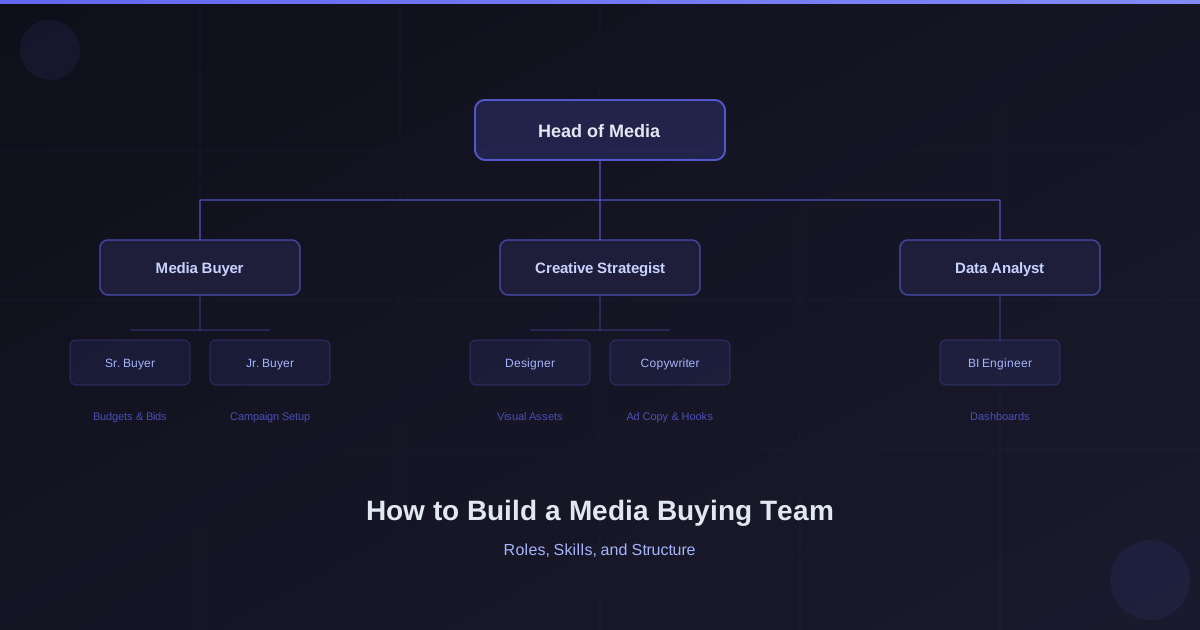
Build the team around work that must be completed and reviewed. Ad spend alone does not specify headcount: one market with reused assets differs from many languages, accounts and new shoots. Assign ownership for execution, creative and measurement before choosing job titles.
A workload-based staffing calculation
The following fictional week uses assumed hours, not a staffing benchmark or NovaStorm productivity result. Measure your own queue and include review, leave and rework.
| Workstream | Weekly assumed demand | Responsibility |
|---|---|---|
| Campaign preparation and operations | 30 hours | Buyer |
| Briefs, copy and creative review | 20 hours | Creative lead |
| Production and asset adaptation | 32 hours | Producer or contracted specialist |
| Reconciliation and test analysis | 12 hours | Analyst |
| Approvals, coordination and mentoring | 10 hours | Accountable team lead |
| Total | 104 hours | Do not count one person’s hour in two streams |
If one full-time position supplies 30 productive queue hours after meetings and routine administration, 104 ÷ 30 = 3.47 full-time equivalents of capacity. Four positions provide 120 such hours, leaving 16 for variability in this illustrative plan. Skills can be combined or contracted; this does not prescribe four people for a particular spend tier. Additional leave or required coverage may change the staffing choice.
At a hypothetical fully loaded $50 per productive hour, 104 hours cost $5,200 per week. Compare a hire’s actual compensation, onboarding, supervision and output with a contract’s cost and review needs. Choose the next resource from the persistent bottleneck, not an unsupported claim that one role always has the highest return.
Responsibility and approval matrix
| Task | Prepares / checks | Accountable decision | Access boundary |
|---|---|---|---|
| Creative hypothesis and offer | Creative lead; commerce and rights reviewer | Team lead approves brief and factual terms | Approved assets only; no need for billing changes |
| Campaign draft | Buyer; second reviewer checks settings | Budget owner approves exposure and release | Named access appropriate to assigned work |
| Measurement and sample plan | Analyst; experiment reviewer | Team lead approves outcome and stopping rule | Only required aggregated/customer-authorized data |
| Live spend change | Authorized buyer prepares rationale | Budget owner approves within stated allowance | No shared logins; remove access after role change |
| Incident or loss limit | On-duty buyer records issue | Named incident owner can pause exposure | Escalation route and backup owner |
Stop wasting ad budget
NovaStorm AI cuts Meta Ads CPA by 30% on average. No complex setup required.
Role labels do not guarantee that a given platform offers exactly those permissions. Verify the available account roles and grant only the access needed for assigned work. Keep approval records, version IDs and an absence backup. Separate campaign permission from customer-data and payment access.
Training gates instead of a three-month promise
- Foundation gate: explain outcome, currency, attribution window, contribution ceiling and new-customer denominator. Demonstrate a reconciled teaching dataset with duplicates and refunds.
- Draft gate: prepare a paused campaign and creative brief; another reviewer verifies price, rights, placement crop, destination and intended outcome. No live spend authority yet.
- Measurement gate: write a falsifiable hypothesis, assignment method, cap, maturation period and stop/incident rule. Identify an inconclusive result without inventing a winner.
- Supervised delivery gate: a budget owner approves a bounded live task and access. The trainee records delivery, checks and escalation without exceeding the allowance.
- Independent-task gate: a qualified reviewer signs off repeated correct behavior and incident response. Increase authority only after evidence, not after an arbitrary number of weeks.
This is a proposed curriculum; no claim is made that three juniors were trained in three months. Mentoring consumes senior capacity and belongs in the workload model. Track accepted drafts, missed defects, accurate reconciliation and adherence to allowance alongside commercial outcomes; do not reward rapid budget changes or creative volume alone.
Make preparation reviewable
A proposed NovaStorm workflow is for the buyer to prepare paused campaign and local ad-set drafts from the creative lead’s approved brief. The analyst supplies an external verified outcome summary and finance supplies the cap; a human owner decides release. Treat any routine-time saving as a hypothesis to measure with comparable tasks, including correction and review time.
Use the creative approval workflow for version ownership and the campaign naming guide for traceable handoffs. A weekly queue review can identify blocked work, but mature outcome reviews follow the actual conversion and refund delay.
Published by NovaStorm AI. Planning examples are illustrative assumptions, not measured customer results.
Disclaimer: This article was generated with the assistance of AI and reviewed by the NovaStorm AI team. While we strive for accuracy, we recommend verifying specific data points and consulting official sources (linked where available) for critical business decisions.
Ready to automate your Meta Ads?
NovaStorm AI takes full responsibility for your campaigns — from monitoring to optimization.
Start NowMore on Agency operations and careers
Managing Multiple Ad Accounts: Agency Best Practices
Onboard client accounts with verified asset IDs and task permissions, review templates safely, and end access with an auditable handoff.
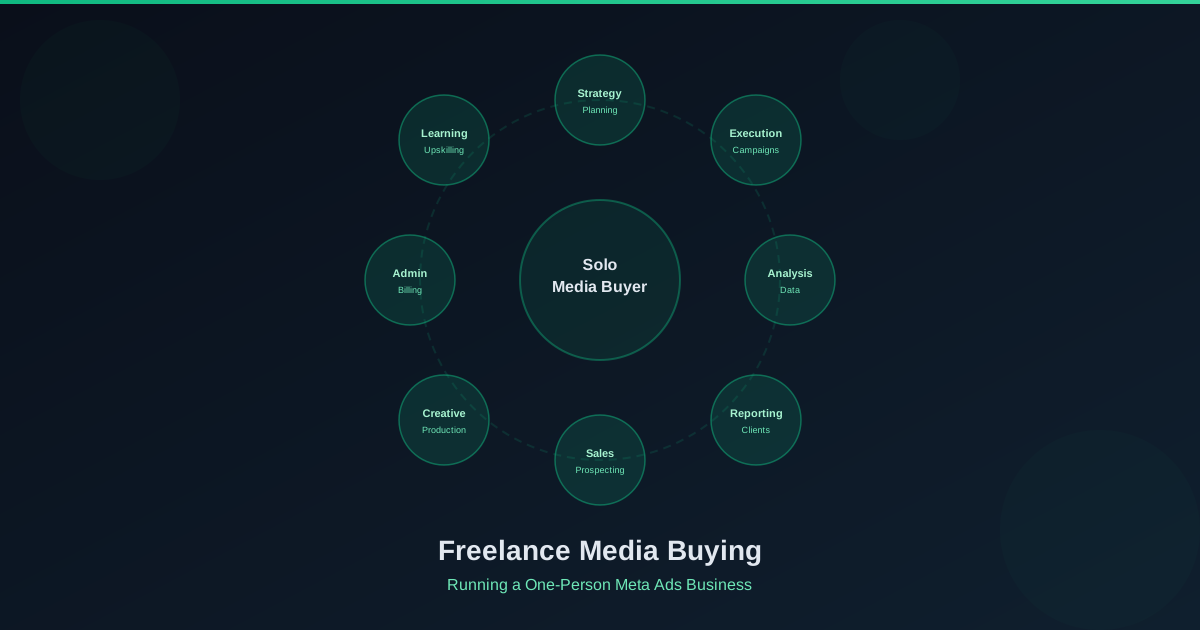
Freelance Media Buying: How to Run a One-Person Meta Ads Business
Price a solo Meta Ads service from actual capacity and costs, define a revenue bonus precisely and make client approval part of delivery.

Agency Operations for Meta Ads: Systems and Processes at Scale
Use owned onboarding and launch forms, verify event delivery and access removal, and reconcile agency capacity and reports before approving client work.
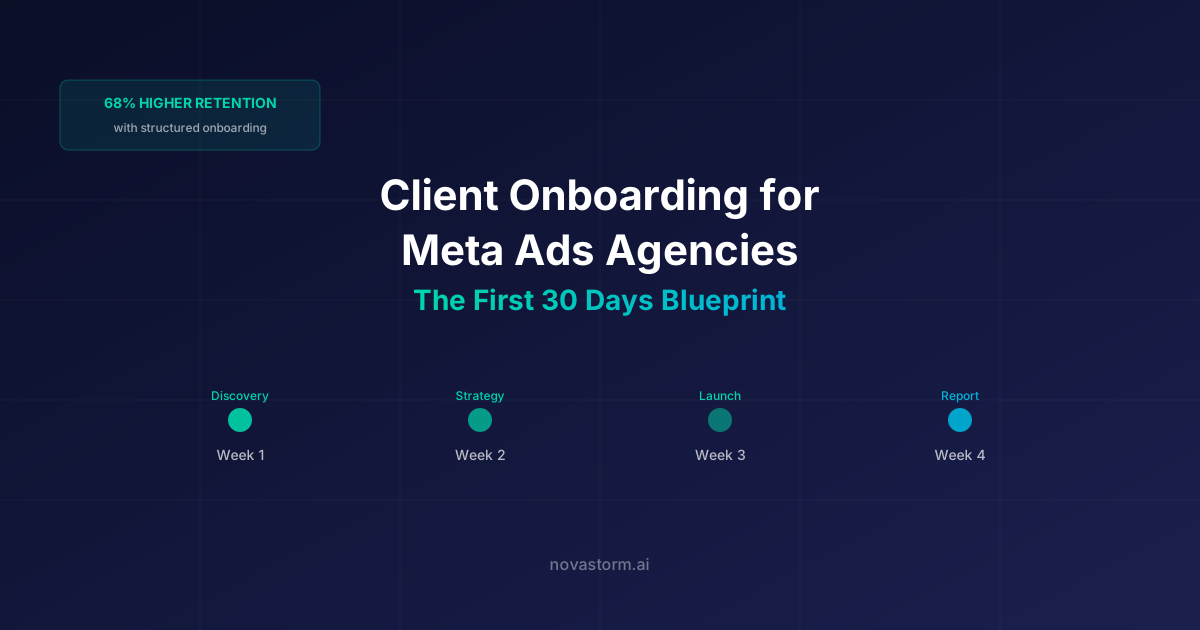
Client Onboarding for Meta Ads Agencies: First 30 Days
Onboard Meta clients with filled discovery, task-based access and expectations documents, launching only after events and approvals are ready.