

The Hook Model: Designing Habit-Forming Ad Experiences on Meta
Design a voluntary ad-to-quiz journey, separate contact permission and measure cohort costs without assuming habits or personalization support.
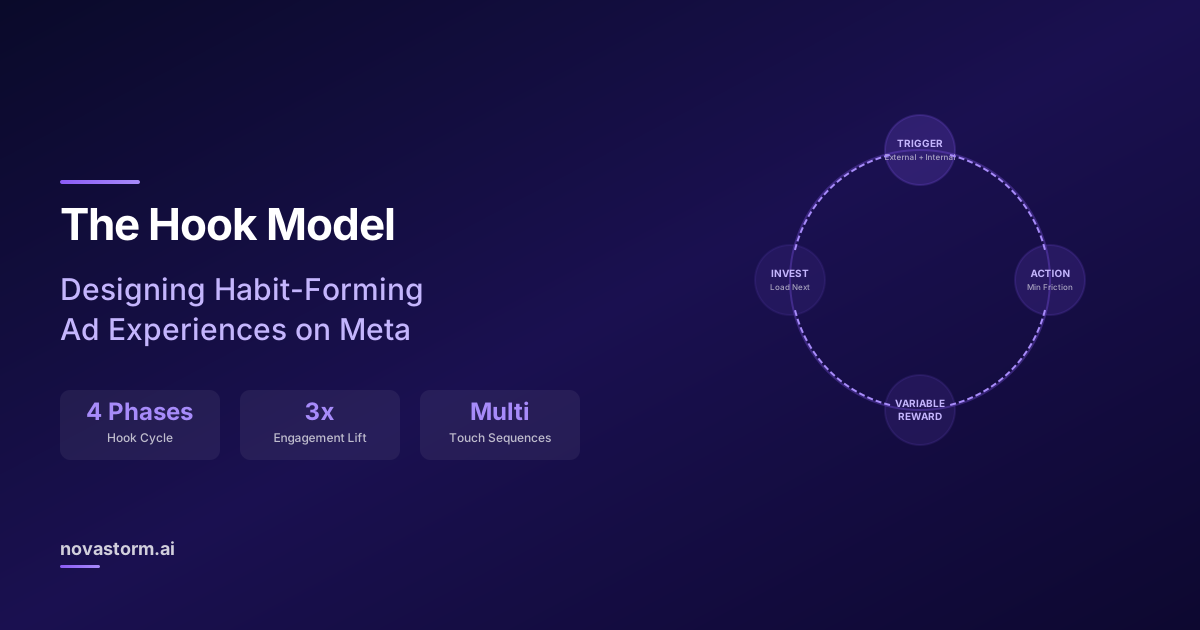
Use the Hook Model as a design checklist for a voluntary useful interaction, not a mandate to make advertising addictive. An ad can introduce a product; repeated exposure is not evidence of a habit or a lower acquisition cost.
Use the actual model names and limits
Nir Eyal’s Hooked material presents trigger, action, variable reward and investment as a product-design model. BJ Fogg’s Behavior Model describes motivation, ability and a prompt coming together for behavior, abbreviated B=MAP. It is not an additive scoring formula or a rule that three ad cycles are necessary. This guide provides no research supporting a dopamine mechanism inferred from ad clicks.
One useful quiz path with a separate contact choice
Hypothetical design: a conventional ad invites a visitor to explore a product-selection quiz; the destination gives a usable result without forcing marketing contact. After the result, a visitor may separately request an email copy or choose to leave. Use predictable price and terms rather than surprise discounts, pressure or hidden data collection.
| Synthetic event | Evidence and identity | Choice boundary |
|---|---|---|
| ad_link_visit | Permitted arrival/session record; not identity of every viewer | Do not claim an audience of all ad impressions automatically exists |
| quiz_completed | Result computed from declared inputs | Result available without coerced contact |
| email_copy_requested | Confirmed request and supported contact channel | Separate service request from optional marketing permission |
| voluntary_return | Permitted account/customer linkage if needed | No inferred relationship from incompatible IDs |
| permission_withdrawn | Recorded preference and downstream treatment | Respect future contact/data rules and retention policy |
Measure a cohort’s voluntary repeat behavior
Stop wasting ad budget
NovaStorm AI cuts Meta Ads CPA by 30% on average. No complex setup required.
Illustrative cohort:100 eligible quiz entrants,40 completed results,20 email-copy requests and 8 voluntary returns at the same follow-up age. Return/entrant rate = 8 / 100 = 8%; return/request rate = 8 / 20 = 40% answers a different question and reflects selected requesters. Both counts are synthetic. A repeat visit alone does not establish habit, psychological investment or an incremental effect of variable rewards.
Hypothetical costs: media USD 200, quiz production USD 100 and support USD 20. If 8 distinct new paid customers are independently confirmed, the defined acquisition cost is (200 + 100 + 20) / 8 = USD 40. If no payment was measured, the same USD 40 per 8 returns is cost per observed return, not CAC. Keep advertising, email and website costs in the full scope and allow outcomes to mature.
Accept the journey before testing the prompt
- Check result usability, accessible controls and truthful destination claims on supported devices.
- Test refusal, withdrawal and broken-contact delivery without losing the visitor’s useful result.
- Choose one prompt change and define comparable assignment, primary business outcome and cash limit.
- Retain failed outcomes and uncertain linkage; do not manufacture complete sequences from aggregate platform events.
Prepare the ad prompt and accurate result promise in NovaStorm, then review the draft. Quiz logic, website personalization, email delivery and user-level cohort tracking are separately implemented responsibilities, not asserted NovaStorm features.
Published by NovaStorm AI. Worked examples and test fixtures in this article are illustrative, not observed customer results.
Disclaimer: This article was generated with the assistance of AI and reviewed by the NovaStorm AI team. While we strive for accuracy, we recommend verifying specific data points and consulting official sources (linked where available) for critical business decisions.
Ready to automate your Meta Ads?
NovaStorm AI takes full responsibility for your campaigns — from monitoring to optimization.
Start NowMore on Buyer psychology
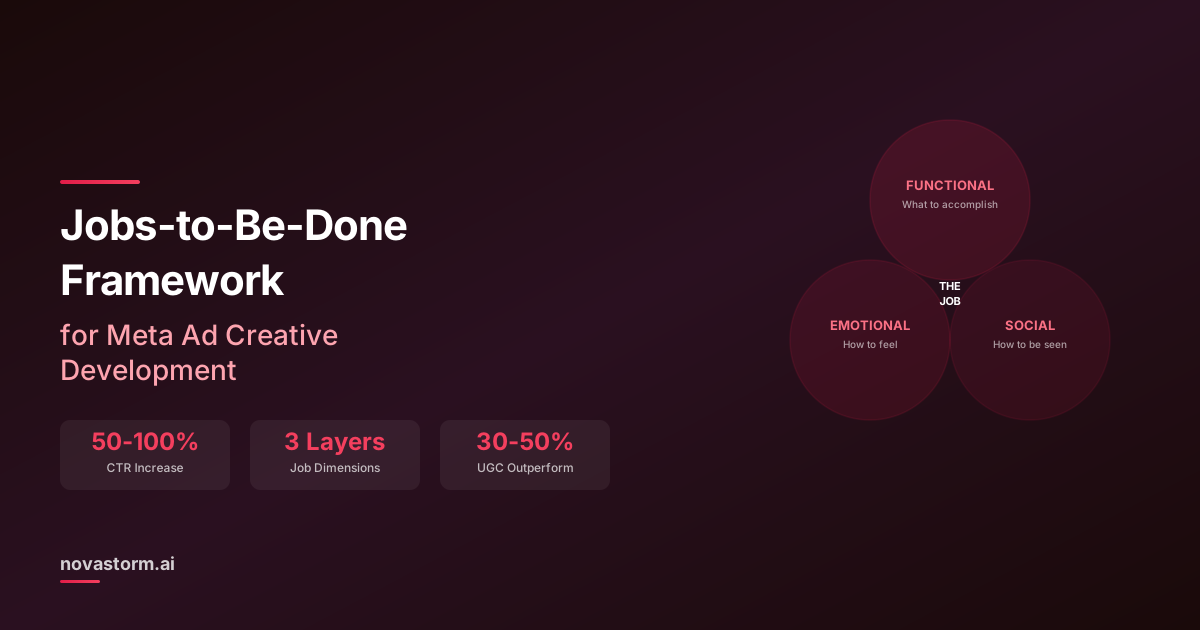
Jobs-to-Be-Done Framework for Meta Ad Creative Development
Turn a Jobs-to-Be-Done decision story into a truthful ad brief, verify targeting separately and evaluate mature customer outcomes.
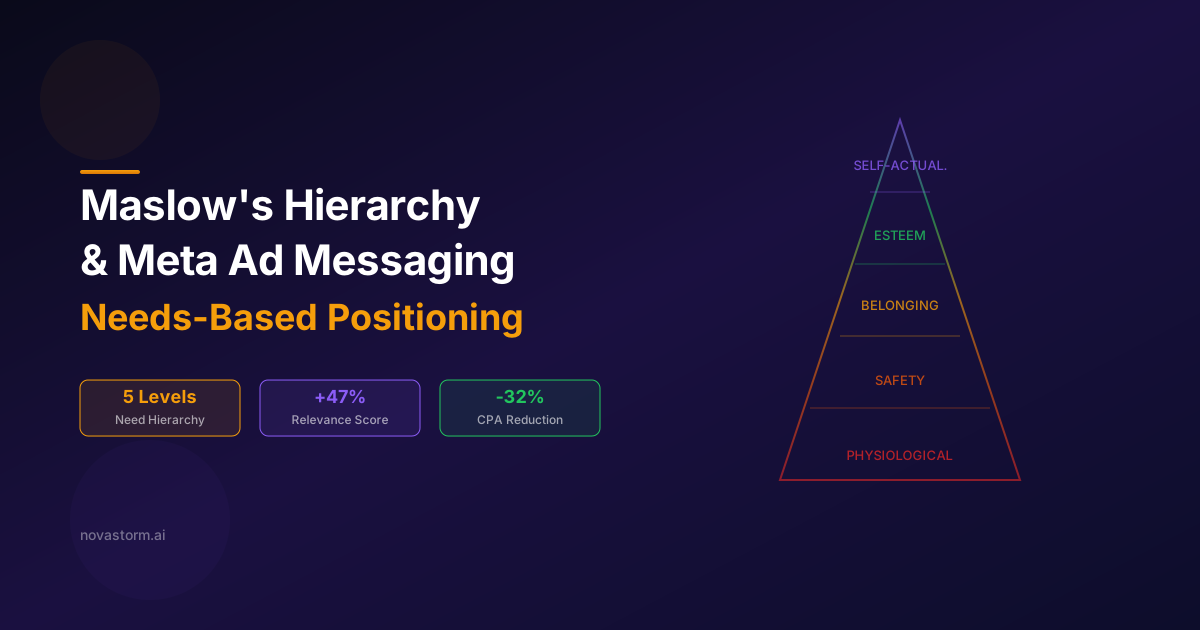
Maslow's Hierarchy and Meta Ad Messaging: Needs-Based Positioning
Discover how Maslow's hierarchy of needs transforms Meta ad messaging. Learn needs-based positioning strategies that align ad copy with audience motivations.
Herd Mentality in Meta Ads: Test Truthful Social Proof
Use permissioned social proof in Meta creative, verify existing-post rendering and measure acquisition cost including any engagement seeding.
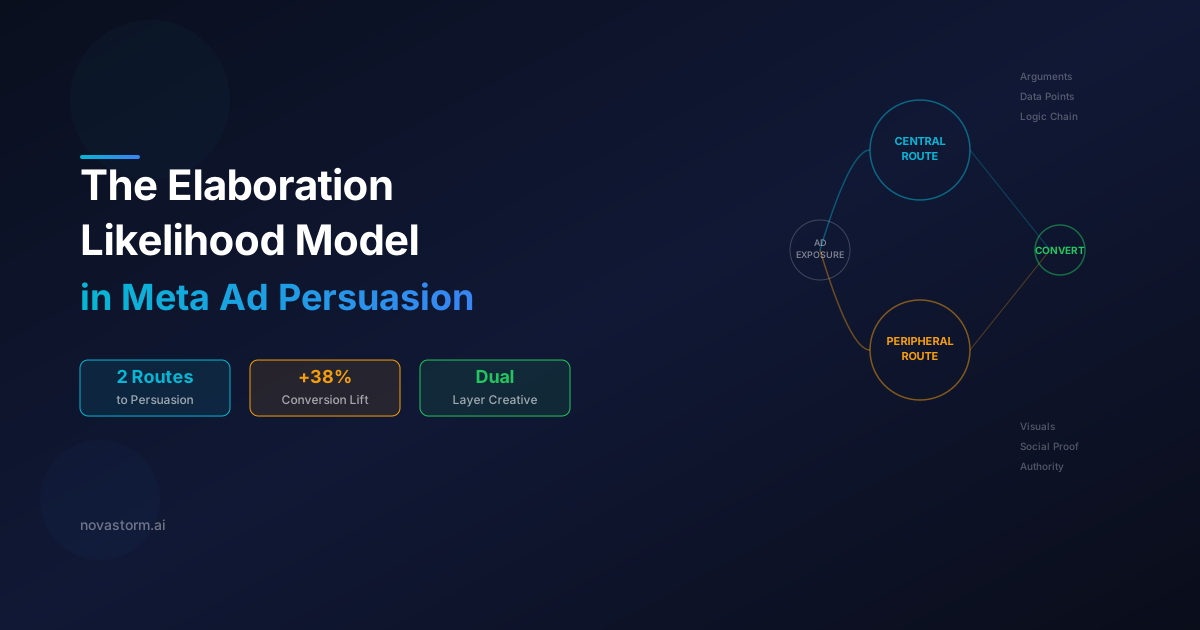
The Elaboration Likelihood Model in Meta Ad Persuasion
Learn how the Elaboration Likelihood Model shapes Meta ad persuasion through central and peripheral routes. Build ads that persuade at every engagement level.