Exit-Intent Popups for Meta Ads Traffic: Recover Bouncing Visitors
Discover how exit-intent popups can recover bouncing Meta Ads visitors. Learn popup design, offer strategies, timing triggers, mobile alternatives, and A/B testing methods.
Exit-Intent Popups for Meta Ads Traffic: Recover Bouncing Visitors
You paid for the click. The visitor landed on your page. And now they are about to leave without converting. This scenario plays out millions of times a day across Meta Ads campaigns, and it represents one of the largest leaks in any paid acquisition funnel. Exit-intent popups for Meta Ads traffic offer a last-chance mechanism to capture value from visitors who would otherwise vanish without a trace.
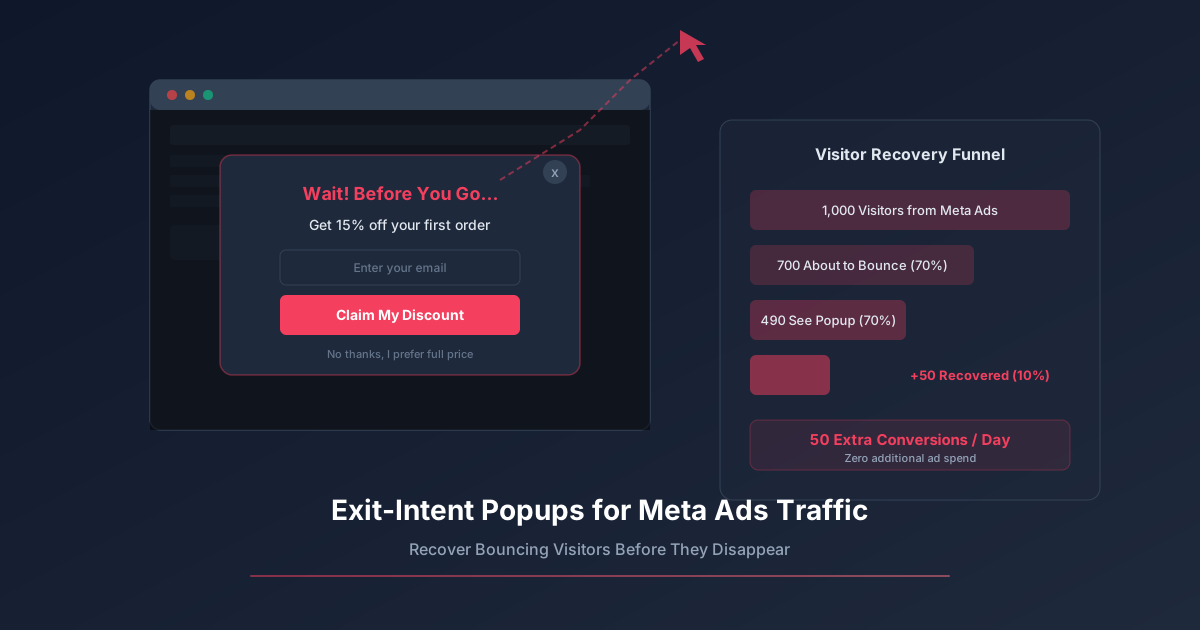
When implemented correctly, exit-intent popups can recover between five and fifteen percent of abandoning visitors. That means if your landing page receives a thousand visitors per day and you recover even fifty of them, you have effectively earned fifty additional conversions without spending another dollar on ads. This article explains how exit-intent technology works, how to design popups specifically for paid social traffic, and how to test your way to optimal performance.
How Exit-Intent Technology Works
Exit-intent detection relies on tracking cursor movement patterns in real time. On desktop, the technology monitors the mouse position and velocity. When the cursor moves rapidly toward the top of the browser window, specifically toward the address bar, tabs, or close button, the system interprets this as a signal that the user intends to leave. At that precise moment, the popup appears.
The detection algorithms have become increasingly sophisticated. Modern exit-intent scripts account for cursor speed, direction, and even hesitation patterns. Some systems also factor in scroll depth and time on page to avoid triggering prematurely on visitors who are simply navigating the interface. The best implementations feel well-timed rather than intrusive because they only fire when there is genuine evidence of departure.
For exit-intent popups for Meta Ads traffic specifically, timing sensitivity is crucial. Paid social visitors have shorter attention spans and lower commitment than organic visitors. If your popup triggers too early, it creates annoyance. If it only triggers on mouse-to-close-button behavior, you miss visitors who use keyboard shortcuts or mobile back buttons. A multi-signal approach that combines cursor tracking with time-based and scroll-based triggers produces the most reliable coverage.
Popup Design Principles for Paid Traffic
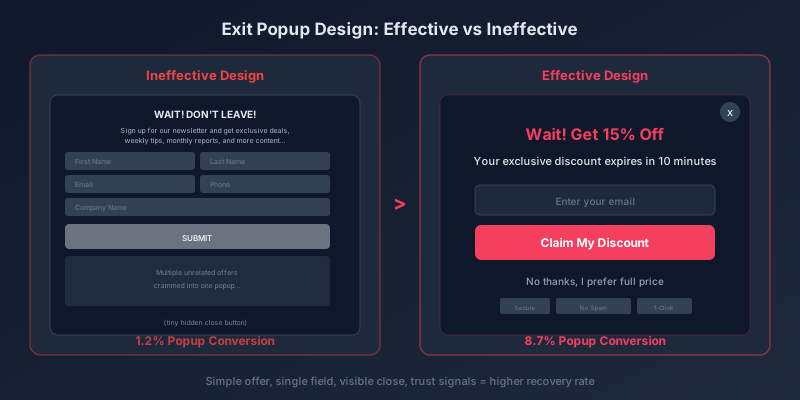
The design of your exit-intent popup determines whether it recovers a visitor or accelerates their departure. For paid social traffic, simplicity wins. Your popup should communicate one clear message, present one clear offer, and require one clear action. Multi-offer popups, busy layouts, and walls of text all underperform focused, clean designs.
Visual contrast is essential. The popup overlay should dim the background page sufficiently to make the popup the sole focus of attention. Use a clean background for the popup itself, typically white or very dark, with a single accent color for the call-to-action button. The headline should be the largest text element, immediately communicating the value of staying.
Always include a visible and easy-to-find close button. Trying to hide or delay the close option increases frustration and damages brand perception. Visitors who feel trapped never convert with genuine intent. A prominent X in the corner and a text-based dismiss link like 'No thanks, I do not want to save 20%' give visitors an honest choice while subtly reinforcing the cost of leaving.
Keep the form on the popup minimal. If you are collecting email addresses, ask for the email address and nothing else. If you are redirecting to a special offer, use a single button with no form at all. The faster a visitor can act on the popup, the more likely they will convert before their exit impulse reasserts itself.
Offer Strategies: Discount, Content, and Email
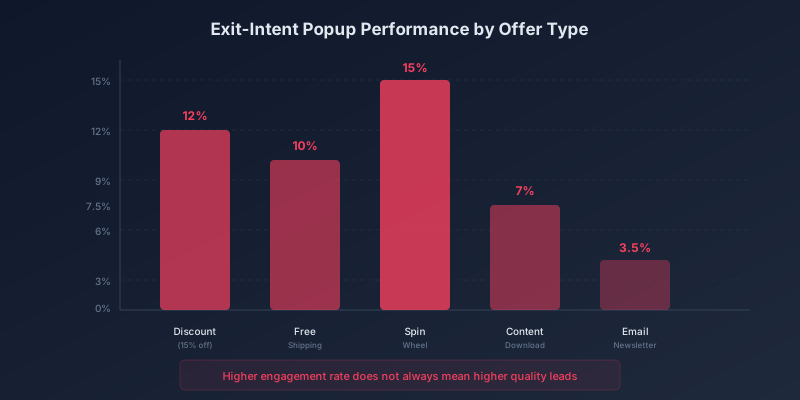
The offer inside your exit-intent popup must be compelling enough to reverse the departure decision. For e-commerce campaigns, discount offers are the most direct approach. A ten to fifteen percent discount code or free shipping offer creates immediate financial incentive. Make the offer exclusive to the popup to add urgency. Language like 'Wait — here is 15% off, just for you' frames the discount as personal and special.
For lead generation campaigns, content offers often outperform discounts. Offering a free guide, checklist, template, or case study gives visitors a low-commitment way to engage with your brand. The key is matching the content offer to the topic of the ad that brought them to the page. If the ad was about email marketing strategies, the popup should offer an email marketing resource, not a generic company newsletter signup.
Email capture popups serve as a long-term recovery mechanism. Even if a visitor does not convert today, capturing their email allows you to nurture them over time. For exit-intent popups for Meta Ads traffic, frame the email signup around specific value rather than a vague 'subscribe to our newsletter' pitch. Tell them exactly what they will receive and when: 'Get our 7-day conversion optimization course, starting tomorrow morning.'
Spin-the-wheel and gamified popups have gained popularity because they add an element of novelty and fun. Visitors spin a virtual wheel to receive a random discount or bonus. These tend to generate high engagement rates but can also attract low-quality leads who are motivated by the game rather than genuine interest in your product. Test them carefully against straightforward offers before committing.
Timing, Triggers, and Frequency Rules
Getting the trigger timing right is critical for exit-intent popups for Meta Ads traffic. The popup should only appear after the visitor has had enough time to evaluate the page. Triggering a popup within five seconds of arrival feels aggressive and desperate. Set a minimum time-on-page threshold, typically between ten and thirty seconds, before enabling exit-intent detection.
Stop wasting ad budget
NovaStorm AI cuts Meta Ads CPA by 30% on average. No complex setup required.
Scroll depth triggers add another dimension of intelligence. A visitor who has scrolled through sixty percent of your page has demonstrated meaningful engagement and is a better candidate for a recovery popup than someone who barely scrolled past the headline. Consider combining time-on-page and scroll-depth requirements so the popup only fires for visitors who have shown genuine interest.
Frequency capping prevents irritation. If a visitor dismisses the popup, do not show it again during the same session. Use cookies or local storage to track popup impressions and enforce a cooldown period, typically between one and seven days. Showing the same popup repeatedly to the same person degrades the user experience and trains them to immediately close anything that appears.
Page-level targeting ensures relevance. Different landing pages may require different popup offers. Your product page popup should offer a discount, while your blog content popup should offer a content upgrade. Use URL-based rules to match popups to pages so visitors always see an offer aligned with their current context.
Mobile Alternatives to Exit-Intent
Traditional exit-intent detection does not work on mobile because there is no mouse cursor to track. Since the majority of Meta Ads traffic comes from mobile devices, this is a significant limitation that requires alternative approaches. The most common mobile exit-intent alternatives rely on behavioral signals rather than cursor movement.
Back-button interception detects when a mobile user taps the browser back button and displays the popup before navigation completes. This approach works but can feel intrusive and may violate some platform guidelines. Use it judiciously and always allow users to continue leaving with a single tap.
Scroll-up detection triggers the popup when a mobile user scrolls back toward the top of the page after having scrolled down. This upward scrolling motion often indicates an intent to leave, especially when combined with high scroll velocity. It serves as a reasonable proxy for desktop exit-intent behavior.
Idle timeout popups appear after a period of inactivity. If a visitor has not interacted with the page for twenty or thirty seconds, the popup appears under the assumption that they may be about to switch apps or close the browser. This approach is less precise than cursor-based detection but provides meaningful coverage on mobile.
Regardless of the trigger method, mobile popups must be designed to comply with Google's interstitial guidelines. Full-screen popups that cover the main content can result in search ranking penalties and a poor user experience. Use partial-screen overlays, slide-up panels, or bottom-sheet designs that allow the user to see part of the underlying page.
Impact on Conversion Rate
The measurable impact of exit-intent popups for Meta Ads traffic varies by industry, offer quality, and implementation. Industry benchmarks suggest that well-designed exit popups convert between three and ten percent of the visitors who see them. Applied to an abandonment rate of seventy percent, this means recovering roughly two to seven percent of total page visitors.
The compound effect on campaign economics is substantial. If your cost per click is two dollars and your baseline conversion rate is three percent, your cost per acquisition is approximately sixty-seven dollars. Adding an exit popup that converts five percent of abandoning visitors effectively raises your overall conversion rate to roughly six and a half percent, dropping your CPA to around thirty-one dollars. That is a fifty-four percent reduction in acquisition cost from a single intervention.
However, there is a nuance worth tracking. Exit popup conversions may be lower quality than primary page conversions because the visitor's initial intent was to leave. Monitor downstream metrics like email open rates, trial-to-paid conversion, and customer lifetime value for popup-recovered conversions separately. If the quality delta is significant, factor it into your ROI calculations.
A/B Testing Your Exit-Intent Popups
Testing is the difference between a popup that recovers five percent of visitors and one that recovers fifteen percent. Start by testing the offer itself, as this is the single highest-impact variable. Compare discount versus content offer versus email capture to determine which resonates most with your specific audience.
Next, test headline copy. The popup headline has approximately two seconds to capture attention and communicate value. Test benefit-focused headlines against urgency-focused headlines against curiosity-focused headlines. For example, compare 'Wait — Get 20% Off Your First Order' against 'Your Cart is About to Expire' against 'Before You Go, See What You are Missing.' Each approach appeals to different psychological motivators.
Design variations are worth testing once you have optimized the offer and copy. Test image versus no image, single-color versus multi-color, and different button colors and sizes. These changes typically produce smaller lifts than offer and copy changes, but they compound over time.
Trigger timing tests can reveal significant performance differences. Compare a ten-second minimum delay against a twenty-second delay against a thirty-second delay. Shorter delays capture more visitors but may produce lower conversion rates per impression. Longer delays miss some visitors but reach a more qualified audience. The optimal timing depends on your page content and average time-on-page metrics.
Track both popup conversion rate and overall page conversion rate. A popup that converts at eight percent but annoys other visitors enough to drop the baseline page conversion rate is a net negative. The goal is to lift total conversions, not just popup conversions. Split testing at the page level, comparing pages with popups enabled versus disabled, gives you the clearest picture of net impact.
Novastorm AI automates Meta Ads routine — from monitoring to optimization. Learn more at novastorm.ai
Disclaimer: This article was generated with the assistance of AI and reviewed by the NovaStorm AI team. While we strive for accuracy, we recommend verifying specific data points and consulting official sources (linked where available) for critical business decisions.
Ready to automate your Meta Ads?
NovaStorm AI takes full responsibility for your campaigns — from monitoring to optimization.
Start NowRelated Articles

AI Funnel Fingerprint Analysis for Meta Ads
Use AI-powered Meta Ads analytics to find funnel drop-offs and automate journey-specific creative for better conversions.

AI-Powered Meta Ads Lead Qualification for Sales
Learn how AI-powered Meta Ads lead qualification and conversation intelligence speed up sales handoff and improve lead quality.

AI Workflows for Cross-Platform Ad Repurposing
Learn how AI-powered Meta Ads creative adapter workflows improve creative repurposing, consistency, and performance across platforms.