Email Marketing and Meta Ads: Creating an Integrated Strategy
Discover how to integrate email marketing and Meta Ads for a unified cross-channel strategy. Learn about customer list sync, lookalike audiences, suppression lists, and lifecycle marketing.
Email Marketing and Meta Ads: Creating an Integrated Strategy
Email marketing and Meta Ads are two of the most effective digital marketing channels available today. Yet most businesses operate them in complete isolation. The email team sends newsletters and automated sequences while the advertising team manages campaigns in Ads Manager. By integrating email marketing and Meta Ads into a cohesive strategy, you unlock capabilities that neither channel can achieve alone, from hyper-targeted retargeting to efficient budget allocation through suppression lists.
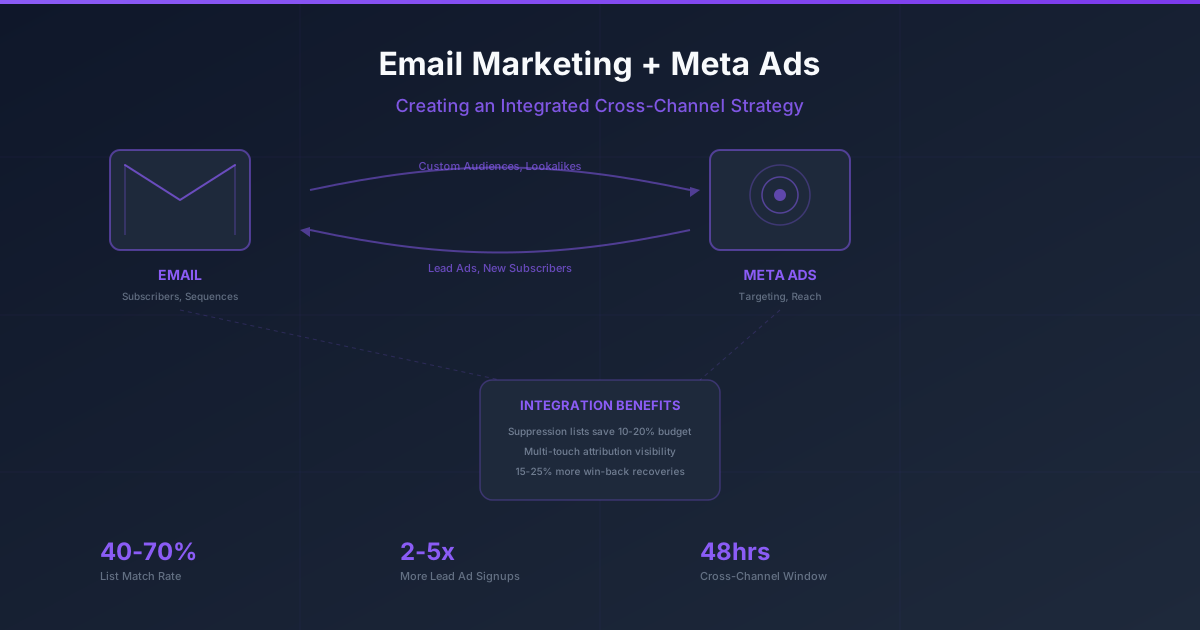
The integration between email marketing and Meta Ads creates a feedback loop that strengthens both channels. Your email subscriber data enhances ad targeting precision. Your ad campaigns grow your email list. Together, they create a multi-touchpoint experience that meets customers wherever they are in their journey, whether they are checking their inbox or scrolling through their feed.
Customer List Sync: The Foundation of Integration
The foundation of any email marketing and Meta Ads integration strategy is customer list synchronization. Meta allows you to upload customer lists containing email addresses, phone numbers, and other identifiers to create Custom Audiences. When these lists are matched against Meta user profiles, you can target your existing subscribers directly on Facebook and Instagram.
Match rates typically range from 40 to 70 percent depending on the quality of your list and whether subscribers used the same email for their Meta accounts. To improve match rates, include multiple identifiers when possible. An email address plus phone number plus first and last name will match at significantly higher rates than email alone.
Automate the sync process rather than manually uploading lists. Most email service providers offer direct integrations with Meta Business Suite. Platforms like Klaviyo, Mailchimp, and HubSpot can automatically sync your segments to Meta audiences, keeping them current as subscribers join, leave, or change segments. This ensures your ad targeting always reflects your latest email data.
Email Subscriber Retargeting Strategies
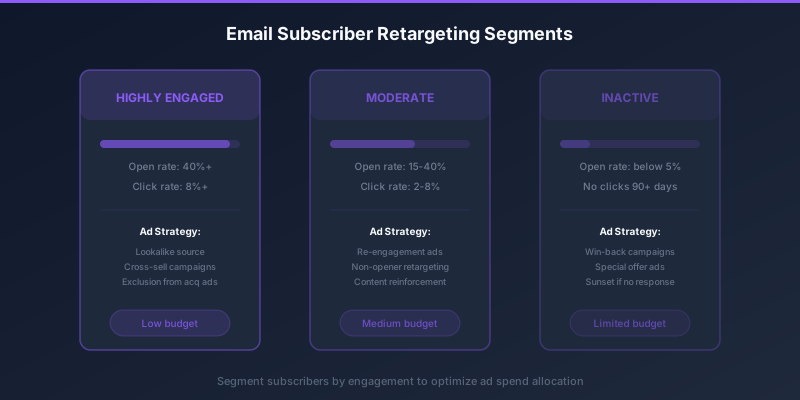
Once your email lists are synced as Custom Audiences, you can deploy powerful retargeting strategies that reinforce your email campaigns. One effective approach is to retarget subscribers who did not open a critical email. If you send a product launch announcement and 60 percent of your list does not open it, you can reach those non-openers with the same message as a Meta ad.
Segment your email retargeting by engagement level. Create separate Custom Audiences for highly engaged subscribers who open and click frequently, moderately engaged subscribers who open occasionally, and inactive subscribers who have not engaged in months. Each segment deserves different ad messaging and budget allocation within your email marketing and Meta Ads strategy.
Time your retargeting to complement email delivery. If you send emails on Tuesday mornings, run corresponding Meta ads Tuesday afternoon through Thursday. This creates a multi-channel impression window where subscribers see your message in their inbox and their social feed within the same 48-hour period, dramatically increasing recall and action rates.
Lookalike Audiences From Email Lists
Perhaps the most powerful application of email marketing and Meta Ads integration is creating Lookalike Audiences from your best email segments. A Lookalike based on your highest-value customers or most engaged subscribers will outperform interest-based targeting in most cases because it is modeled on people who have already demonstrated affinity for your brand.
Create multiple Lookalike source audiences from different email segments. Your top 10 percent of customers by lifetime value makes an excellent source for purchase-optimized campaigns. Your most engaged email subscribers who consistently open and click form a great source for engagement campaigns. Your recent converters who purchased in the last 30 days create timely Lookalikes for seasonal promotions.
Test different Lookalike percentages. One percent Lookalikes are the most similar to your source audience and typically produce the best results for conversion campaigns. Three to five percent Lookalikes cast a wider net while maintaining reasonable similarity. For awareness campaigns, you might expand to five to ten percent. Always split test to find the optimal balance between audience size and similarity.
Coordinated Campaign Timing and Messaging
The real power of email marketing and Meta Ads integration reveals itself through coordinated campaigns. When your email and ad teams plan together, every campaign becomes multi-channel by default. A product launch is not just an email blast or an ad campaign; it is a synchronized sequence where each channel plays a specific role.
Stop wasting ad budget
NovaStorm AI cuts Meta Ads CPA by 30% on average. No complex setup required.
For a major campaign, consider this timeline. One week before launch, run teaser ads to your email subscriber audience on Meta. Three days before, send a preview email to your VIP segment. On launch day, send the main email to your full list and simultaneously activate broad targeting ads. One day after launch, retarget email non-openers and ad engagers who did not convert. One week later, send a reminder email and run urgency-focused retargeting ads.
Maintain consistent messaging across channels while adapting the format. Your email can include detailed copy, multiple images, and several calls to action. Your Meta ad should distill the same message into a single compelling visual and concise headline. The consistency builds recognition while the format variation prevents fatigue.
Suppression Lists: Saving Budget and Improving Experience
Suppression lists are an underused but essential component of email marketing and Meta Ads integration. By excluding specific email segments from ad targeting, you avoid wasting budget on people who have already converted or who are unlikely to respond. Upload your recent purchaser list as an exclusion audience to prevent showing acquisition ads to existing customers.
Create suppression audiences for unsubscribers, refund requesters, and support escalation cases. There is no value in advertising to someone who just unsubscribed from your emails or had a negative customer service experience. Similarly, suppress your active subscription customers from seeing ads for the subscription they already have.
Suppression lists also improve customer experience. Nobody enjoys seeing ads for a product they already purchased. By maintaining clean suppression audiences, you reduce ad fatigue among your existing customers and ensure your budget reaches genuinely new prospects. Calculate the budget saved by suppression lists and you will often find it is substantial, sometimes ten to twenty percent of total ad spend.
Email Capture Through Meta Lead Ads
The integration works both ways. Meta Lead Ads are a powerful tool for growing your email list with qualified subscribers. Lead Ads feature pre-filled forms that make it easy for people to share their email address without leaving Facebook or Instagram. The reduced friction typically results in two to five times more sign-ups compared to sending traffic to an external landing page.
Connect your Lead Ads to your email service provider through native integrations or tools like Zapier. When someone submits a Lead Ad, they should immediately enter your email welcome sequence. This fast follow-up is critical because lead intent diminishes quickly. A welcome email sent within minutes of sign-up will generate significantly higher engagement than one sent hours later.
Offer genuine value in exchange for the email address. Lead magnets such as guides, templates, discount codes, or exclusive content work well in the email marketing and Meta Ads ecosystem. Test different offers to find what attracts the most qualified subscribers, meaning those who actually open and engage with subsequent emails, not just the highest volume of sign-ups.
Lifecycle Marketing Across Channels
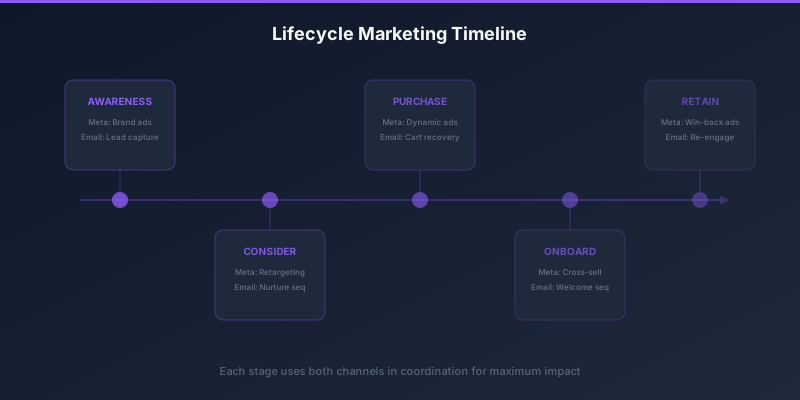
The ultimate expression of email marketing and Meta Ads integration is lifecycle marketing that follows customers from first touch to long-term retention. Map out your customer journey and identify where each channel adds the most value. Ads excel at awareness and acquisition. Email excels at nurturing and retention. Together, they cover the entire lifecycle.
During the awareness stage, Meta Ads introduce your brand to new audiences while Lead Ads capture emails. In the consideration stage, email sequences nurture leads while retargeting ads reinforce key messages. At the purchase stage, abandoned cart emails and dynamic retargeting ads work in tandem to recover lost sales. Post-purchase, email onboarding sequences are complemented by cross-sell ads.
For retention and win-back, create coordinated campaigns that re-engage lapsed customers across both channels simultaneously. An email win-back sequence paired with Meta retargeting ads typically recovers 15 to 25 percent more lapsed customers than either channel alone. The multi-channel approach ensures your message reaches people regardless of which platform they are most active on.
Measure the integrated impact by tracking cross-channel attribution. Use UTM parameters on all email links and ad clicks, then analyze the overlap in your analytics platform. You will likely discover that many conversions involve touchpoints from both channels, reinforcing the importance of running email marketing and Meta Ads as a unified strategy rather than separate efforts.
Building an integrated email and Meta Ads strategy requires initial setup effort, but the ongoing benefits compound over time. As your email list grows, your ad targeting improves. As your ads drive more subscribers, your email revenue increases. This virtuous cycle is the hallmark of sophisticated cross-channel marketing that delivers sustainable growth.
Novastorm AI automates Meta Ads routine — from monitoring to optimization. Learn more at novastorm.ai
Disclaimer: This article was generated with the assistance of AI and reviewed by the NovaStorm AI team. While we strive for accuracy, we recommend verifying specific data points and consulting official sources (linked where available) for critical business decisions.
Ready to automate your Meta Ads?
NovaStorm AI takes full responsibility for your campaigns — from monitoring to optimization.
Start NowRelated Articles

AI Funnel Fingerprint Analysis for Meta Ads
Use AI-powered Meta Ads analytics to find funnel drop-offs and automate journey-specific creative for better conversions.

AI-Powered Meta Ads Lead Qualification for Sales
Learn how AI-powered Meta Ads lead qualification and conversation intelligence speed up sales handoff and improve lead quality.

AI Workflows for Cross-Platform Ad Repurposing
Learn how AI-powered Meta Ads creative adapter workflows improve creative repurposing, consistency, and performance across platforms.