

Dynamic Creative Optimization vs Manual Testing: Which Wins
Choose dynamic creative for exploration and controlled testing for causal conclusions, with correct combination counts and reviewed variants.
Use dynamic creative to explore eligible combinations, and a controlled experiment to answer whether one approach improves your business outcome. They solve different problems. Individually assembled ads are easier to audit, but manual assembly alone does not create an A/B test.
Count combinations without assuming all will be delivered
Illustrative arithmetic: five images × five headlines × five descriptions = 125 theoretical combinations. Add five button choices as a fourth independent set and the count is 5⁴ = 625. This is combinatorics, not a claim that Meta accepts five assets in every slot, permits all combinations or serves them evenly.
Check the actual creative options for the objective and account. The official creative schema contains an asset feed field; it does not guarantee a current DCO switch, export of every delivered combination or a supported maximum asset count. Keep a versioned asset list and preview accepted combinations before authorizing delivery.
Compare the methods on the question you need answered
| Question | Adaptive combination delivery | Separately prepared variants |
|---|---|---|
| Which assets deserve more exploration? | Can provide directional evidence from selected delivery | Can reveal candidates, still selected by delivery |
| Did this one change cause more retained purchases? | Unequal allocation cannot answer by raw element averages alone | Requires documented random assignment and comparable conditions |
| Can every message combination be approved? | Review all plausible claim/visual combinations or avoid mixing | Each complete message can be reviewed directly |
| Can the exact combination be recreated? | Verify the actual export/preview evidence; missing combinations remain unknown | Save complete source assets, text and settings |
A higher CTR does not demonstrate that the delivery system was optimizing clicks. Check the saved performance goal. Nor does an element report establish an independent headline effect when images, audience exposure and timing also differ. No specific bandit implementation or universal learning deadline is assumed.
A completed discovery-to-validation plan
Stop wasting ad budget
NovaStorm AI cuts Meta Ads CPA by 30% on average. No complex setup required.
Hypothetical desk organizer offer: image A shows compartments; image B shows a desk in use. Both have the same price, headline and destination. Hypothesis: the use-context image increases retained purchases. Discovery logs identify B as a candidate; this is a proposed test, not an observed result.
- Before discovery, approve all asset combinations and a bounded spend ceiling. Record accepted settings, versions and actual report dimensions.
- If reporting cannot identify the full image/headline/description/button combination, do not label an exported element a proven winning ad. Reassemble a complete reviewed candidate and record that it is newly constructed.
- For validation, use an eligible randomized concurrent experiment. Hold offer, audience eligibility, schedule, placement eligibility, destination and measurement constant; select a sample and primary metric before launch.
- Use mature purchase cohorts and a separate returns review. Stop for operational failures or authorized spend exhaustion; preserve an inconclusive result if the planned evidence is not reached.
Hypothetical mature outcomes: each arm spends $800. A has 32 retained purchases, CPA $25; B has 40, CPA $20. With $30 contribution per purchase, media-only contribution is $160 versus $400. These small assumed counts illustrate arithmetic and require uncertainty analysis before a winner decision. Do not claim a population DCO win rate from them.
Scale only a reviewed decision
If validation supports a useful effect within the approved risk, deploy a bounded change and check that mature contribution remains acceptable. Discovery and validation audiences must follow the experiment’s assignment rules; exclusions alone do not guarantee randomness, and a sequential before/after comparison can be confounded by seasonality.
Prepare the complete reviewed concept and campaign structure in NovaStorm as a draft, inspect the saved content and status, and obtain publication approval. Campaigns default to Paused; unpublished ad sets are local drafts. Use the testing pipeline worksheet to retain the assignment, maturity and decision evidence; no automatic experiment export is implied.
Published by NovaStorm AI. Worked examples and proposed tests are labeled in the article.
Disclaimer: This article was generated with the assistance of AI and reviewed by the NovaStorm AI team. While we strive for accuracy, we recommend verifying specific data points and consulting official sources (linked where available) for critical business decisions.
Ready to automate your Meta Ads?
NovaStorm AI takes full responsibility for your campaigns — from monitoring to optimization.
Start NowMore on Creative and audience testing
Automated Creative Testing Frameworks for Meta Ads at Scale
Design a Meta creative testing pipeline with sample planning, mature conversions, reviewed scaling decisions and explicit cost limits.
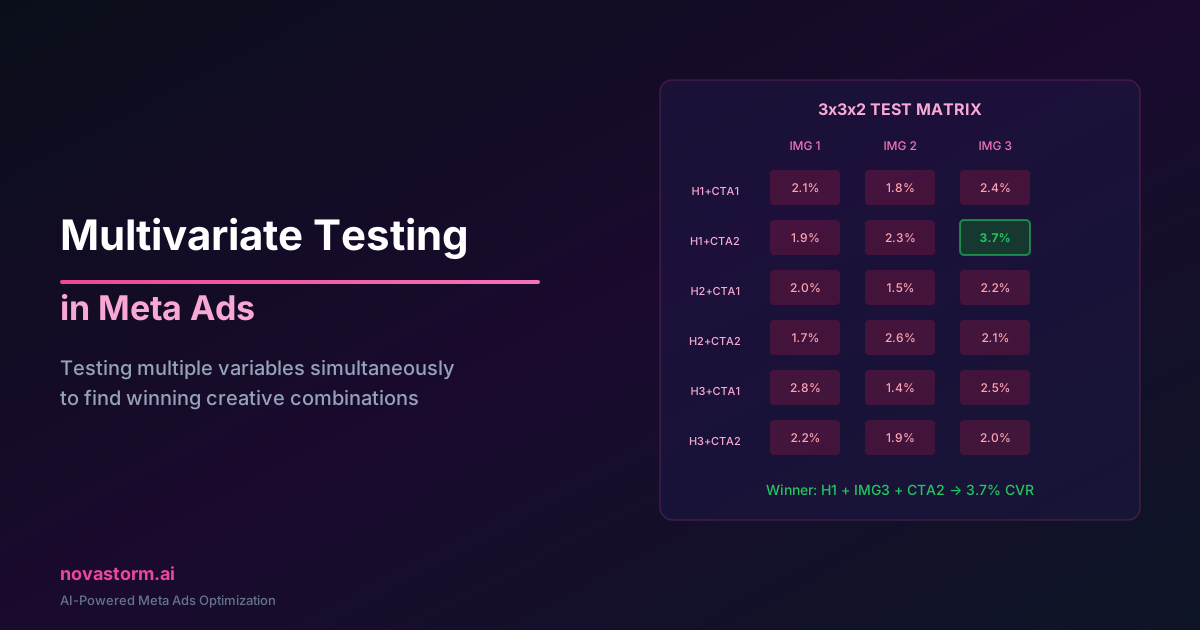
Multivariate Testing in Meta Ads: Testing Multiple Variables
Build an 18-cell creative matrix, distinguish adaptive delivery from random assignment, and plan interactions, uncertainty and an affordable comparison.
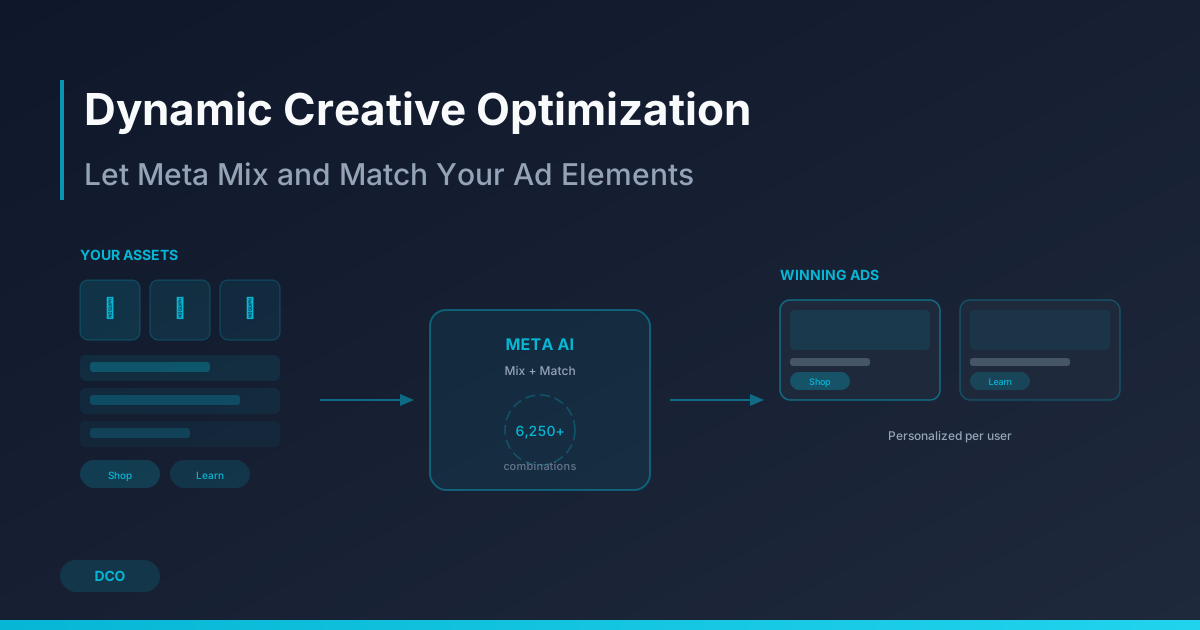
Dynamic Creative Optimization: Let Meta Mix and Match Your Ad Elements
Use available creative automation as exploratory delivery, calculate combinations honestly and validate selected variants in a separate controlled comparison.
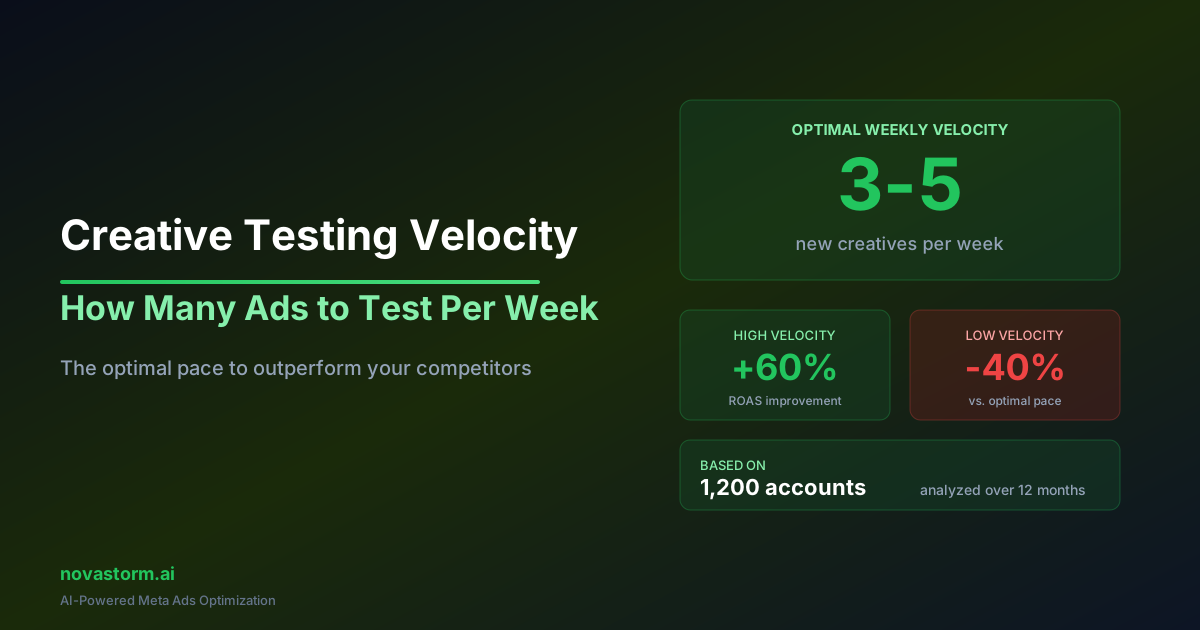
Creative Testing Velocity: How Many Ads to Test Per Week
Choose creative production pace from team hours, media budget and mature evidence; keep asset counts separate from experimental conclusions.