

The Decoy Effect in Meta Ad Pricing Displays
Use the decoy effect as a testable pricing-display hypothesis with correct dominance, real offers and retained contribution rather than unsupported uplifts.
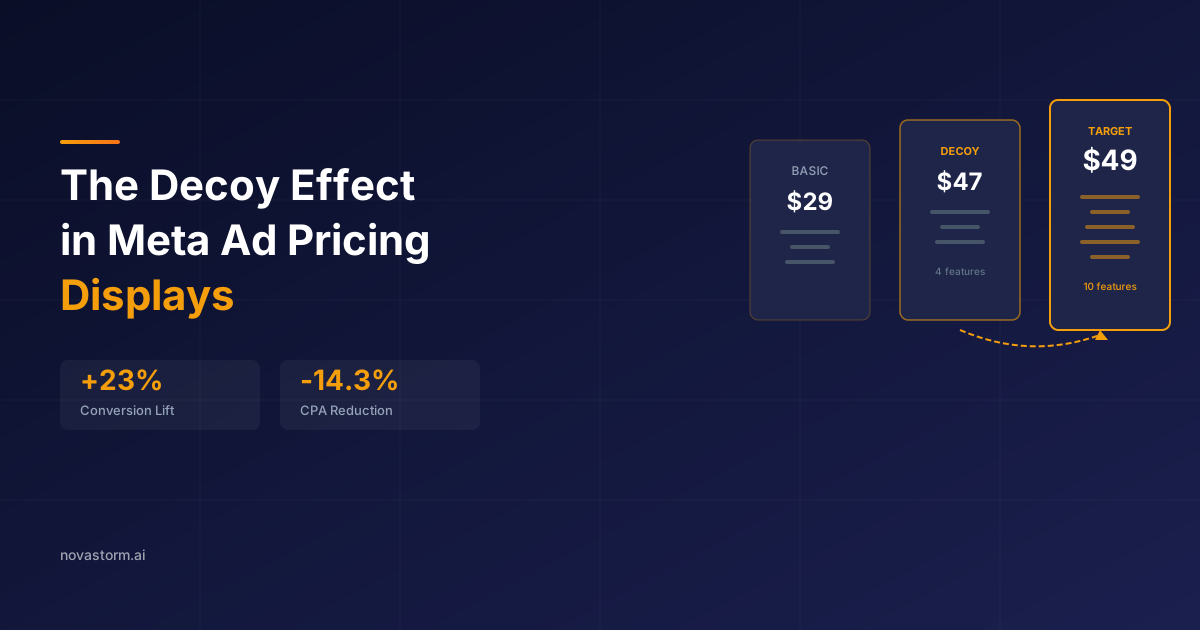
The decoy effect describes how adding an asymmetrically dominated alternative can change preference among existing options. The foundational reference is Huber, Payne and Puto (1982). It motivates a pricing-display hypothesis, not a universal conversion uplift for Meta ads.
Check whether the option is actually dominated
The following plans are hypothetical, with price and included capacity as the only comparison dimensions. Real plans may differ on support, contract or other attributes, which must also be disclosed.
| Plan | Monthly price | Included projects | Comparison |
|---|---|---|---|
| Basic | $20 | 3 | Cheaper than the target; a meaningful alternative |
| Target | $49 | 10 | No more expensive than the decoy and more capacity |
| Decoy illustration | $49 | 4 | Dominated by Target on the stated dimensions |
A $47 plan with four projects is cheaper than a $49 plan with ten. It trades price for capacity, so it is not strictly dominated on both dimensions. Calling it a decoy does not remove that tradeoff. The illustration above shows the definition; it is not a recommendation to invent a useless or unavailable plan.
Keep every offer real and understandable
- Show plans a buyer can actually purchase, including all material features, billing commitments and exclusions.
- Explain a recommendation by fit, such as project capacity. Do not use “Most Popular” without a dated, defined selection count.
- Check card order and legibility in the actual placement; viewers may not see every card or in the planned sequence.
- Avoid fake deadlines, hidden charges and unsupported value totals.
- Do not assume a specific feature-removal percentage, price gap or maximum decoy-selection rate is optimal.
Stop wasting ad budget
NovaStorm AI cuts Meta Ads CPA by 30% on average. No complex setup required.
Test selection, contribution and retention
Compare the current truthful display with a truthful alternative display for eligible assigned visitors. Keep the offers themselves, allocation and customer handling comparable if the intended change is presentation. Prespecify target-plan selection, retained contribution per assigned visitor, refund/cancellation maturity and uncertainty. More target-plan selections can still reduce profit if total paid customers or retention decline.
| Teaching calculation | Current display | Alternative display |
|---|---|---|
| Assigned visitors | 1,000 | 1,000 |
| Retained paid customers | 40 | 45 |
| Contribution per customer before display/media costs | $30 | $25 |
| Total contribution | $1,200 | $1,125 |
These synthetic counts show that a higher retained-customer count can accompany $75 less contribution. They are not a measured decoy effect. Include production and media costs, power based on a meaningful effect, and an approved loss ceiling. A $500 budget or seven days does not guarantee a conclusive test.
Prepare the evidence-backed pricing brief and campaign draft in NovaStorm and obtain product-owner approval of every price and badge. Review saved fields before publication; the commercial test and retention ledger remain separate.
Published by NovaStorm AI. Worked examples and proposed tests are labeled in the article.
Disclaimer: This article was generated with the assistance of AI and reviewed by the NovaStorm AI team. While we strive for accuracy, we recommend verifying specific data points and consulting official sources (linked where available) for critical business decisions.
Ready to automate your Meta Ads?
NovaStorm AI takes full responsibility for your campaigns — from monitoring to optimization.
Start NowMore on Buyer psychology

Neuromarketing for Meta Ads: Test One Visual Attention Hypothesis
Turn a visual attention idea into one honest creative hypothesis; compare mature purchase cost without claiming neuroscience or guaranteed sales.
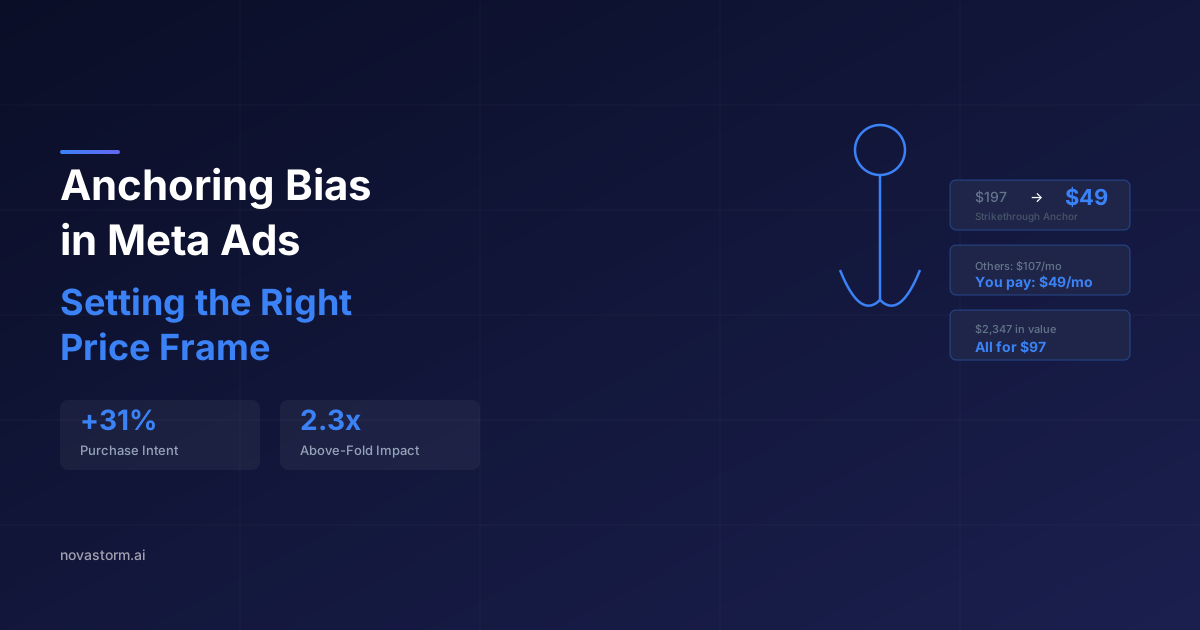
Anchoring Bias in Meta Ads: Setting the Right Price Frame
Prepare truthful price frames with documented references, visible subscription commitments and a retained-contribution test of anchoring hypotheses.
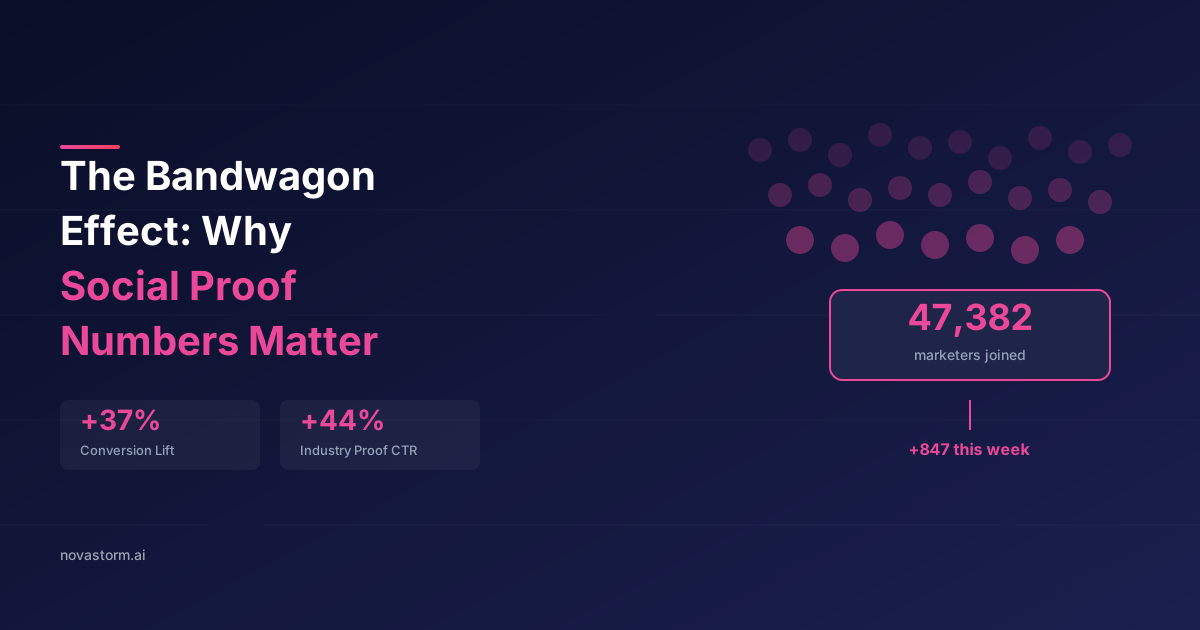
The Bandwagon Effect: Why Social Proof Numbers Matter in Ads
Audit social-proof numbers with a dated claim register and correct CTR comparisons, then test retained contribution with approved evidence.
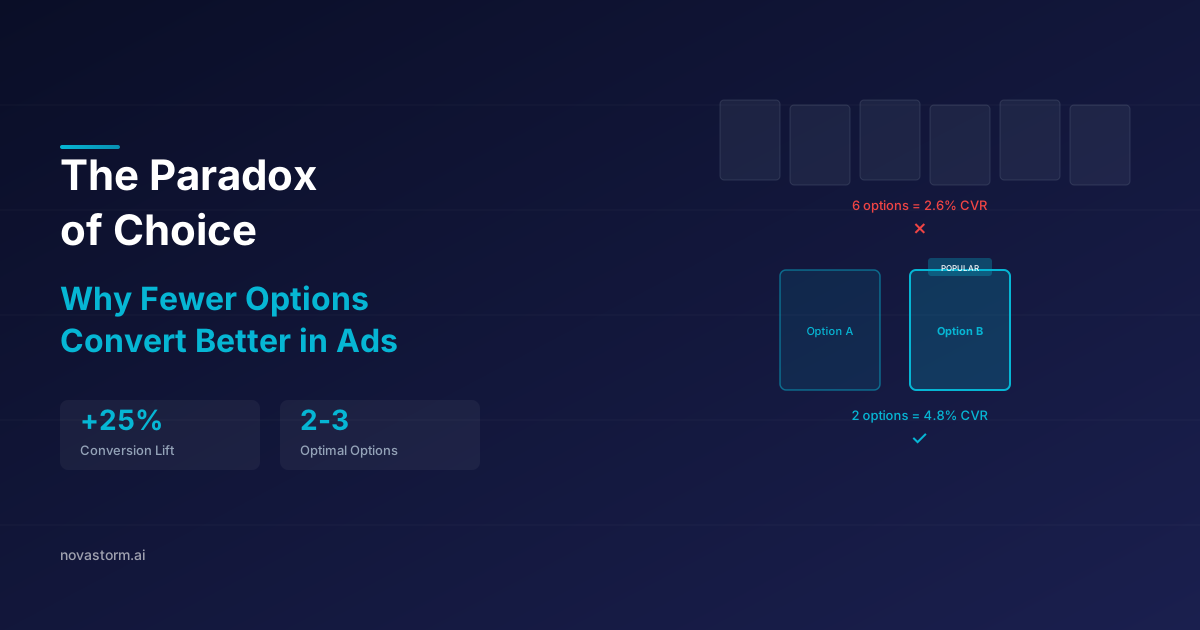
The Paradox of Choice in Meta Ads: Test Clearer Product Selection
Test choice reduction by distinguishing narrative cards from assortment decisions, using truthful recommendations and retained-contribution outcomes.