

Conversion Rate Optimization for Meta Ads Landing Pages
Turn CRO observations into an owned backlog, reproduce mobile defects and separate repair acceptance from a controlled conversion hypothesis.
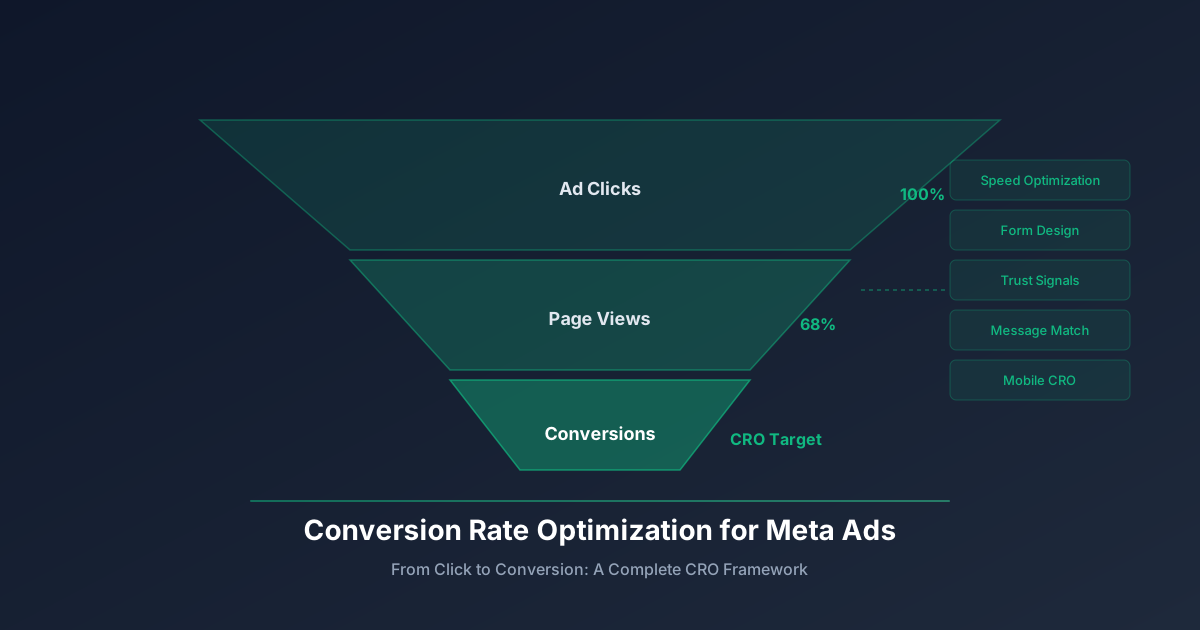
Prioritize a landing-page change by the behavior you can verify. A broken required field is a defect to repair; clearer delivery wording is a hypothesis to test. The mobile ad-to-purchase walkthrough helps locate the problem before you assign work.
A filled queue with explicit assumptions
This backlog is a hypothetical teaching example, not a measured customer audit. Counts, effort and owners are planning assumptions. Replace them with dated observations and named teammates; severity does not require an invented revenue forecast.
| Priority and observation | Owner and eligible reach | Effort assumption | Evidence and next action |
|---|---|---|---|
| 1: required postal-code field cannot be focused when the keyboard is open | Checkout engineer; affected mobile address submissions, count pending | Half day plus mobile regression review | Reproducible defect assumed for this example; confirm, repair and accept valid submission |
| 2: delivery price appears only after address entry | Commerce owner; all delivery-eligible checkout sessions | One day including offer review | Proposed friction mechanism; test early truthful delivery terms |
| 3: form-start events exceed completed leads | Analytics owner; form sessions in a declared 14-day interval | Half day to reconcile logging | Not yet proven abandonment; compare event receipts with actual submissions |
| 4: visitors request reduced motion | Frontend owner; users with reduced-motion preference | One day including keyboard and playback review | Working requirement; verify content remains available without autoplay |
Prioritize a confirmed blocker by customer harm. For hypotheses, rank evidence strength, eligible reach, cost and reversibility. A “high impact” label means an assumed mechanism, not a measured uplift; do not multiply guessed scores into a precise sales prediction.
Reproduce and accept the address fix
- Record page version, device/browser, viewport, keyboard state and a synthetic address. On an example 390 × 844 viewport, open the shipping form, focus the preceding field, then attempt to focus and complete the required postal code with the keyboard visible.
- Save the actual failure state and steps only if reproduced. Check whether an overlay, layout shift or validation handler blocks focus; repair the identified cause rather than deleting a required fulfillment field.
- Acceptance: focus remains reachable by touch and keyboard, the entered value persists, invalid input receives a meaningful message, and valid submission creates one correct order with the required address.
- Retest keyboard open/closed, orientation and browser variations that the issue affects. Verify price, delivery and confirmation behavior; record pass/fail with a reviewer. This proves the repaired route works, not that conversion increased.
A separate delivery-wording experiment
Stop wasting ad budget
NovaStorm AI cuts Meta Ads CPA by 30% on average. No complex setup required.
Hypothesis: showing accurate delivery charges beside the offer reduces surprise and improves retained purchases per eligible visitor. Control is the existing wording; treatment changes only that placement. Randomize eligible visitors to stable variants, predefine the exposure cap, sample plan, outcome-maturation period and stopping rule. Keep product, prices, fulfillment and acquisition traffic comparable.
Primary outcome: retained paid orders per assigned eligible visitor after the declared refund window. Guardrails: contribution per visitor, delivery accuracy, cancellations and support complaints. Check allocation, event collection and missing outcomes before reading a lift. Use the experiment card to set sample and stopping rules; an underpowered result remains inconclusive.
Capture mobile states as evidence
| State to capture | Reproduction and acceptance | Caption to complete after capture |
|---|---|---|
| Reduced motion | Enable the operating-system preference before loading; inspect initial playback and the manual play control | Device, browser, viewport, page version, preference and observed behavior |
| Invalid postal code | Use synthetic input, submit and inspect the field message, focus and recovery | Input rule, error text, focused element and whether correction succeeds |
| Valid corrected form | Correct the same value, submit once and inspect confirmation | Expected record, actual record and duplicate-submission check |
These are proposed capture instructions; this article does not attach screenshots of those states or claim that the hypothetical address defect was observed on NovaStorm. Keep customer addresses out of images. A screenshot documents a state; interaction checks are still needed for focus, motion and successful recovery.
NovaStorm’s inspected ShowcaseVideo component includes a prefers-reduced-motion branch that skips automatic-play registration and shows a manual Play button. Verify initial-load and preference-change behavior in the delivered page. This code example is not a completed accessibility audit or measured increase in sales. Apply the same discipline to your own form states.
Use form autofill guidance for appropriate field attributes and W3C error-identification guidance for meaningful messages. Close a repair with behavior evidence; close a hypothesis with its experiment result and limits. The funnel instrumentation guide covers the next measurement question.
Published by NovaStorm AI. Planning examples are illustrative assumptions, not measured customer results.
Disclaimer: This article was generated with the assistance of AI and reviewed by the NovaStorm AI team. While we strive for accuracy, we recommend verifying specific data points and consulting official sources (linked where available) for critical business decisions.
Ready to automate your Meta Ads?
NovaStorm AI takes full responsibility for your campaigns — from monitoring to optimization.
Start NowMore on Landing pages and conversion
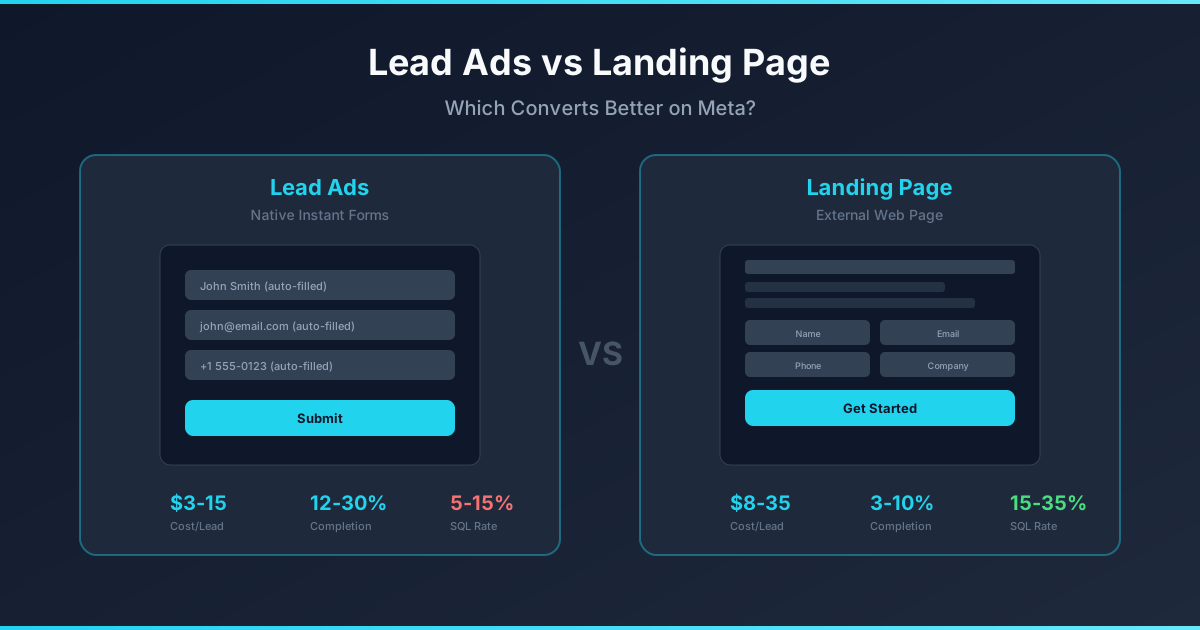
Lead Ads vs Landing Page: Which Converts Better on Meta
Compare instant forms and landing pages through qualified leads, mature sales and allowable customer costs, with a tested handoff and fair assignment.
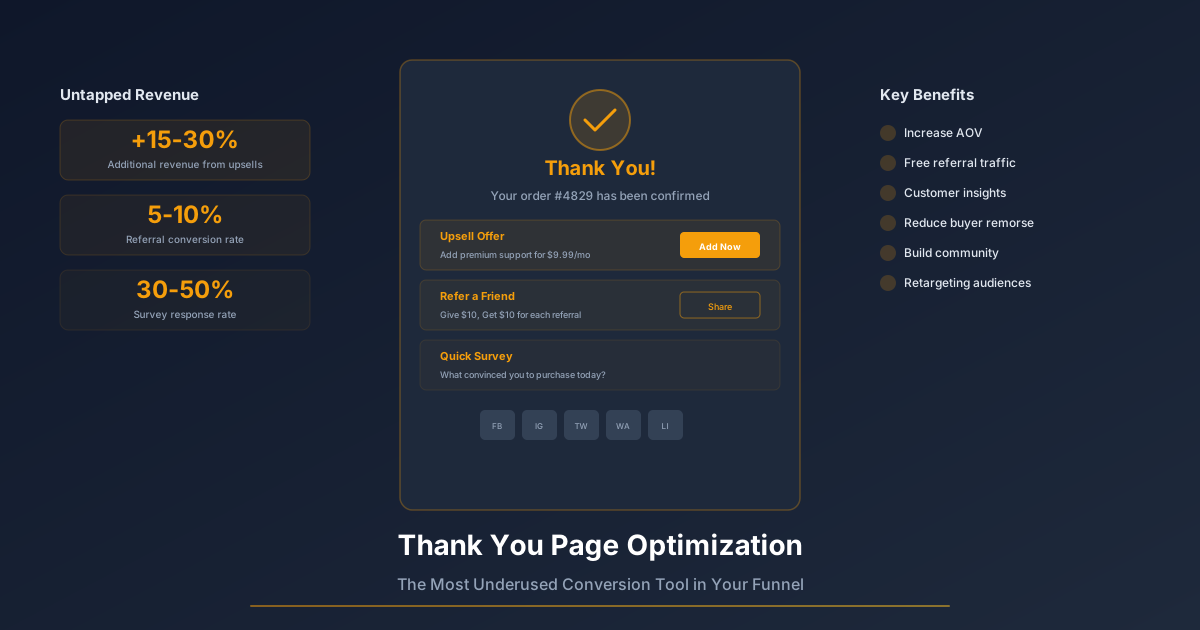
Thank You Page Optimization: Confirm Status and Prevent Duplicate Purchases
Design confirmation messages from verified lead and payment states; prevent duplicate purchases and make optional add-ons and surveys explicit.
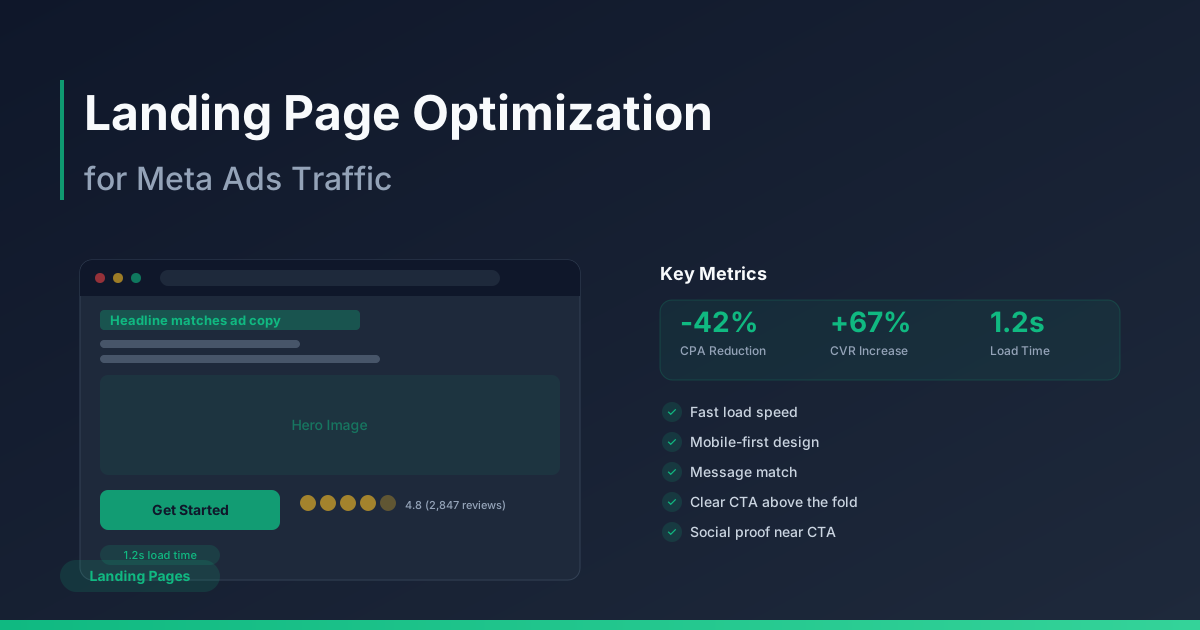
Landing Page Optimization for Meta Ads Traffic
Reproduce the mobile purchase journey, reconcile click/session/checkout/payment denominators and evaluate technical fixes separately from sales effects.
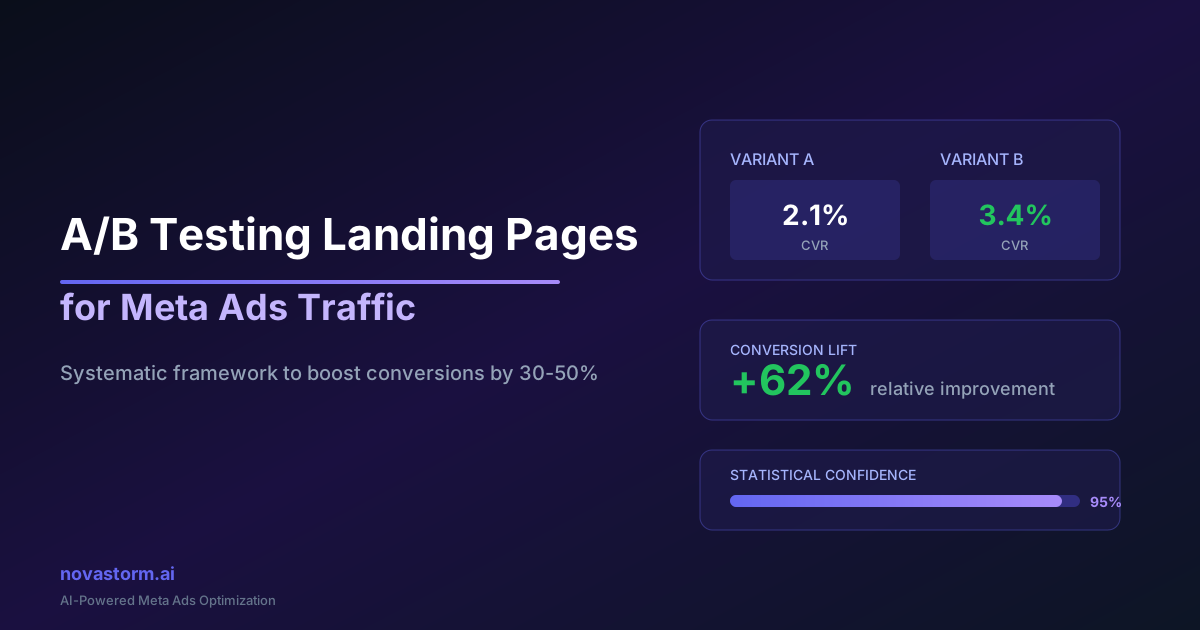
A/B Testing Landing Pages for Meta Ads Traffic
Set up consistent landing-page assignment, check revisit and event integrity, calculate sample and budget needs, and distinguish repairs from experiments.