Content Marketing and Meta Ads Synergy: Amplify Organic With Paid
Learn how to combine content marketing with Meta Ads for maximum impact. Discover strategies for boosting organic posts, content retargeting, and measuring content ad ROI.
Content Marketing and Meta Ads Synergy: Amplify Organic With Paid
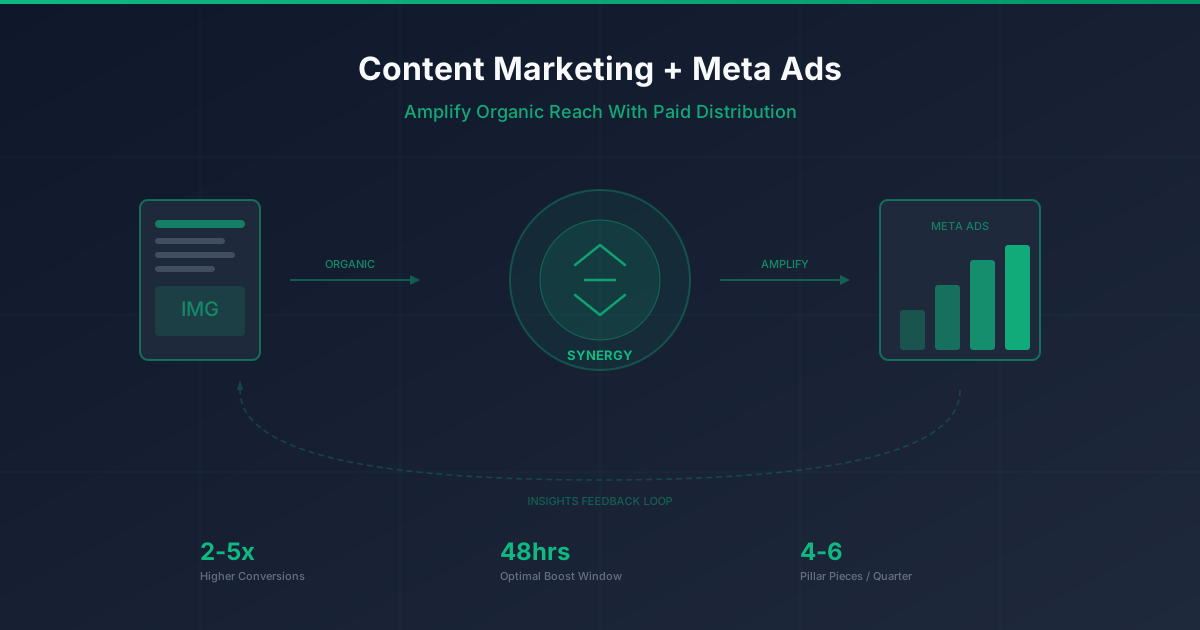
Content marketing and Meta Ads synergy represents one of the most powerful yet underutilized strategies in digital marketing. While many businesses treat organic content and paid advertising as separate channels, the real magic happens when they work together. By amplifying your best-performing content through paid distribution, you can dramatically extend reach, accelerate audience growth, and build a content-to-conversion funnel that delivers consistent results.
The challenge most marketers face is not a lack of content or a lack of ad budget. It is the gap between the two. Content teams produce blog posts, videos, and social updates. Advertising teams run conversion campaigns. But rarely do these efforts converge. When you bridge that gap, the content marketing and Meta Ads synergy becomes a compounding force that outperforms either channel in isolation.
Boosting Top Organic Posts for Maximum Reach
The simplest entry point into content marketing and Meta Ads synergy is boosting your highest-performing organic posts. Not every piece of content deserves paid amplification. The strategy is to let organic engagement serve as a testing ground. Posts that naturally generate above-average likes, comments, and shares have already proven their appeal to your audience.
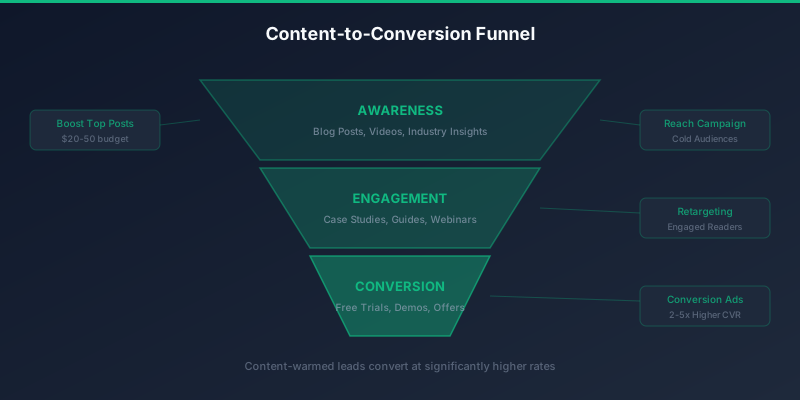
When you boost these validated posts, you are investing in content that has demonstrated resonance. Look at your page insights and identify posts with engagement rates at least two to three times your average. These are your candidates for paid amplification. Even a modest budget of twenty to fifty dollars can extend a top post to thousands of additional viewers who match your target demographics.
The key is timing. Boost posts within the first 24 to 48 hours of publishing while organic momentum is still building. This creates a compounding effect where paid reach fuels additional organic engagement through social proof, which in turn improves the ad performance. The algorithm sees high engagement and rewards the post with even more distribution.
Building a Content-to-Conversion Funnel
The real power of content marketing and Meta Ads synergy emerges when you structure a funnel that guides audiences from awareness to conversion using content at every stage. At the top of the funnel, use educational and entertaining content promoted through brand awareness or reach campaigns. Blog posts, how-to videos, and industry insights work exceptionally well here.
In the middle of the funnel, retarget people who engaged with your top-of-funnel content. Serve them deeper content such as case studies, comparison guides, or webinar recordings. These pieces build trust and position your brand as an authority. At this stage, your audience is familiar with your brand and more receptive to detailed information.
At the bottom of the funnel, people who have consumed multiple content pieces are significantly warmer. Now you can present conversion-oriented ads such as free trials, demos, or special offers. Because these prospects have already engaged with your content at multiple touchpoints, conversion rates at this stage are typically two to five times higher than cold traffic campaigns.
Blog Traffic Ads and Content Distribution
Driving traffic to blog content through Meta Ads might seem counterintuitive when most advertisers focus on direct conversions. However, blog traffic ads play a crucial role in the content marketing and Meta Ads synergy strategy. They build first-party audiences, establish thought leadership, and create retargeting pools of engaged readers.
Use the traffic objective in Ads Manager to drive clicks to your most valuable blog posts. Target interest-based audiences who are likely to find your content relevant. Optimize for landing page views rather than link clicks to ensure you are attracting people who actually read the content rather than accidental clickers.
Track metrics beyond just clicks. Monitor time on page, scroll depth, and subsequent page visits. A blog visitor who spends four minutes reading and visits two additional pages is far more valuable than one who bounces in five seconds. Use these engagement signals to refine your targeting and identify which content topics generate the most qualified readers.
Content Retargeting Sequences That Convert
Content retargeting is where the content marketing and Meta Ads synergy truly shines. By creating custom audiences based on specific content consumption, you can build sequential retargeting campaigns that tell a story over time. Someone who reads your beginner guide gets served your intermediate content next, then your advanced material, and finally a conversion offer.
Set up custom audiences for each content category on your website. Create separate audiences for people who visited your blog in the last seven days, fourteen days, and thirty days. Layer in engagement duration by using the Meta Pixel to track time-on-site events. This allows you to differentiate between casual visitors and deeply engaged readers.
Stop wasting ad budget
NovaStorm AI cuts Meta Ads CPA by 30% on average. No complex setup required.
Design your retargeting sequences with a natural progression. Start with more content, not an immediate sales pitch. People who just read a blog post are in learning mode, not buying mode. Serve them another related article or a downloadable resource. After two or three content touchpoints, introduce your product or service as a natural next step in their journey.
Building Brand Awareness Through Content Ads
Brand awareness campaigns powered by content represent the long-game approach to the content marketing and Meta Ads synergy. Instead of asking for an immediate conversion, you invest in becoming the recognized authority in your space. Over time, this reduces your cost per acquisition across all channels because prospects already know and trust your brand.
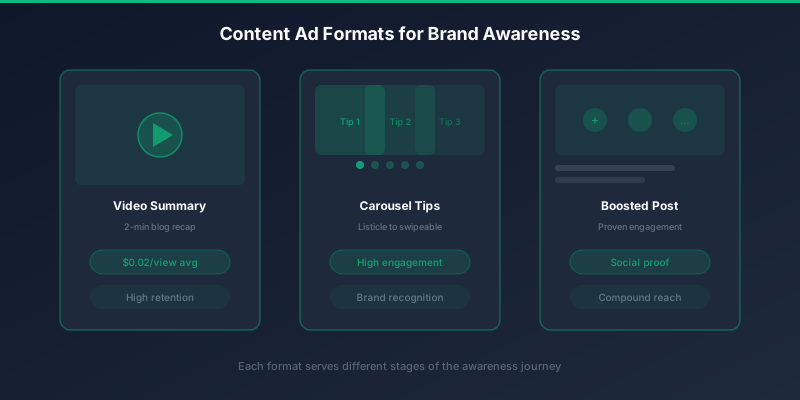
Create video content from your best blog posts and run brand awareness campaigns. A two-minute video summarizing your most popular article can reach thousands of people in your target demographic at a cost of just a few cents per video view. These viewers become warm audiences for future campaigns.
Carousel ads work well for content-driven brand awareness too. Turn a listicle blog post into a swipeable carousel where each card presents one key takeaway. Include a final card that invites people to read the full article. This format generates high engagement rates and builds brand recognition even among people who do not click through.
Measuring Content Ad ROI Effectively
Measuring the return on investment for content-driven ads requires a different framework than direct-response campaigns. The content marketing and Meta Ads synergy operates across multiple touchpoints, so single-touch attribution models will always undervalue content ads. You need to adopt multi-touch attribution or at minimum track assisted conversions.
Set up conversion windows that capture the delayed impact of content engagement. Someone who reads your blog post today might convert thirty days later. If your attribution window only looks at seven days, you miss the connection entirely. Use 28-day click and one-day view attribution at minimum for content campaigns.
Track micro-conversions that indicate content ad effectiveness. Email signups from blog readers, resource downloads, video completions, and return visits all demonstrate that your content ads are building a qualified audience. Calculate cost per micro-conversion and compare it against your eventual cost per customer acquisition to quantify the content funnel contribution.
Create a dashboard that tracks the full journey from content engagement to conversion. Use UTM parameters on all promoted content links and connect this data to your CRM or analytics platform. This allows you to see exactly which content pieces, when amplified through ads, ultimately produce paying customers.
Aligning Your Editorial Calendar With Ad Campaigns
The most sophisticated expression of content marketing and Meta Ads synergy involves synchronizing your editorial calendar with your advertising schedule. When content publication and ad campaigns are planned together, each reinforces the other. A new blog series launch coincides with awareness ads. A product update aligns with case study publication and retargeting campaigns.
Plan your content production with amplification in mind. Not every blog post needs a corresponding ad campaign, but your pillar content absolutely should. Identify four to six major content pieces per quarter that will receive paid amplification. Build these into your editorial calendar with production timelines that include ad creative development alongside content creation.
Seasonal alignment matters too. If your business has predictable demand cycles, ensure your content calendar addresses relevant topics in advance of peak periods. Run awareness content ads six to eight weeks before your peak season, then transition to conversion campaigns as demand naturally increases. This primes your audience and fills your retargeting pools before they are needed most.
Communication between content and advertising teams is essential for this alignment. Weekly sync meetings, shared planning documents, and unified reporting dashboards ensure everyone understands how each piece of content fits into the larger paid strategy. When both teams operate from the same playbook, the compounding effect of content marketing and Meta Ads synergy accelerates dramatically.
The brands that win in this environment are those that stop treating content and ads as separate disciplines. When every blog post is a potential ad, and every ad is informed by content insights, you create a virtuous cycle that builds audience, authority, and revenue simultaneously. Start with your top-performing content, add paid amplification, measure the results, and expand from there.
Novastorm AI automates Meta Ads routine — from monitoring to optimization. Learn more at novastorm.ai
Disclaimer: This article was generated with the assistance of AI and reviewed by the NovaStorm AI team. While we strive for accuracy, we recommend verifying specific data points and consulting official sources (linked where available) for critical business decisions.
Ready to automate your Meta Ads?
NovaStorm AI takes full responsibility for your campaigns — from monitoring to optimization.
Start NowRelated Articles

AI Funnel Fingerprint Analysis for Meta Ads
Use AI-powered Meta Ads analytics to find funnel drop-offs and automate journey-specific creative for better conversions.

AI-Powered Meta Ads Lead Qualification for Sales
Learn how AI-powered Meta Ads lead qualification and conversation intelligence speed up sales handoff and improve lead quality.

AI Workflows for Cross-Platform Ad Repurposing
Learn how AI-powered Meta Ads creative adapter workflows improve creative repurposing, consistency, and performance across platforms.