

Budget Waste in Meta Ads: Common Money Drains and How to Fix Them
Audit eight potential Meta budget leaks with evidence, owners and acceptance checks, distinguish event mismatches, and act on cash-limit risk.
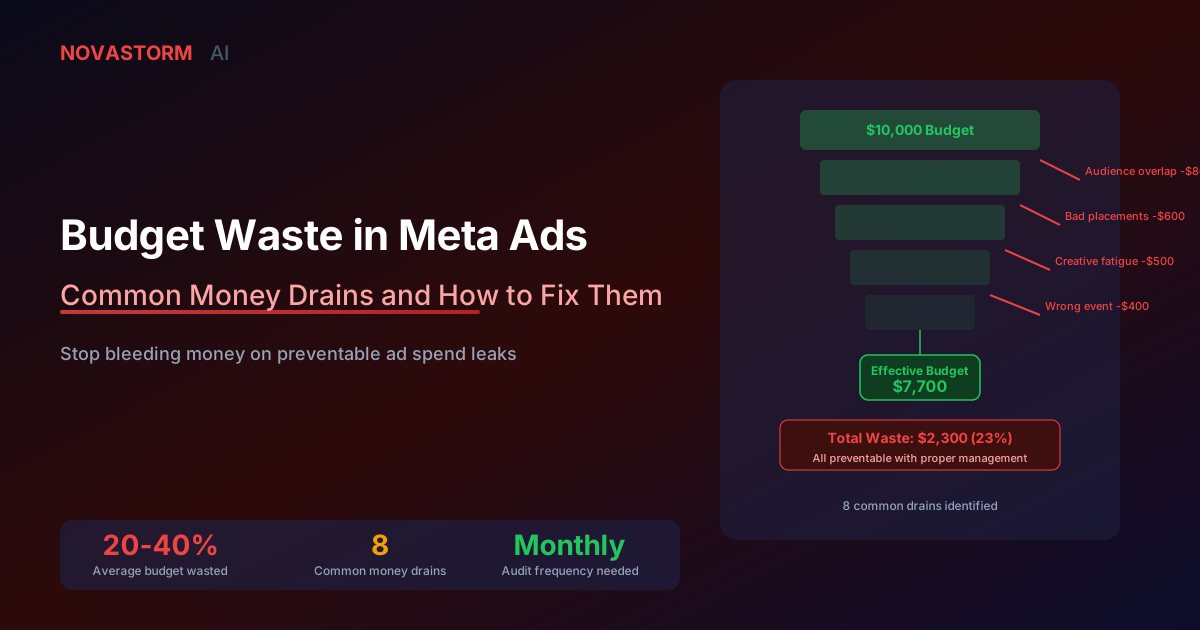
A budget leak is an avoidable cost or a spend that fails its agreed business purpose. It must be evidenced. There is no established percentage of every account’s spend that can be recovered merely by applying an audit checklist.
Separate failures from diagnostic signals
| Potential leak | Evidence to collect | Appropriate response |
|---|---|---|
| Duplicate or forgotten delivery | Active settings, owner, dates and current purpose | Pause delivery that has no approved job |
| Broken destination or collection | A reproducible failure and business records | Fix the defect; pause if continued spend would cause harm |
| Fragmented groups | Budget, outcome volume and distinct hypotheses | Consolidate only if the separate question has no value |
| Unexpected exposure | Saved business boundaries and delivery report | Verify eligibility and available exclusions |
| Creative deterioration | Matched-period response, auction cost and paid outcomes | Test the cause; frequency alone does not prove fatigue |
| Wrong optimization goal | Selected goal versus required customer action | Correct the goal with a recorded reason |
| Placement concern | Comparable mature outcomes and customer quality | Investigate before excluding inventory |
| Cash-limit risk | Actual cumulative spend and approved allowance | Stop at the agreed limit |
Overlap does not prove a cost penalty
Shared eligible audiences can complicate delivery and experiment interpretation. It does not mean you are automatically bidding against yourself or that 30% overlap raises CPM by a known amount. Check current reporting availability and whether separate groups answer separate questions before changing the structure.
Time and placement patterns need context
A purchase recorded at night may follow an earlier interaction. Small hourly samples and collection gaps can make a period look unproductive. Check time zone, delay, customer quality and the supported scheduling options. Do not describe every overnight impression or a placement with twice the average CPA as automatically wasted.
Inspect the event and the audience purpose
Use the outcome required by the business and validate its collection. Fewer events do not make a 50-per-week rule a compulsory reason to optimize toward clicks or cart additions. Existing customers may belong in an approved retention campaign but outside a new-customer comparison. Verify available audience controls rather than assuming interest exclusions still exist in every setup.
A bounded investigation
Suppose a fictional test can lose $300. After $180 it has six confirmed paid orders in the matched cohort but zero displayed platform purchases. Reconciled media cost is $30; investigate measurement before calling all $180 waste. A confirmed broken checkout or a reached $300 cap can justify immediate stopping without waiting for a universal impression count.
The minimum viable evidence budget explains what a small cap can and cannot answer. Use the funnel allocation review when deciding whether spend should move between campaign jobs. Removing a confirmed leak does not prove that an alternative campaign will produce the same demand.
Keep a decision record
Stop wasting ad budget
NovaStorm AI cuts Meta Ads CPA by 30% on average. No complex setup required.
- Name the owner and business purpose for every active campaign.
- Record the finding, evidence, severity and next action.
- Reconcile paid outcomes after conversion delay.
- Review the commercial ceiling and actual cash allowance.
- Validate current campaign fields against the Meta’s official campaign SDK.
Assign the eight findings to an owner
Fillable audit register, not a completed customer audit. Replace the evidence and acceptance fields with dated records from your account. “Investigate” means a signal remains unresolved; “defect” requires a reproducible failure.
| Potential loss | Evidence to attach | Owner role | Acceptance check |
|---|---|---|---|
| Forgotten delivery | Saved status, purpose and actual spend | Budget owner | Unapproved delivery stopped; effective status checked |
| Destination / collection failure | Reproduced URL failure or event mismatch | Web / tracking owner | Controlled order and event reconciliation pass |
| Fragmentation | Distinct hypotheses, budget and matured outcomes | Media buyer | Structure change preserves useful question and cap |
| Unexpected exposure | Approved boundaries versus scoped delivery report | Media buyer | Accepted configuration and delivery scope verified |
| Creative deterioration | Equal-window costs, response and paid outcomes | Creative lead | Cause tested; outcome review recorded |
| Wrong goal | Saved objective/event versus business outcome | Media buyer | Chosen event and destination match approved goal |
| Placement concern | Matured placement quality and attribution scope | Analyst | Comparable evidence supports retain/exclude decision |
| Cash risk | Actual spend, remaining allowance and reporting time | Budget owner | Stop action and effective state verified before further authorization |
Do not confuse an event mismatch with wasted media
In the fictional $180/6-order example, each order must be unique and belong to the same declared scope. Check purchase ID, event name, timestamp, timezone, value/currency, consent and attribution window before comparing store and platform counts. Those six orders establish a descriptive cost of $30 per order; they do not prove six incremental advertising purchases.
Hypothetical boundary case: a person interacts with an ad at 14:00, orders at 23:30, and payment confirmation arrives the next day. A purchase-hour report and an impression-hour report describe different times. Keep interaction, order and confirmation timestamps distinct. A quiet daytime purchase column does not prove the daytime impression had no value.
A concrete monitoring signal and a cash decision
NovaStorm’s dashboard includes a Total Spend card and a Daily Spend chart. Treat those as displayed reports for the selected scope and period, not an automated hard-cap guarantee. Verify account, currency, date range and freshness against the underlying spend report before making a cash decision.
Illustrative signal: the approved test cap is $300 and reconciled spend is $280, leaving $20. If the reporting and stopping delay could consume an assumed $25 more, waiting for the display to reach $300 risks exceeding the cap. Stop or reduce exposure early enough for that uncertainty, then verify the effective state and reconcile final spend. A confirmed checkout defect can justify immediate intervention even before the cap.
Moving unused allowance into another campaign authorizes a new risk; it does not manufacture demand. Prepare a paused NovaStorm draft of the proposed change, obtain the budget owner’s approval of the total allowance and confirm the result before treating the change as executed.
Published by NovaStorm AI. Worked examples and proposed tests are labeled in the article.
Disclaimer: This article was generated with the assistance of AI and reviewed by the NovaStorm AI team. While we strive for accuracy, we recommend verifying specific data points and consulting official sources (linked where available) for critical business decisions.
Ready to automate your Meta Ads?
NovaStorm AI takes full responsibility for your campaigns — from monitoring to optimization.
Start NowMore on Budget and unit economics

Budget Allocation Across Funnel Stages in Meta Ads
Allocate Meta budget by campaign job, deduplicate credited orders, model retargeting capacity and review mature contribution under one cap.
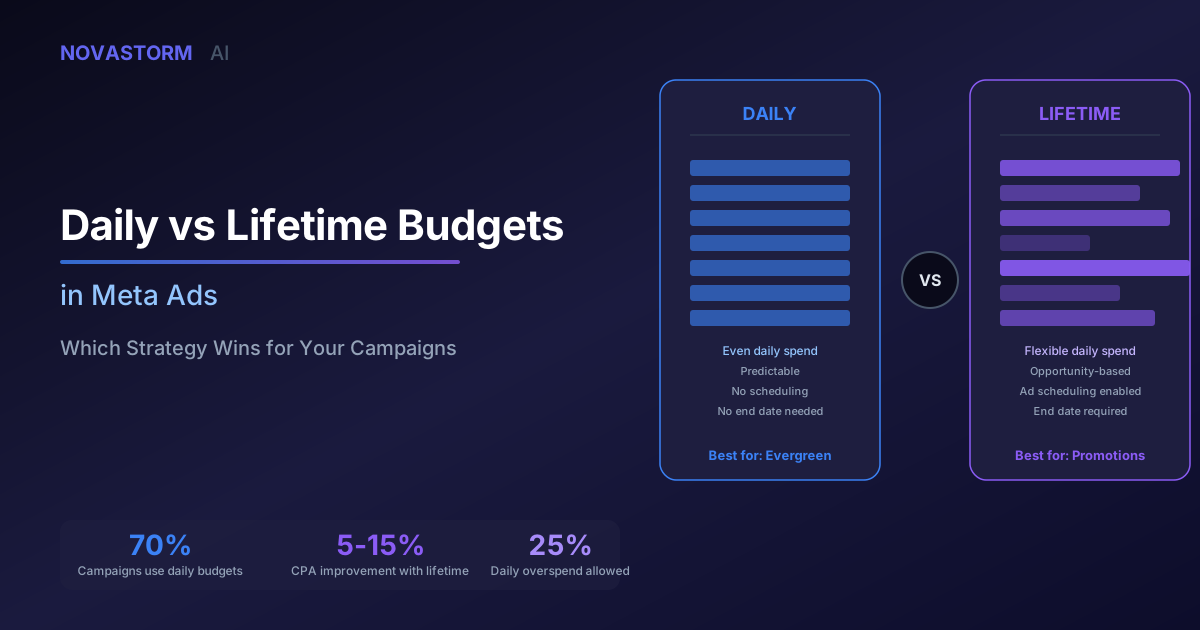
Daily vs Lifetime Budgets in Meta Ads: Which Strategy Wins
Choose daily or lifetime Meta budgets by operating horizon, log accepted settings and dates, and track remaining allowance with reporting delay.
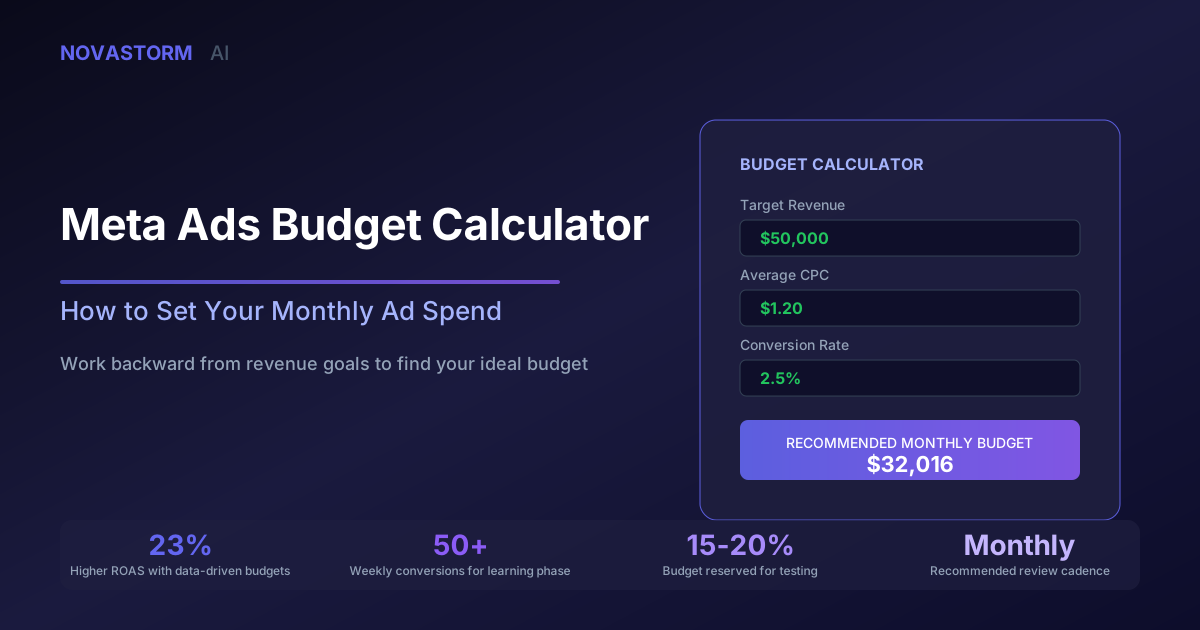
Meta Ads Budget Calculator: How to Set Your Monthly Ad Spend
Calculate monthly Meta ad spend from contribution and lead quality, test sensitivity, and reconcile cash limits with a paused campaign draft.
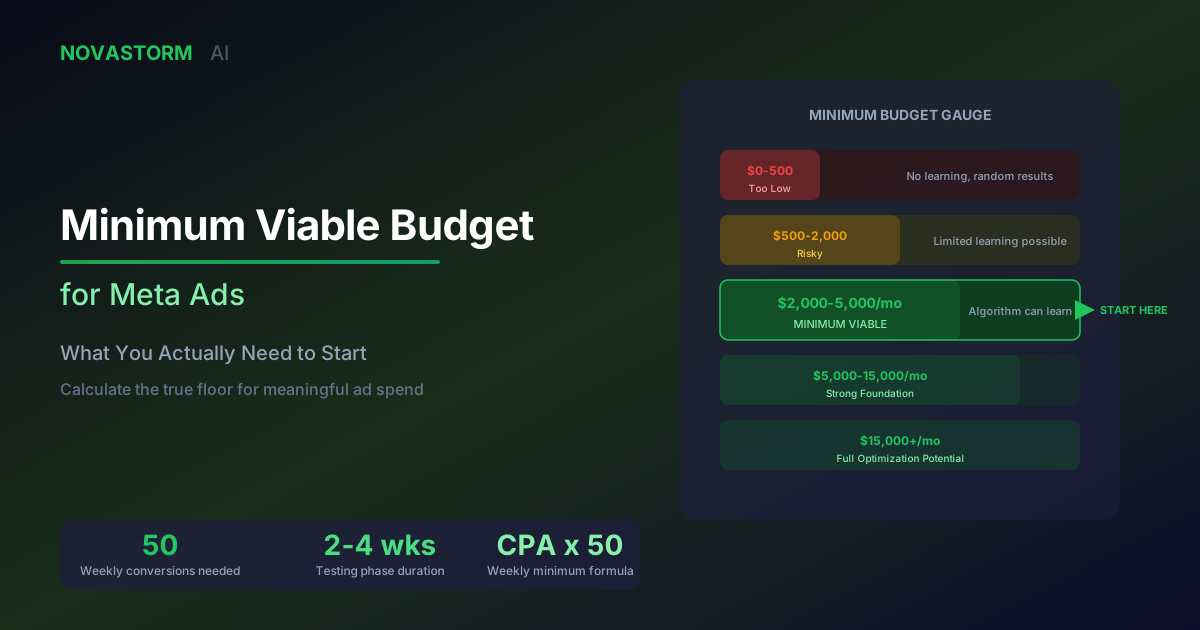
Minimum Viable Budget for Meta Ads: What You Need to Start
Judge what a small Meta ad budget can answer, verify tracking before spending, and close a capped test honestly with mature or inconclusive evidence.