

Brand Awareness Campaigns on Meta: When and How to Invest at Top of Funnel
Define a Meta awareness hypothesis and measurement plan before committing spend, with current objective naming and limits on proxy conclusions.

Awareness spending is justified by a specific information or market problem and a plan to measure its effect. It is not a compulsory prerequisite for Sales, nor the inevitable cure for a rising CPA. A tracking defect, auction change or weak destination can produce the same symptom.
Write an awareness hypothesis
A fictional brand entering a new market may ask whether eligible buyers recognize its offer after exposure. An established service may ask whether prospects understand a new capability. State the population, message, affordable allowance and intended awareness outcome before planning the creative.
Use current objective and buying terminology
The Meta’s official campaign SDK lists OUTCOME_AWARENESS alongside the other current outcome identifiers. Older names such as Brand Awareness and Reach should not be treated as guaranteed separate menu objectives. Verify the available performance goal, buying type and delivery controls in the account.
If a media plan needs a particular reach/frequency commitment, use the reservation and reach-plan review to inspect the actual terms. A two-to-three-per-week exposure level is not universally optimal, and a modeled recall estimate is not a direct survey of every exposed person.
Choose evidence appropriate to the claim
| Evidence | Question answered | Limit |
|---|---|---|
| Reach and frequency | How delivery was distributed in the report | Does not establish recall or incremental sales |
| Modeled recall metric where available | What the platform estimates | Depends on the metric definition/model |
| Supported brand-lift design | Difference for a defined test population | Eligibility, assignment and uncertainty apply |
| Search or conversion trend | A useful hypothesis about change | Correlation alone is not causation |
Integrate the job without a fixed budget ratio
The full-funnel job architecture connects messaging and downstream outcomes. It does not imply that every brand needs 60% awareness spending or that a small business should spend 15–25%. Choose a capped hypothesis that does not jeopardize its cash and operating commitments.
Stop wasting ad budget
NovaStorm AI cuts Meta Ads CPA by 30% on average. No complex setup required.
Review creative for the actual population
- Make the brand and offer identifiable and truthful.
- Prepare formats that render correctly in the selected placements.
- Test whether the message answers the intended awareness question.
- Check eligibility, destination and operational ownership.
- Record the verified outputs and uncertain interpretations separately.
At review, report actual delivery, the supported awareness estimate or test result, cost and commercial uncertainty. There is no fixed four-to-eight-week payoff that substitutes for the planned design. Continue only when the evidence and available cash support the next decision.
A filled awareness brief and an explicit inconclusive decision
Hypothetical brief, not a measured brand study: a new local repair service wants eligible adult residents in its service area to recognize its same-day diagnosis offer. The assumed test allowance is $600 total, with no transfer from essential operating cash. Message: “Book a diagnosis; see the written quote before approving a repair.” Question: can the intended population identify the service and its offer after the defined exposure period?
| Brief field | Hypothetical planning choice | Owner acceptance |
|---|---|---|
| Population | Adults in the actual service radius; existing customers defined separately | Owner confirms capacity and eligibility |
| Asset | One truthful diagnosis demonstration, brand visible and destination tested | Creative reviewer confirms price and service claims |
| Evidence | Supported brand-lift test if eligible; otherwise report delivery and a descriptive survey separately | Measurement owner confirms assignment, sample and metric |
| Allowance | $600 assumed total plus separately agreed production cost | Budget owner approves before publication |
| Insufficient data | Finish inconclusive; do not claim recall or sales lift | No automatic spend extension |
Before selecting a brand-lift test, verify account eligibility and minimum commitments with the available test provider. Specify baseline response rate, smallest lift worth acting on, confidence/power targets, eligible population, exposure assignment and expected survey response. Have the measurement owner assess whether the attainable sample can answer that question. If it cannot, narrow the decision or choose a descriptive study. Do not invent a universal minimum or claim a small sample becomes valid just by running longer.
Keep the question wording identical across comparison groups and avoid recruiting only people who voluntarily clicked the ad. A rise in brand searches or sales may reflect seasonality, other channels or market changes. A graph of those trends can motivate a follow-up hypothesis; it cannot replace randomized assignment or an adequately justified comparison.
Prepare the approved asset and awareness brief for a NovaStorm campaign draft. Check objective, geography, dates and total allowance with the owner before publication. A paused draft is not evidence of delivered reach or brand lift, and the product workflow does not establish eligibility for a survey test.
Disclaimer: This article was generated with the assistance of AI and reviewed by the NovaStorm AI team. While we strive for accuracy, we recommend verifying specific data points and consulting official sources (linked where available) for critical business decisions.
Ready to automate your Meta Ads?
NovaStorm AI takes full responsibility for your campaigns — from monitoring to optimization.
Start NowMore on Campaign structure and objectives
Meta Engagement Campaigns: Plan Interactions and Check Paid Outcomes
Plan a Meta Engagement campaign with a declared interaction, post-ID log, complaint guardrails and a separate test of downstream paid outcomes.

Reach and Frequency Campaigns on Meta: Predictable Delivery for Big Brands
Review reservation eligibility, forecasts, commitments and delivery measurement without promising identical exposure or universal reach guarantees.
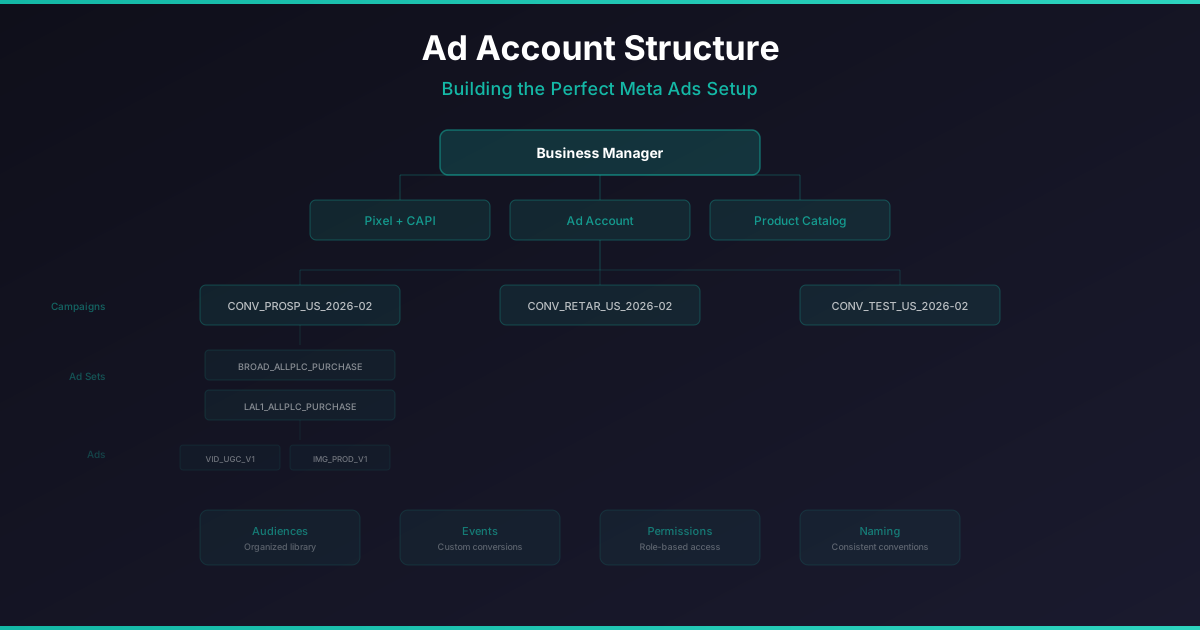
Ad Account Structure: Building the Perfect Meta Ads Setup
Audit asset owners and effective permissions, connect durable IDs to event responsibility, and approve a campaign plan for the correct account.

Video Views Campaigns: Building Retargeting Pools on Meta
Measure a Meta video-view cohort and its downstream value without equating repeated plays, watch percentage or cheap views with qualified customers.