

Black Friday Meta Ads Strategy: From Preparation to Execution
Prepare a Black Friday and Cyber Monday brief with discount economics, truthful materials, inventory limits and mature-result spending decisions.

Treat Black Friday through Cyber Monday as a bounded commercial event. The useful preparation is a verified offer, fulfillable stock, working payment route and a loss allowance. Neither a warm audience nor a low CPM guarantees profitable orders.
Calculate the discounted order first
This fictional backpack offer starts at $100 and discounts to $80. Costs per retained order are assumed: product $30, delivery subsidy $8, fulfillment $4, payment fees $3 and net return-loss allowance $10. Contribution before media is $80 − $30 − $8 − $4 − $3 − $10 = $25. Reserve $5 for nonmedia acquisition and profit, leaving an illustrative media CPA ceiling of $20. Use actual prices and mature return losses; do not double-count refunds already removed from revenue.
With 200 saleable units, $4,000 is an inventory-based media envelope at that ceiling, not a forecast that spending it sells 200 units. Suppose the cash owner approves only $2,000 initial exposure and a maximum $300 contribution shortfall. Those lower constraints govern the event; staff, delivery and stock may require still smaller tranches.
A filled holiday brief and materials
| Field | Illustrative brief | Approval evidence |
|---|---|---|
| Offer | Backpack at $80; shipping and return terms shown before payment | Commerce owner checks price, costs and eligible stock |
| Main-event material | Headline: Your daily backpack, holiday price $80. CTA: See offer details. | Approved photo, accurate product details and readable mobile preview |
| Deadline material | Use the actual offer end time and time zone only | Owner confirms the genuine end; remove expired creative |
| Cyber Monday material | A separately approved remaining-stock offer; do not silently extend a “final” deadline | Recalculate stock, contribution and truthful terms |
| Exposure and loss | Initial media allowance $2,000; contribution-shortfall allowance $300 | Finance approval and a named escalation owner |
Prepare product, offer and reminder layouts as briefs, not invented customer assets. Any testimonial or sales-count statement needs its source and permission. Produce the formats the actual placements require; format diversity alone is not evidence that an algorithm rewards the account.
Preparation sequence
Stop wasting ad budget
NovaStorm AI cuts Meta Ads CPA by 30% on average. No complex setup required.
- Before production, reconcile prior mature event cohorts and the current cost sheet. Inspect operational lessons without assuming holiday buyers have lower lifetime value.
- Build approved photos, factual copy, landing terms and recovery messages. Test stock changes, coupon eligibility, payment confirmation and order/event identity.
- If early access or audience warming is used, give it a separate bounded cost and follow-up metric. Do not compare early warm buyers with later cold buyers as a causal proof of warming.
- Before launch, confirm deadline, time zone, consent behavior, placement crop, tracking and the person who can approve or pause exposure.
- Before Cyber Monday, use remaining cash, saleable stock and settled or clearly provisional contribution; prepare a truthful offer rather than recycling expired urgency.
Monitor operations faster than you judge performance
A two- or three-hour check can identify a broken checkout, wrong price, unavailable inventory, tracking failure or runaway spend. It does not automatically make purchases and refunds mature. Fix verified technical failures or stop exposure at a declared risk limit promptly; performance reallocations require the selected outcome delay, enough information and consistent cost scope.
Hypothetical mature cohort: $1,800 spend and 100 retained orders give CPA $18. At $80 per order, gross-revenue ROAS is $8,000 ÷ $1,800 = 4.44, rounded, not 4.2. Contribution before media is 100 × $25 = $2,500; after media it is $700 before other included costs. This arithmetic is a teaching example, not a NovaStorm dashboard or customer result.
Compare equal-age holiday and ordinary cohorts for contribution, repeat behavior, returns and source coverage. An observed difference does not by itself identify discounting as its cause. Preserve unknown outcomes and revisit late refunds after the event.
A proposed NovaStorm workflow is to prepare main-event and Cyber Monday materials as paused campaign and local ad-set drafts. Human owners approve the offer, exposure allowance and release. The annual seasonal budget plan keeps the event inside cash and inventory limits; no automated holiday scaling is claimed.
Published by NovaStorm AI. Planning examples are illustrative assumptions, not measured customer results.
Disclaimer: This article was generated with the assistance of AI and reviewed by the NovaStorm AI team. While we strive for accuracy, we recommend verifying specific data points and consulting official sources (linked where available) for critical business decisions.
Ready to automate your Meta Ads?
NovaStorm AI takes full responsibility for your campaigns — from monitoring to optimization.
Start NowMore on Seasonal and launch campaigns
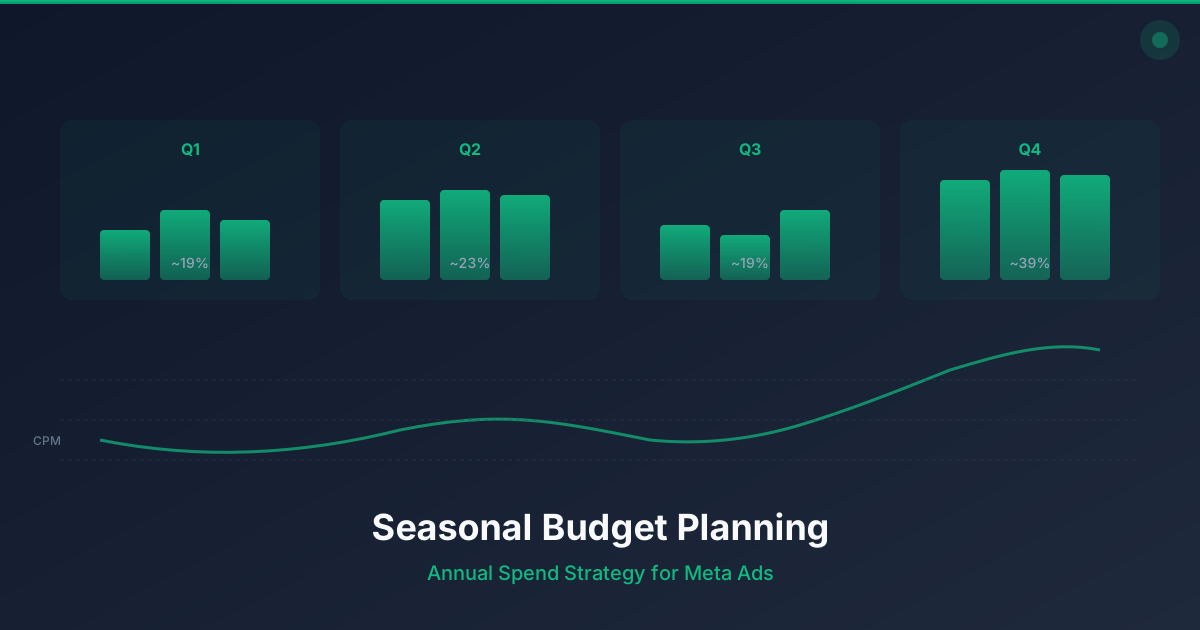
Seasonal Budget Planning for Meta Ads: Annual Spend Strategy
Build an annual advertising envelope from seasonal contribution, stock capacity and cash reserves, then approve mature-result reviews with clear owners.
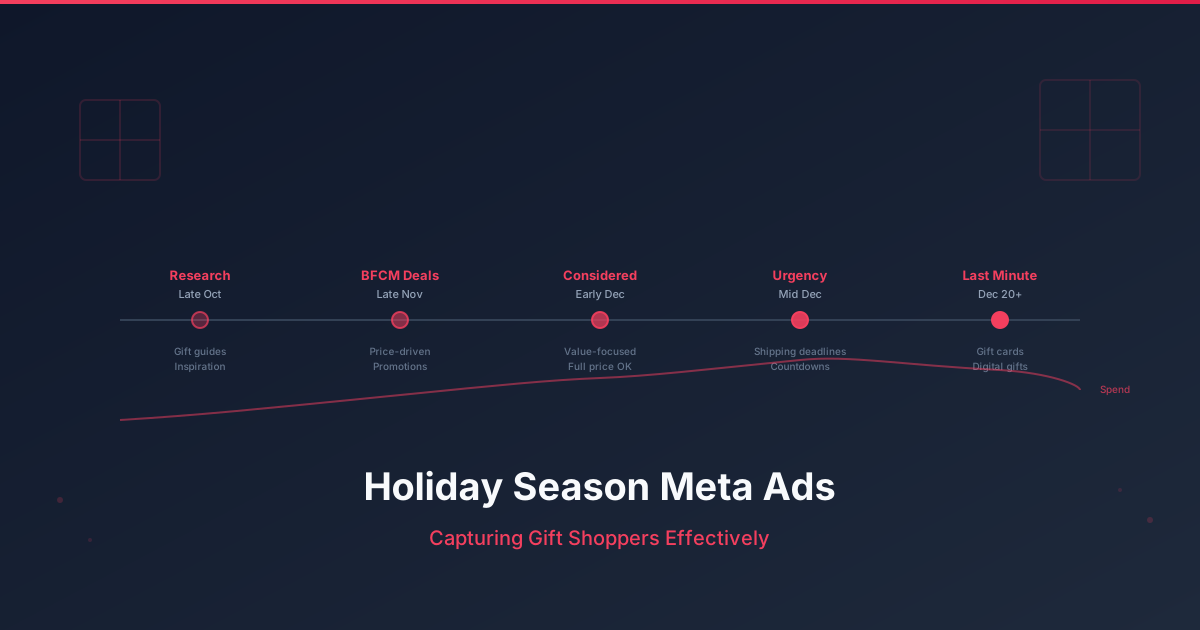
Holiday Season Meta Ads: Capturing Gift Shoppers Effectively
Build gift offers around the buyer’s decision, verified delivery and return terms, then compare price-tier creative by retained contribution.
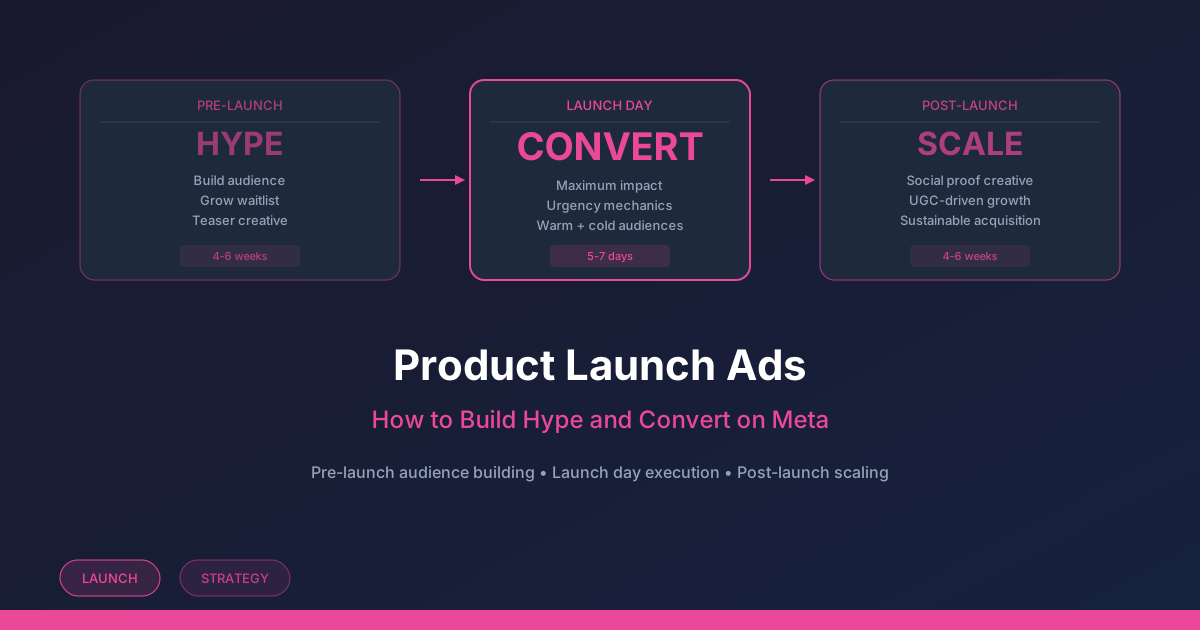
Product Launch Ads on Meta: Budget, Stock and Approval Plan
Plan a product launch with truthful stock and bonus terms, consented waitlists, paid-order economics and measurable approval or stop gates.
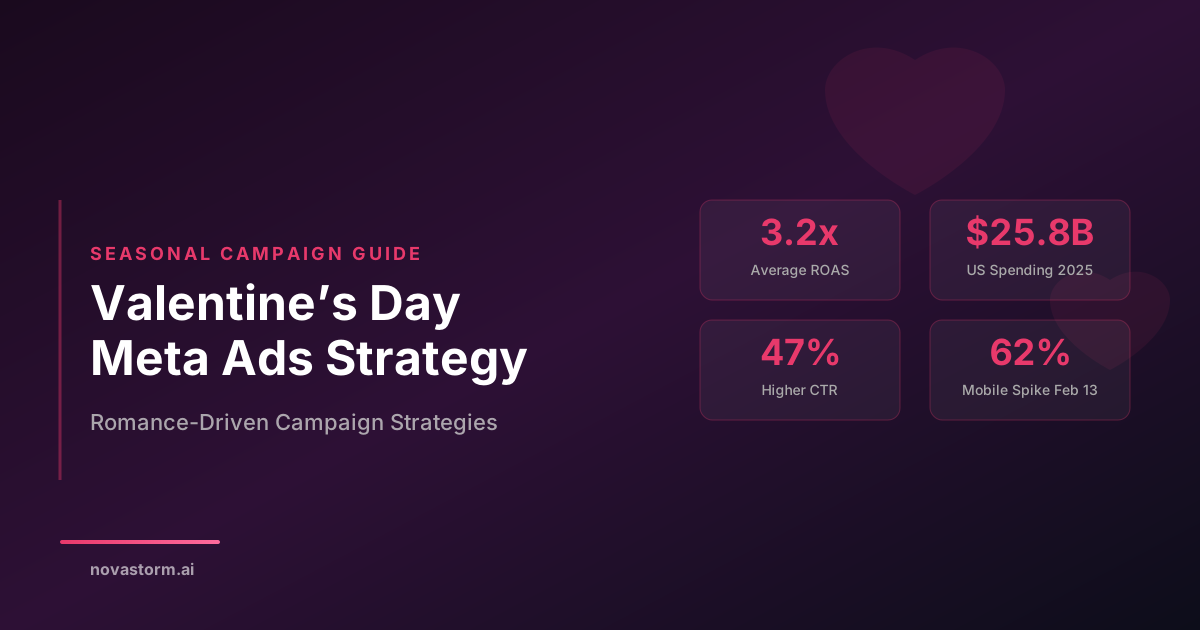
Valentine's Day Meta Ads: Romance-Driven Campaign Strategies
Plan Valentine’s Meta ads around delivery cutoffs, gift-message hypotheses and margin, with transparent cart-recovery denominators.